

What Happens in Every Section of a Retail Store & Why the Backroom Matters Most
This post breaks down every section of a retail store, what each one is actually responsible for, and which one carries more operational weight than most people give it credit for.
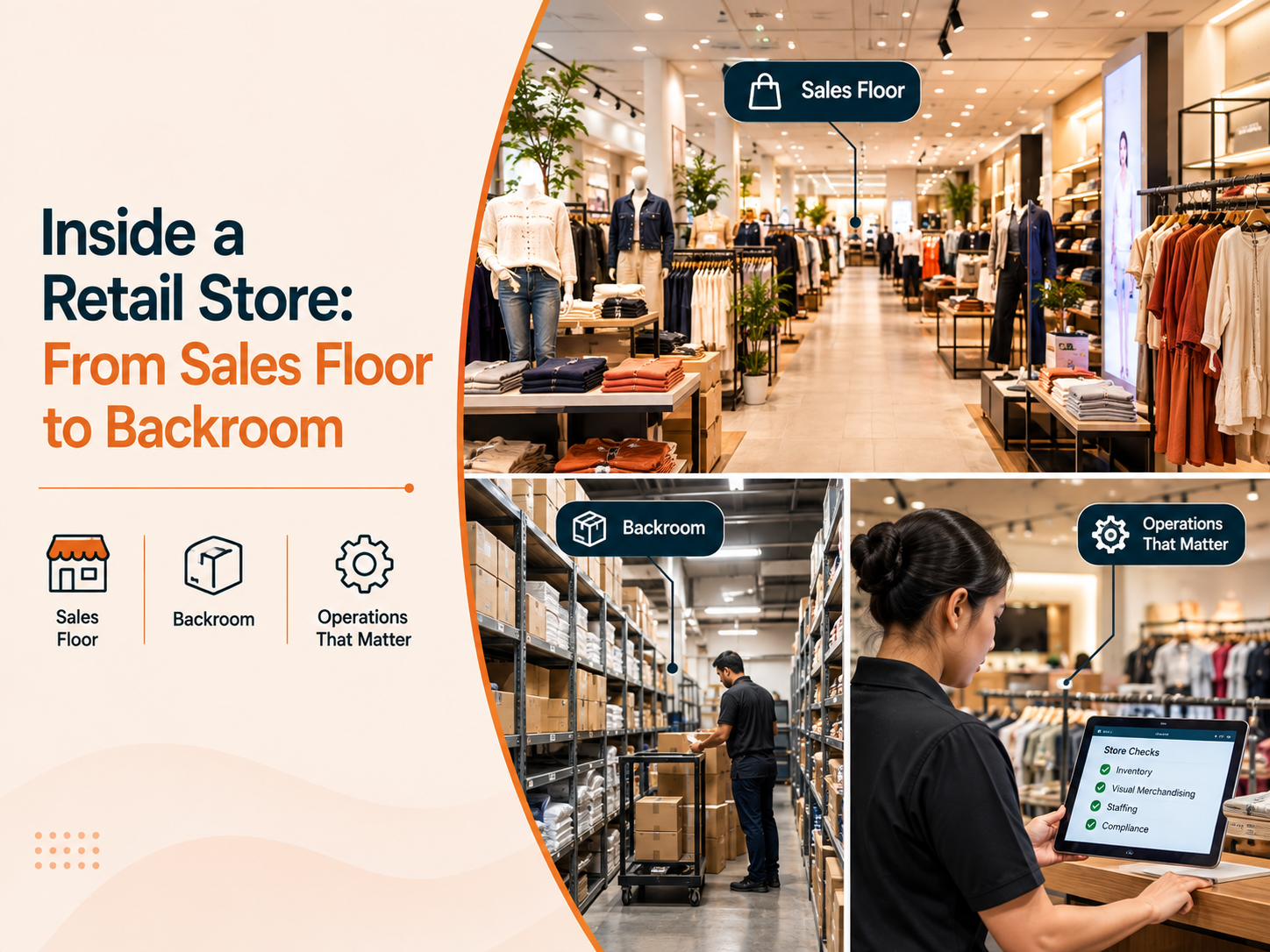
A customer walking into a retail store sees one thing: a sales floor. What's actually running behind that experience is several distinct operations happening in parallel, each with its own staffing, standards, and failure points. Most retail content covers the customer-facing half of this and stops there.
This post breaks down every section of a retail store, what each one is actually responsible for, and which one carries more operational weight than most people give it credit for.
Entry and Storefront
The first impression zone, window displays, signage, lighting, and the transition space just inside the door where a customer gets their first read on the store.
This section is easy to dismiss as purely aesthetic. It isn't. Industry research estimates that as much as 76% of in-store purchase decisions are influenced by displays and product placement. A clothing store that refreshes its window display around a seasonal theme every few weeks pulls in noticeably more walk-in traffic than one that leaves the same mannequin setup untouched for months, the same store, the same stock, a very different result at the door.
The Sales Floor
Where merchandising, staffing, and direct customer interaction all converge. This is the section most retail operations content is entirely about, and for good reason. Planogram compliance gets maintained here, or quietly drifts. Restocking cadence determines whether shelves look complete or picked-over. Staff availability during peak hours determines whether customers get help or wander off unassisted.
It's also the section where a store can look stocked on paper and still fail a customer in person. A shopper looking for a specific shoe size that's technically in inventory, but sitting on the wrong shelf or in the wrong box, walks away thinking the store was out of stock, when the real issue was never inventory at all.
Cash Wrap and Checkout
The transaction zone, positioned for speed and a clean final impression. A single slow register during a weekend rush can create a visible queue that colors a customer's memory of an otherwise good visit, the rest of the trip fades, but the wait at checkout is what they remember and mention to a friend.
This section also carries the store's cash handling discipline, register counts, reconciliation, deposit prep, the kind of process that only gets noticed when it breaks down.
Fitting Rooms
Specific to apparel and fashion retail, and a section most generic "retail operations" content skips entirely. Fitting rooms need constant attention to cleanliness and upkeep between uses, and prompt return of tried-and-rejected items back to the sales floor. An item taken into a fitting room and never returned to its shelf is effectively lost from inventory, even though it never left the building, it's just sitting somewhere no customer or system can find it.
Fitting rooms are also a well-known blind spot for shrinkage, and need their own attention distinct from general floor security.
The Backroom and Stockroom
This is the section worth pausing on, because it's almost certainly more important than its visibility suggests.
Retail design practice deliberately keeps the backroom concealed from the customer-facing flow, it's not meant to be seen, and as a result, it's chronically under-discussed relative to its actual operational weight. Supply chain research puts a real number on just how significant this space is: in-store logistics, largely backroom-driven, is estimated to account for close to 48% of total operational logistics costs in retail. Not warehouse costs, not transportation, costs generated inside the four walls of the store itself, in a space customers never enter.
How much weight the backroom carries does shift by format, a grocery store's backroom is doing far more (cold storage, faster turnover, shorter shelf life) than a small fashion boutique's, but in every format, it's consistently more operationally significant than its visibility would suggest.
The difference shows up fast between stores that get this right and ones that don't. Two stores can have identical sales floor merchandising and nearly identical footfall, but if one restocks an emptied shelf within twenty minutes because the backroom is organized by category, and the other takes two hours because nobody can find the right box quickly, the second store is quietly losing sales it never even registers as lost. This matters even more as quick commerce and buy-online-pickup-in-store orders route directly through the backroom rather than the sales floor, a disorganized stockroom now slows down two channels, not just one.
Inventory Management
Distinct from the backroom itself, this is the tracking and accuracy layer sitting on top of it: stock counts, reorder thresholds, and shrinkage tracking. A backroom can be physically organized and still fail here if the numbers on the system don't match what's actually on the shelf, a system showing twelve units in stock when the shelf and backroom combined only have eight is the gap that eventually turns into a customer being told "we have it" and then not finding it.
Customer Service Desk
Handles returns, exchanges, and complaint resolution, a fundamentally different function from the sales floor, since it deals with problems and post-purchase issues rather than active selling. A return handled smoothly and without friction often builds enough goodwill that a customer buys something else on the way out. A slow, unclear return process does the opposite, it can end a relationship a good sales floor experience had already built.
Loss Prevention and Security
Unlike most sections on this list, loss prevention isn't one physical space, it spans the entire store. A store with cameras only covering the entrance, while shrinkage is actually concentrated in the fitting room blind spot, is protecting the wrong section. Entry, fitting rooms, the backroom, and checkout each carry distinct loss prevention needs, and treating it as one centralized concern rather than a section-by-section responsibility is a common, costly gap.
Management and Administrative Office
The coordination layer, scheduling, reporting, HR, and performance tracking, the function responsible for making sure every other section actually has the staffing, training, and information it needs to run. A manager scheduling shifts based on last month's footfall instead of this week's actual promotional calendar ends up with a store that's technically staffed, on paper, while being genuinely short-handed the moment a promotion drives three times the usual traffic. This coordination layer is also where staff training gets planned across sections, our look at what happens to training content after a new hire learns it covers why this needs more thought than a one-time onboarding session.
Which Section Actually Matters Most?
If the question is "which section do customers notice," the answer is obviously the sales floor and checkout. But if the question is "which section, if it breaks down, causes every other section to fail," the honest answer is the backroom and inventory management.
A well-merchandised, well-staffed sales floor can still run out of a bestselling item by Saturday afternoon, not because demand was unexpected, but because backroom replenishment couldn't keep pace. The customer blames "the store." They never see that the actual failure point was two rooms away, in a section they never once walked into. Given that in-store logistics represents nearly half of a store's total operational logistics cost, the backroom isn't a support function to the "real" store, it's arguably the section with the most leverage over whether every other section succeeds.
Why These Sections Only Work as One System
Retail operations research frames a store as a set of departments that only function well when information actually moves between them, inventory data informing replenishment, sales data informing staffing, backroom status informing what the sales floor can promise a customer. A promotion that drives three times the normal footfall means nothing if the person building the week's schedule never found out it was happening, the store ends up staffed for an ordinary Tuesday on a day that was anything but.
This is where documented systems make the difference between sections that coordinate and sections that just happen to share a building. Our complete guide to Standard Operating Procedures for multi-location businesses and our breakdown of the checklist types every store needs cover how each section's daily standards get documented and tracked consistently. Staffing coordination across sections, especially getting the sales floor and backroom properly balanced during peak hours, is where structured workforce scheduling matters most. And for loss prevention specifically, spanning entry, fitting rooms, and checkout all at once, AI video analytics gives a single, connected view across sections that a section-by-section manual approach can't match.
Book a personalized demo to see how NymbleUp connects every section of your store, from the backroom to the sales floor, into one operational system.
FAQ
What are the main sections of a retail store? Entry and storefront, the sales floor, cash wrap or checkout, fitting rooms (for apparel retail), the backroom and stockroom, inventory management, the customer service desk, loss prevention, and the management or administrative office.
Why is the backroom important to retail store operations? In-store logistics, largely driven by the backroom, accounts for an estimated 48% of total operational logistics costs in retail. A disorganized backroom directly slows down sales floor replenishment and order fulfillment, even though customers never see it.
How do different retail store departments work together? Effectively run stores share information across sections, inventory data informs replenishment, sales data informs staffing, and backroom status informs what the sales floor can promise a customer. Sections that operate in isolation tend to produce failures that show up somewhere else in the store.
What causes retail store operations to break down? Usually a breakdown in one less-visible section, most often the backroom or inventory accuracy, that eventually shows up as a customer-facing problem, like empty shelves or unfulfilled orders, in a completely different section.
Is the backroom or the sales floor more important to retail operations? Customers notice the sales floor first, but the backroom often has more influence over whether the sales floor can actually perform, since it drives replenishment speed and now increasingly fulfills online and quick commerce orders too. Both matter, but the backroom's importance is consistently underestimated relative to its actual operational weight.
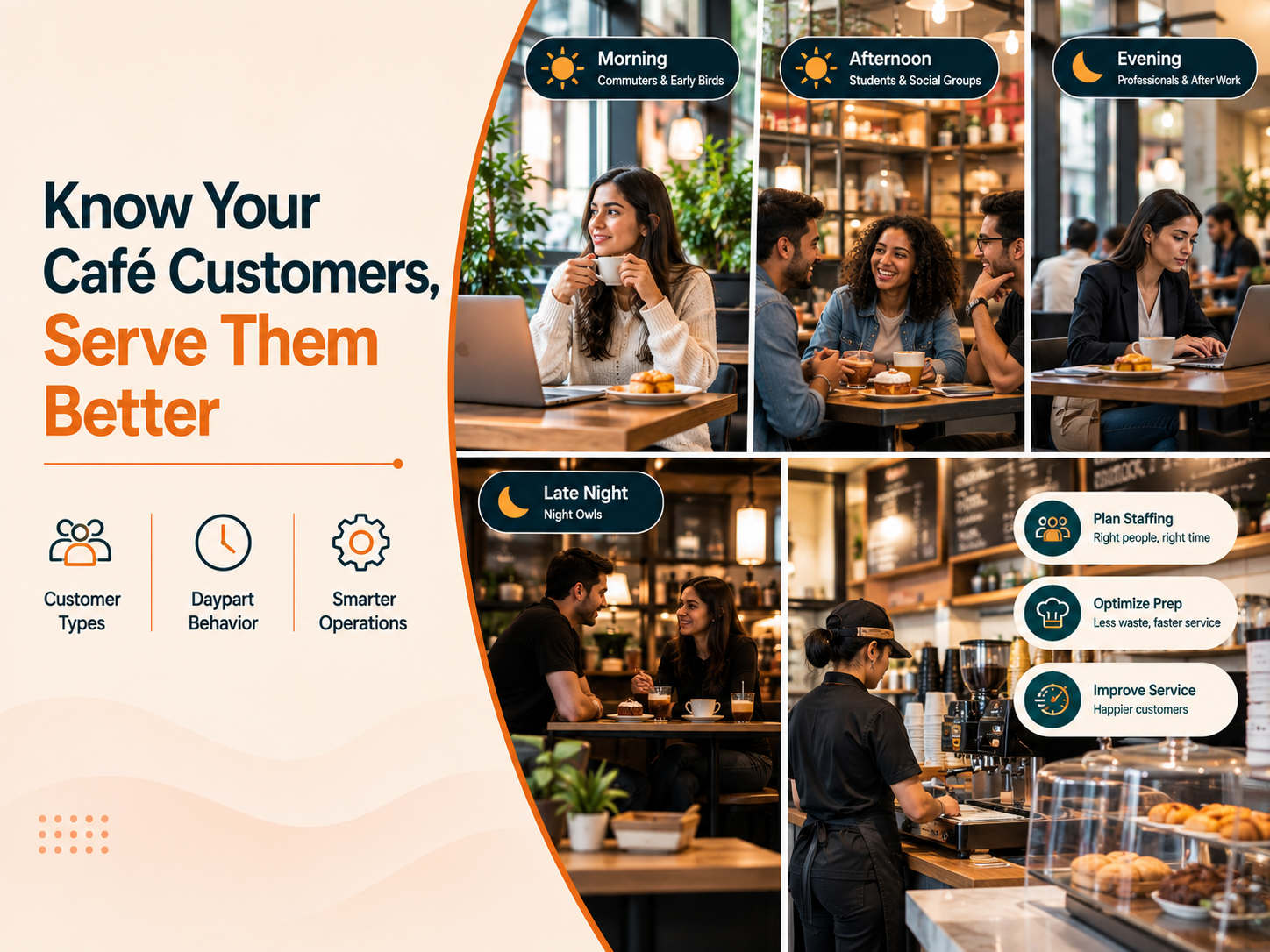
Types of Café Customers and How They Affect Café Operations
Learn the main types of café customers, how their behavior changes by daypart, and how cafés can use these patterns to improve staffing, pre…
Read more
How to Prepare a New Retail Store for a Successful Launch
Planning to open a new retail store? Learn how to prepare your store for a successful launch with best practices for staffing, inventory, SO…
Read more
Why Store Execution Is Becoming a Competitive Advantage in Modern Retail
Discover why store execution is becoming a competitive advantage for modern retailers. Learn how customer expectations, omnichannel retail, …
Read more