

Types of Café Customers and How They Affect Café Operations
Learn the main types of café customers, how their behavior changes by daypart, and how cafés can use these patterns to improve staffing, prep and service.
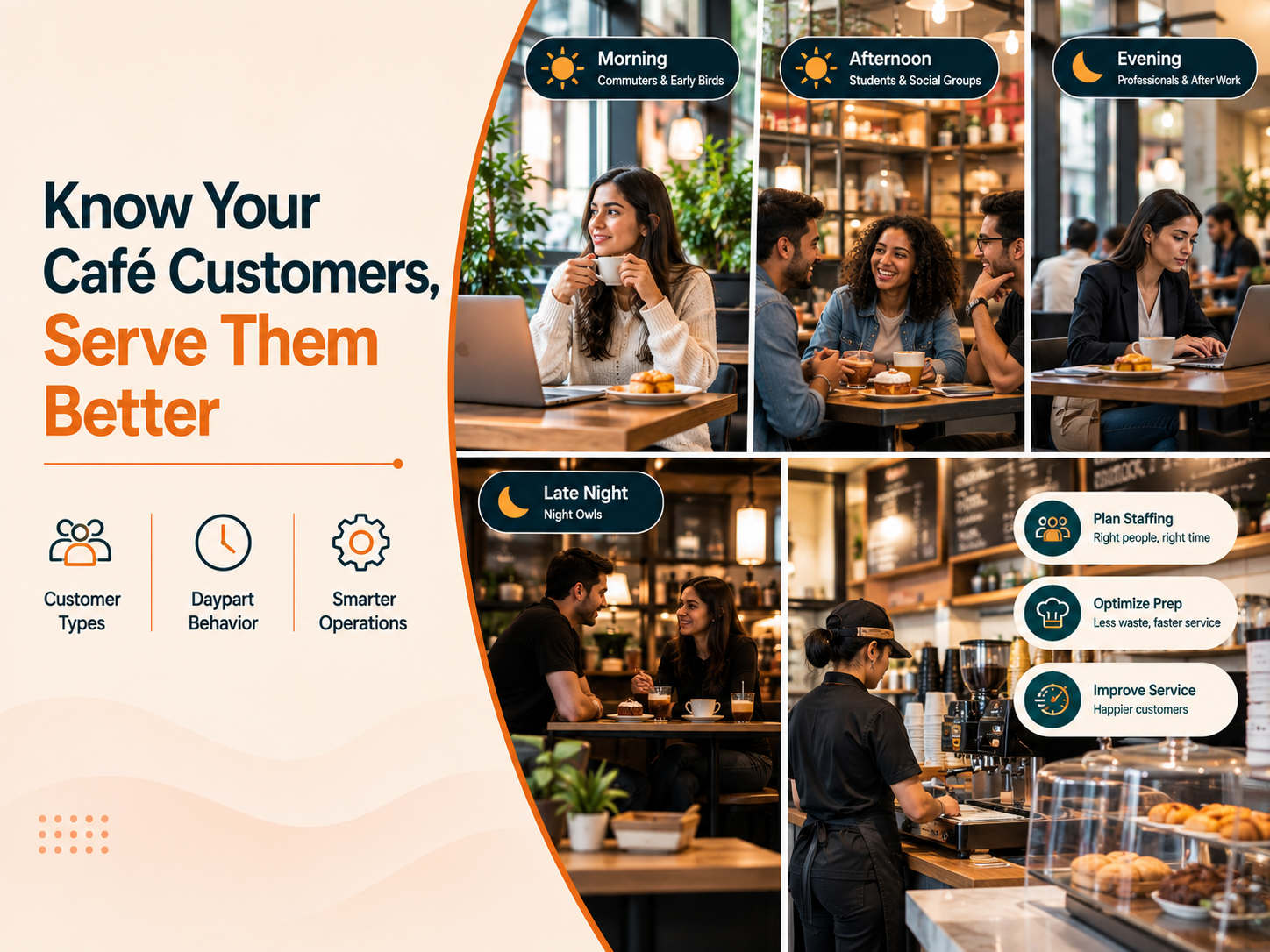
Most content on café customer types is written for a marketing team, who to target, what to put in an ad, which segment responds to a discount. That's useful, but it skips the more immediate question for anyone actually running a café: how should knowing your customer types change what happens behind the counter, not just in a campaign brief.
The same six or seven customer types show up in café after café. What changes, and what most operators never quite plan around, is how differently each type behaves depending on the hour, and how much that should be shaping staffing and prep, not just messaging.
Types of Café Customers
A few distinct types show up consistently across café research and real operator experience:
- Urban professionals: high-frequency visits, strong preference for speed and mobile ordering
- Commuters: time-sensitive, focused almost entirely on grab-and-go during rush hours
- Remote workers: long-duration visits, need reliable WiFi and power outlets more than they need speed
- College students: price-sensitive, drawn to extended hours and a study-friendly environment
- Suburban families: weekend-heavy traffic, need comfortable seating and kid-friendly options
- Tourists and specialty-seekers: seasonal, drawn to local specialties and a sense of place
Picture a café near a business district on a Tuesday morning. The 8 AM crowd is almost entirely commuters and urban professionals, people who want their order fast and are gone within three minutes. By 11 AM, the same tables start filling with remote workers settling in for the next four hours. Neither group is wrong for the café, but they need almost opposite things from it.
Café Customer Behavior by Time of Day
Café traffic follows a well-documented daypart pattern:
- Morning rush (roughly 7-9 AM): commuter-heavy, almost entirely focused on quick service
- Midday: a mix of business lunches and remote workers, creating steady, sustained afternoon traffic rather than a sharp spike
- Evening: a shift toward social gatherings and study groups, slower per-table turnover, different service pace entirely
This means the same café is effectively running three different businesses across one day, a fast-transaction morning operation, a steady midday mix, and a slower, seating-focused evening one. A café that staffs and preps the same way at 8 AM and 4 PM is almost always getting one of those two windows wrong.
Dine-In vs. Takeaway Trends in Cafés
Whether a customer dines in or takes their order to go isn't just a preference worth noting, it's a real operational signal. Tracking that ratio over time is what tells a café whether it's time to add a dedicated grab-and-go section, rather than continuing to route every order through the same counter and queue.
Consider a neighborhood café that's seen its takeout share creep from a quarter of orders to nearly half over a year, all while keeping the exact same single-line counter setup designed for a dine-in-heavy pattern. The queue backs up during the morning rush not because the café is understaffed, but because a growing share of fast, simple takeout orders is stuck behind slower, more customized dine-in orders in the same line. The fix isn't more staff, it's a second flow built for the customers who were never going to sit down in the first place.
Coffee Preferences and Customer Segmentation
Consumer research on coffee preferences has found distinct taste-preference clusters, groups that lean toward espresso, Americano, café latte, or café mocha, and each cluster tends to correlate with different demographic patterns and visit frequency.
This matters more than it sounds. A café whose regulars skew heavily toward one or two of these clusters can tune its default recommendations and upsell prompts around what that specific customer base already prefers, rather than pushing the same generic suggestion to everyone in line.
Customer Loyalty Patterns in Cafés
Research on purchase timing has found that regularity, customers visiting on a predictable schedule, correlates directly with brand loyalty, store loyalty, and how responsive a customer is to deals and promotions.
In practice, this means loyalty program data can reveal something more useful than total footfall: which customer type is actually driving repeat revenue. A café might discover that its Tuesday and Thursday morning regulars, mostly the same small group of urban professionals, account for a disproportionate share of monthly revenue compared to the much larger, but far less consistent, weekend crowd.
Café Staffing Based on Customer Patterns
This is really the point the rest of this post has been building toward: most café segmentation content stops at marketing use cases and never connects it to the floor.
A café staffed identically at 8 AM and 3 PM is, in practice, almost always wrong for one of those two windows, overstaffed during a slow midday stretch, understaffed for a sharp commuter rush. Matching staffing to the real customer mix and pace of each daypart, rather than a flat shift pattern repeated all week, is where this data actually pays for itself. This is exactly the kind of demand-based planning workforce scheduling is built to support, rather than relying on a manager's general sense of "mornings are busy."
Café Ordering and Prep Based on Customer Patterns
The same logic applies behind the counter. A grab-and-go-heavy morning runs better with pre-batched, ready-to-serve items prepared before the rush starts, not made to order under pressure. An evening study-group crowd needs a completely different rhythm, planning for longer table turnover rather than rushing service that customers in that window never actually wanted sped up.
This is where daypart-specific prep, not just a single opening checklist covering the whole day, starts to matter. Our breakdown of the checklist types every store needs and our complete guide to Standard Operating Procedures cover how to document processes that actually reflect how a day really unfolds, not just a generic version of it.
There's more worth digging into here than one post can cover, how loyalty program data specifically should shape a café's promotions calendar, and how menu design itself can be built around the taste-preference clusters mentioned above, are both worth their own dedicated look later.
Book a personalized demo to see how NymbleUp helps cafés and QSR brands match staffing and prep to real customer patterns, hour by hour.
FAQ
What are the main types of café customers? Common types include urban professionals, commuters, remote workers, college students, suburban families, and tourists or specialty-seekers, each with different priorities around speed, seating, and price.
How does time of day affect café customer behavior? Significantly. Mornings tend to be commuter-heavy and speed-focused, midday brings a steadier mix of business lunches and remote workers, and evenings shift toward slower-paced social and study visits.
Does dine-in vs. takeout ratio affect café operations? Yes. A rising takeout share often signals the need for a separate grab-and-go flow, since routing fast takeout orders through the same queue as slower dine-in orders tends to create bottlenecks that look like a staffing problem but aren't.
How can cafés use customer data to improve staffing? By matching shift plans to the actual customer mix and pace of each daypart, rather than applying the same staffing pattern all day, cafés can avoid being simultaneously overstaffed during slow stretches and understaffed during predictable rushes.
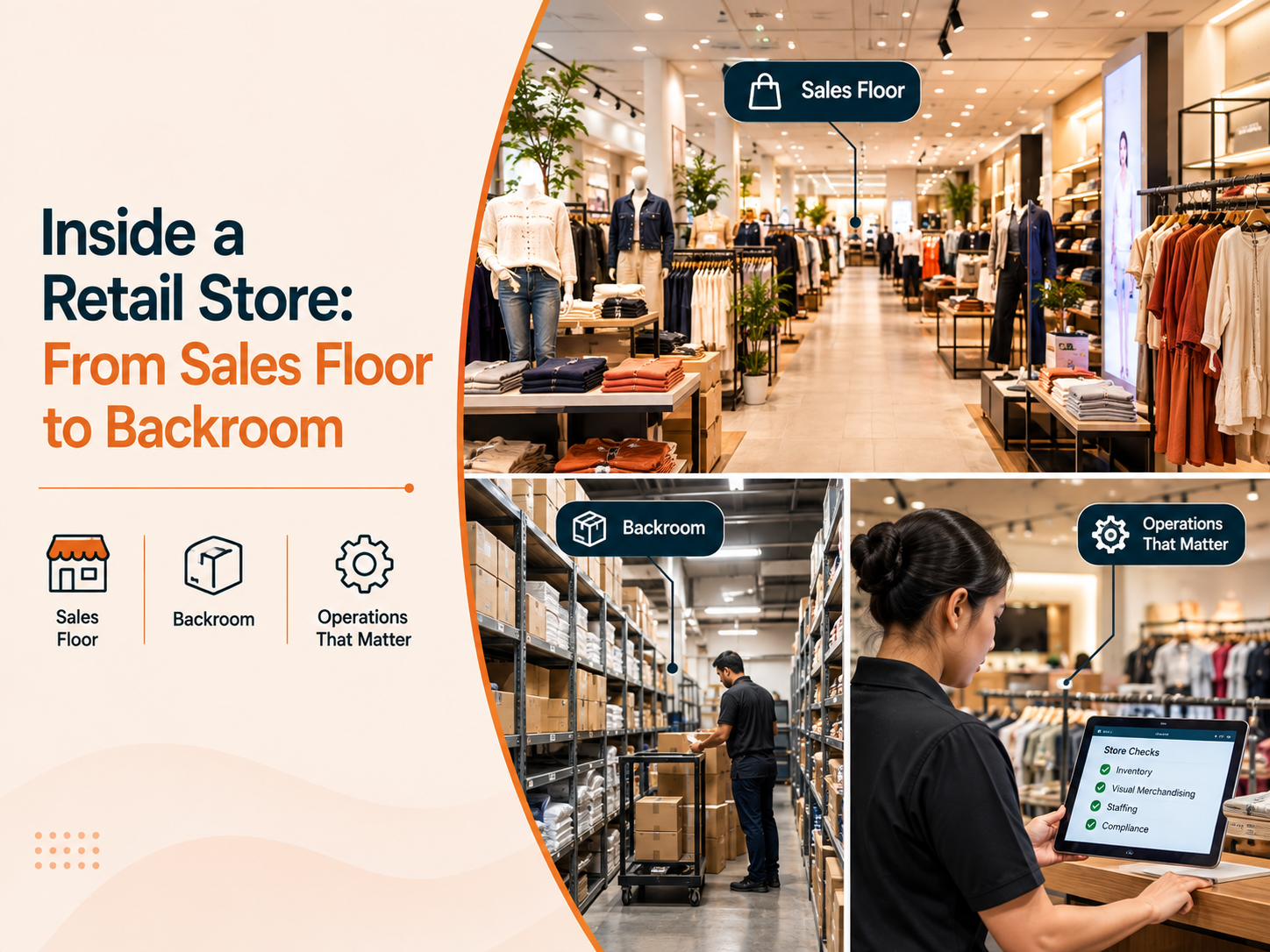
What Happens in Every Section of a Retail Store & Why the Backroom Matters Most
This post breaks down every section of a retail store, what each one is actually responsible for, and which one carries more operational wei…
Read more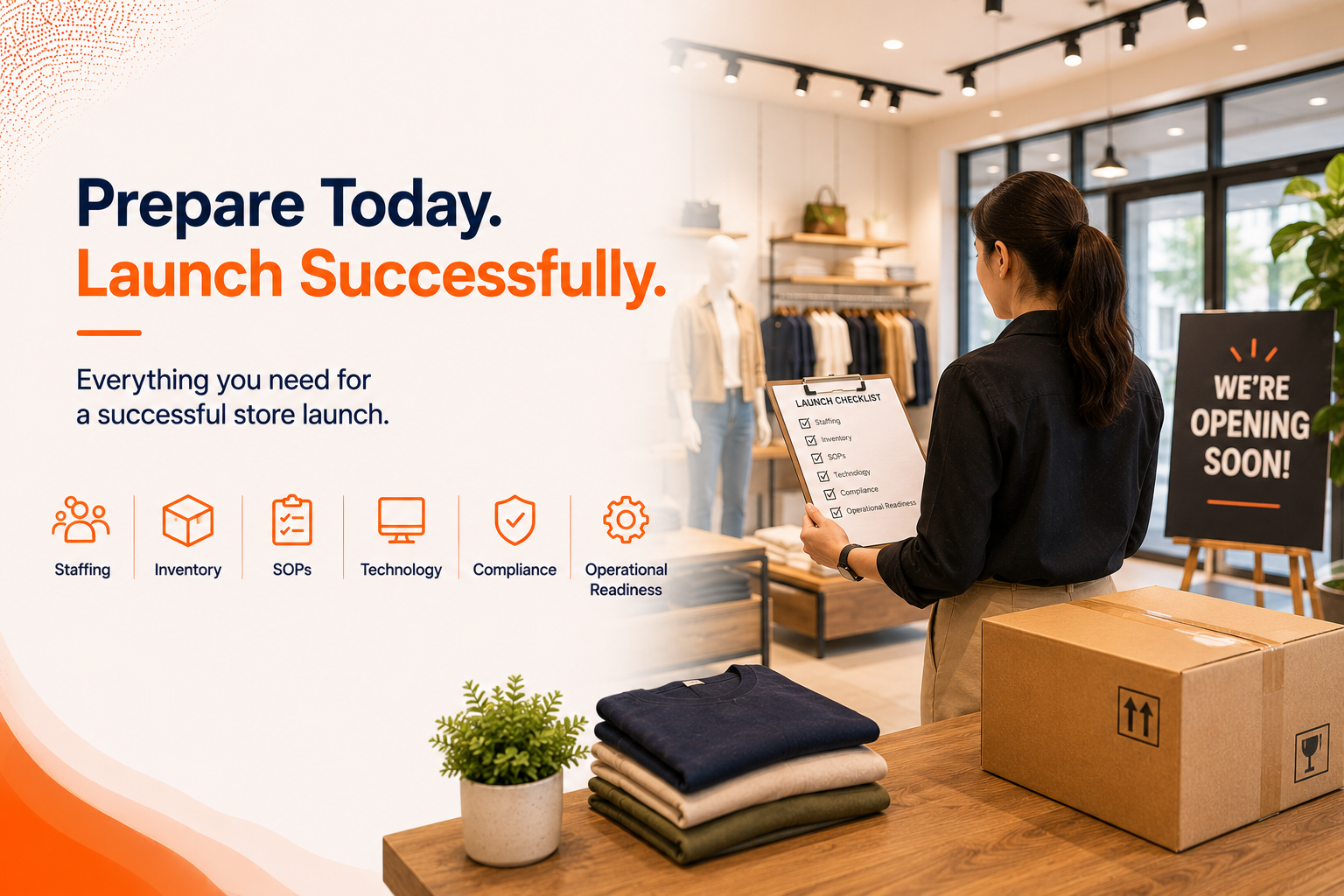
How to Prepare a New Retail Store for a Successful Launch
Planning to open a new retail store? Learn how to prepare your store for a successful launch with best practices for staffing, inventory, SO…
Read more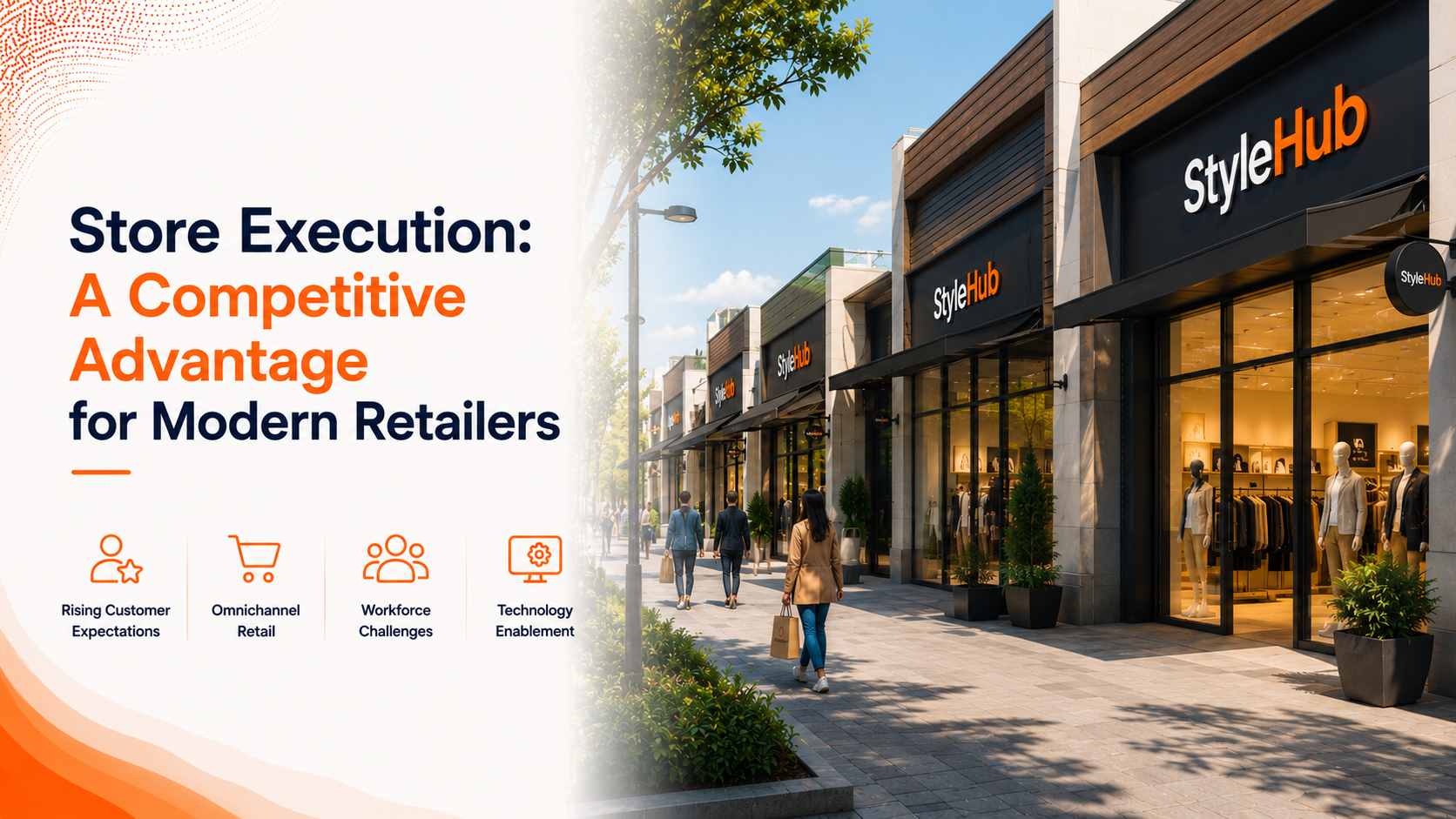
Why Store Execution Is Becoming a Competitive Advantage in Modern Retail
Discover why store execution is becoming a competitive advantage for modern retailers. Learn how customer expectations, omnichannel retail, …
Read more