

Types of Checklists Every Retail and QSR Store Needs
A detailed breakdown of daily, weekly, and monthly checklists for retail and QSR stores, including food safety logs, walkthroughs, and mobile checklist completion.
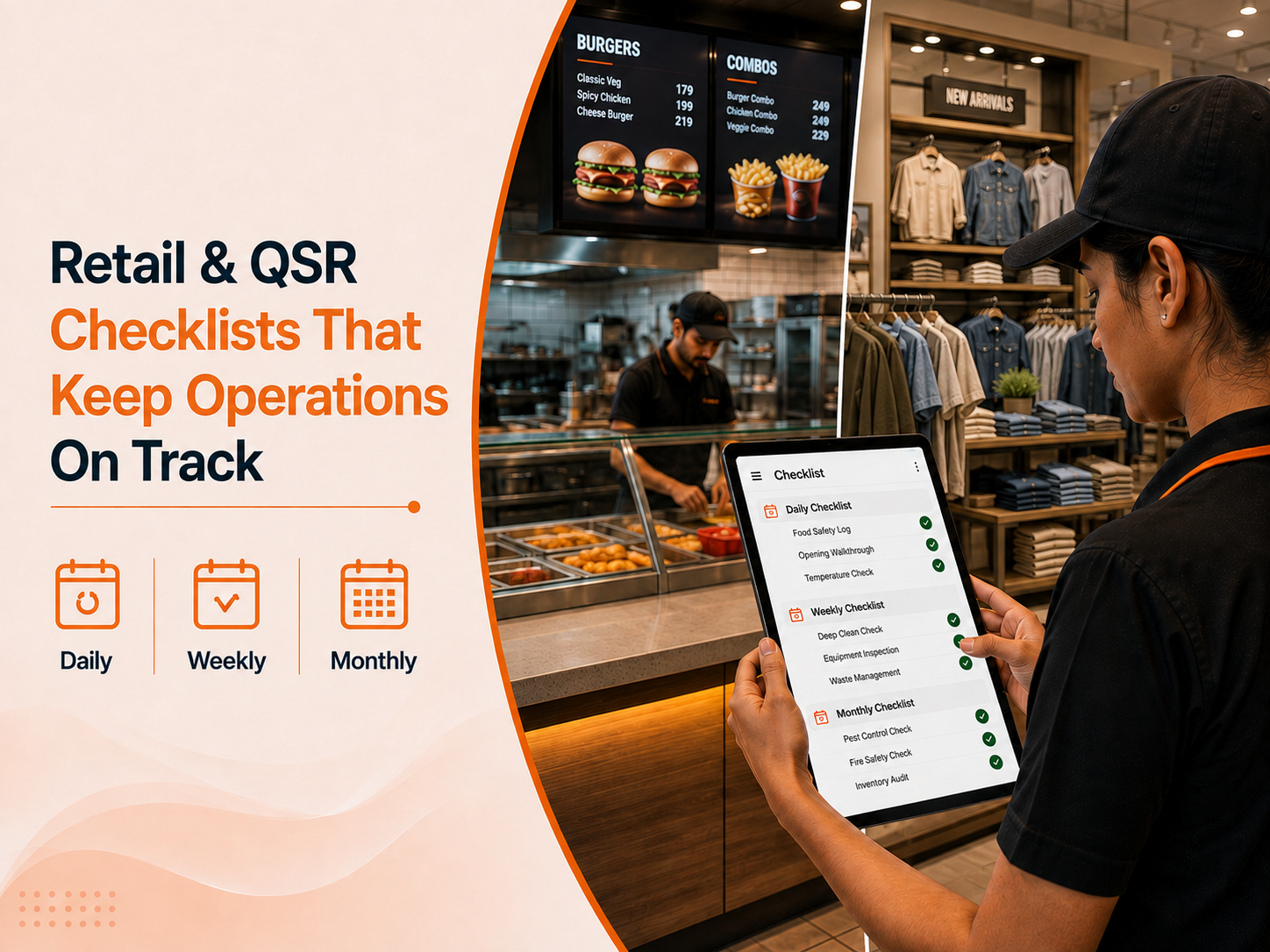
Most guides to store checklists list them by function, opening, closing, cleaning, cash handling, and stop there. That misses the part that actually determines whether a checklist gets followed: how often it needs to happen, and who's responsible for it. A checklist that mixes a daily task with a monthly one trains staff to treat everything on it as equally optional, and equally skippable.
This guide organizes checklists the way they should be managed, by frequency first, then function, and goes into the specific detail that makes each one usable in practice, not just a category name. It builds directly on our complete guide to Standard Operating Procedures, since checklists are simply SOPs in their most common, everyday form.
Organize by Frequency First, Not Just Function
A 60-item checklist covering everything from daily opening tasks to monthly deep cleaning looks thorough on paper, but in practice, staff give real attention to the first ten items and rush through the rest just to clear the list. Daily checks belong in a daily checklist. Weekly and monthly items belong in their own, separate lists, reviewed on their own schedule.
This isn't just a formatting preference. It directly affects completion quality. Keeping checklists short, focused, and matched to a single frequency is one of the simplest ways to improve how consistently they actually get done.
Daily Checklists
Opening checklist Covers safety checks, cleanliness, equipment testing, cash float setup, and shift briefing before doors open.
Closing checklist Covers cash reconciliation, equipment shutdown, security, and handover notes for the next shift.
Shift changeover checklist Distinct from opening and closing, this covers what needs to carry over mid-day, between a morning and afternoon shift, for example. Outstanding customer issues, low stock flags, and equipment problems should be handed off explicitly rather than left for the next person to notice on their own.
Food safety and temperature log (QSR) This needs more specificity than "check the fridge." A proper daily food safety checklist logs temperatures separately for walk-in coolers, hot-holding units, and cooked items, since each has a different safe range and risk profile. It should also cover FIFO (first-in, first-out) rotation and date labeling on stored items, sanitizer concentration checks at wash stations, and basic hygiene points like handwashing and glove use. These are the areas most food safety inspections and HACCP-based systems focus on, because they're where the highest-risk, highest-frequency problems tend to originate.
Cash handling checklist Register counts at shift start and end, deposit preparation, and a clear process for logging and escalating discrepancies rather than letting them go unrecorded.
Weekly Checklists
Deep cleaning checklist Covers areas that don't need daily attention but can't be neglected for a month either, equipment breakdown and sanitizing, storage areas, and spaces outside the daily cleaning routine.
Stock and inventory checklist Stock counts, replenishment cycles, and identifying slow-moving or expiring inventory before it becomes a write-off.
Store walkthrough checklist This is different from a daily task checklist. A walkthrough is a quality spot-check, typically done by a manager, looking at how the store actually looks and functions rather than just confirming tasks were marked complete. It catches the gap between "the checklist was ticked" and "the store actually meets standard."
Monthly Checklists
Full compliance and audit checklist A more detailed review than a daily or weekly checklist, usually covering regulatory and brand-standard requirements in full. This is where our audit and compliance content becomes directly relevant, since monthly audits are often what surface an outdated SOP or a checklist that's stopped being followed properly.
Equipment maintenance checklist Preventive maintenance checks on refrigeration, kitchen equipment, HVAC, and other systems where a small issue caught early avoids a costly breakdown later.
Mystery shopper or guest experience checklist An outside-in view of the customer experience, service speed, staff interaction, cleanliness, and overall impression, that internal daily checklists can't fully capture since staff know when they're being checked against their own list.
Checklist Types Specific to QSR
Drive-thru operations checklist Covers order accuracy, timing metrics, condiment and packaging completeness, and food quality checks specific to the drive-thru channel, which runs on a different rhythm than in-store service.
HACCP-aligned food safety checklist A more structured version of the daily food safety log, mapped to the core HACCP principles, covering the full flow of food from receiving and storage through prep, cooking, holding, and service. This is typically what a health inspector or food safety auditor will expect to see documented.
Checklist Types Specific to Retail
Visual merchandising checklist Confirms displays match the planogram, signage is current, and mannequins or shelf layouts reflect the brand's current visual standards, since inconsistent merchandising across locations is one of the most visible signs of operational drift.
Loss prevention checklist Covers security camera checks, high-value item placement, and processes for handling suspected shrinkage, distinct from general safety and security checks in the daily checklist.
Why Paper Checklists Struggle at Multi-Location Scale
A paper checklist, even filled in completely, doesn't confirm when a task was actually done or by whom, only that a box got ticked. Across a handful of locations, this is manageable to spot-check manually. Across dozens or hundreds, it becomes nearly impossible to know which stores are actually keeping up and which ones are just filling in the form at the end of the day to look compliant.
Completing Checklists on Mobile
This is the direction most multi-location retail and QSR brands are moving toward, checklists completed directly on a phone, at the point of work, rather than filled in later from memory.
With NymbleUp, staff complete checklists on mobile as tasks happen, at the fridge while logging a temperature, at the counter during shift changeover, on the floor during a walkthrough. Photo proof can be attached where it matters, a completed cleaning task, a temperature reading, a merchandising display, so completion isn't just a checkbox, it's evidence. Each entry is time-stamped automatically, and if a checklist isn't completed on schedule, it flags to the relevant manager instead of quietly going unnoticed.
For a manager overseeing multiple locations, this turns checklist completion from a pile of paper forms reviewed after the fact into a live view of exactly what's happening across every store, right now, from a single dashboard.
Book a personalized demo to see how your team can complete every checklist type, daily, weekly, or monthly, right from their phone with NymbleUp.
FAQ
What's the difference between a daily checklist and a store audit checklist? A daily checklist confirms routine tasks are completed as part of normal operations. A store audit checklist is a more detailed, periodic review, usually conducted by a manager or auditor, that evaluates whether store standards are actually being met, not just whether tasks were checked off.
How often should QSR food safety checklists be completed? Core food safety checks, temperature logs, hygiene checks, sanitizer concentration, should be completed at least once per shift, with more detailed HACCP-aligned reviews conducted weekly or monthly depending on regulatory requirements.
Can checklists be completed on a mobile phone instead of paper? Yes. Mobile checklist completion is increasingly standard for multi-location retail and QSR brands, since it allows time-stamped, photo-verified task completion and gives managers real-time visibility across every store, rather than relying on paper forms reviewed after the fact.
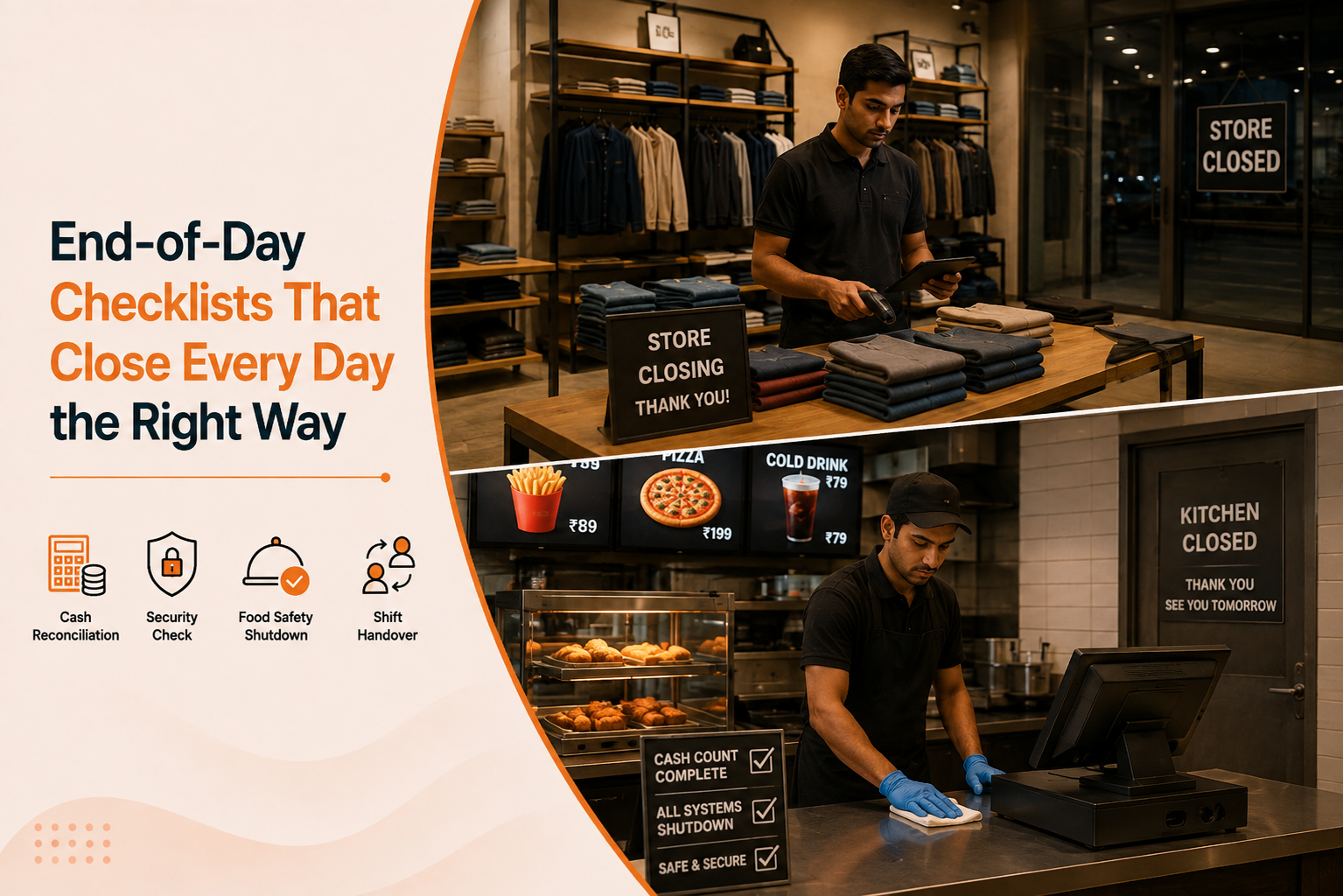
Retail Store and QSR Closing Checklist: Complete Guide
Read more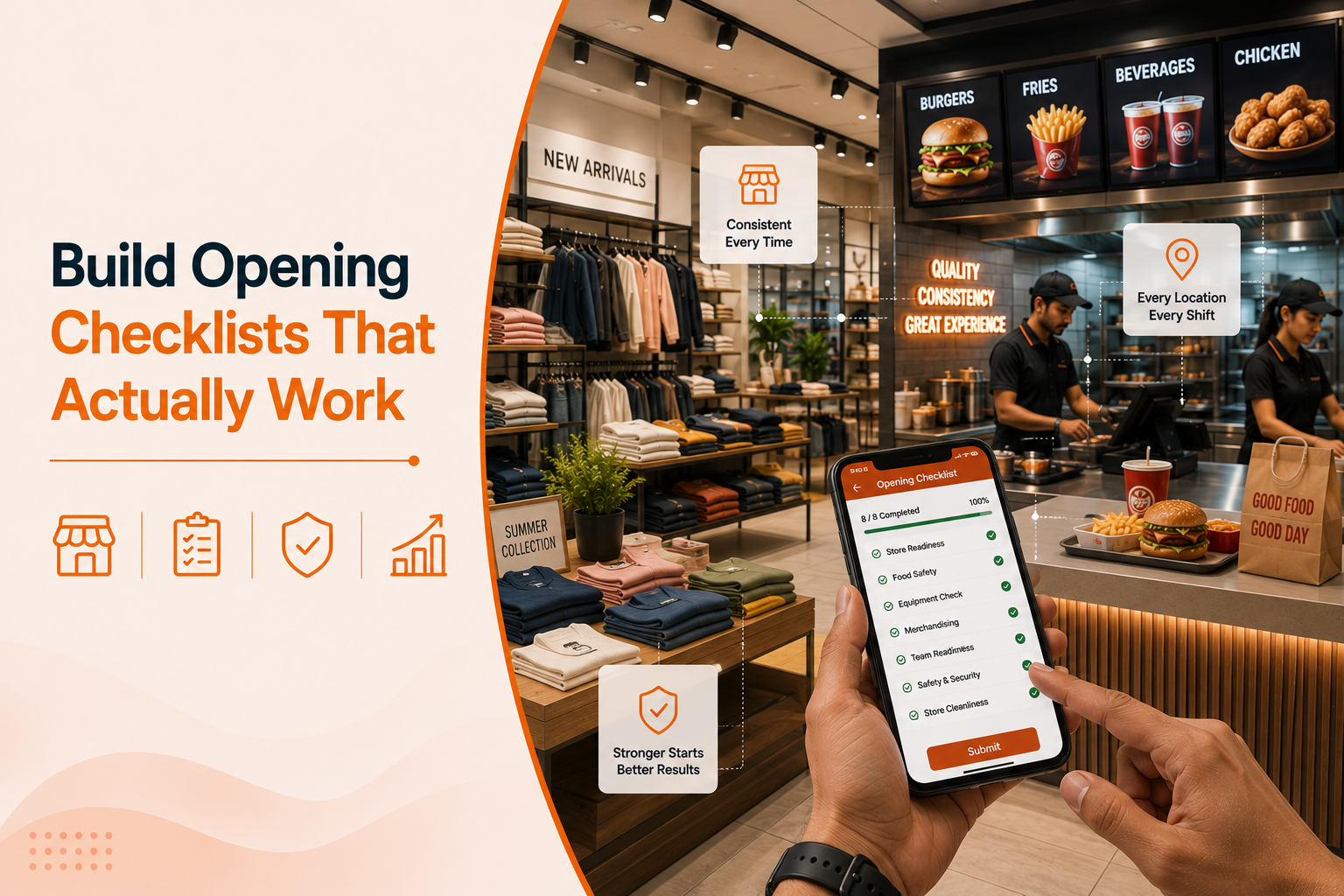
How to Open a Retail Store or QSR : A Step-by-Step Opening Checklist Guide
Why most opening checklists fail before the first mistake even happens, and how to build one that actually holds up across every shift and l…
Read more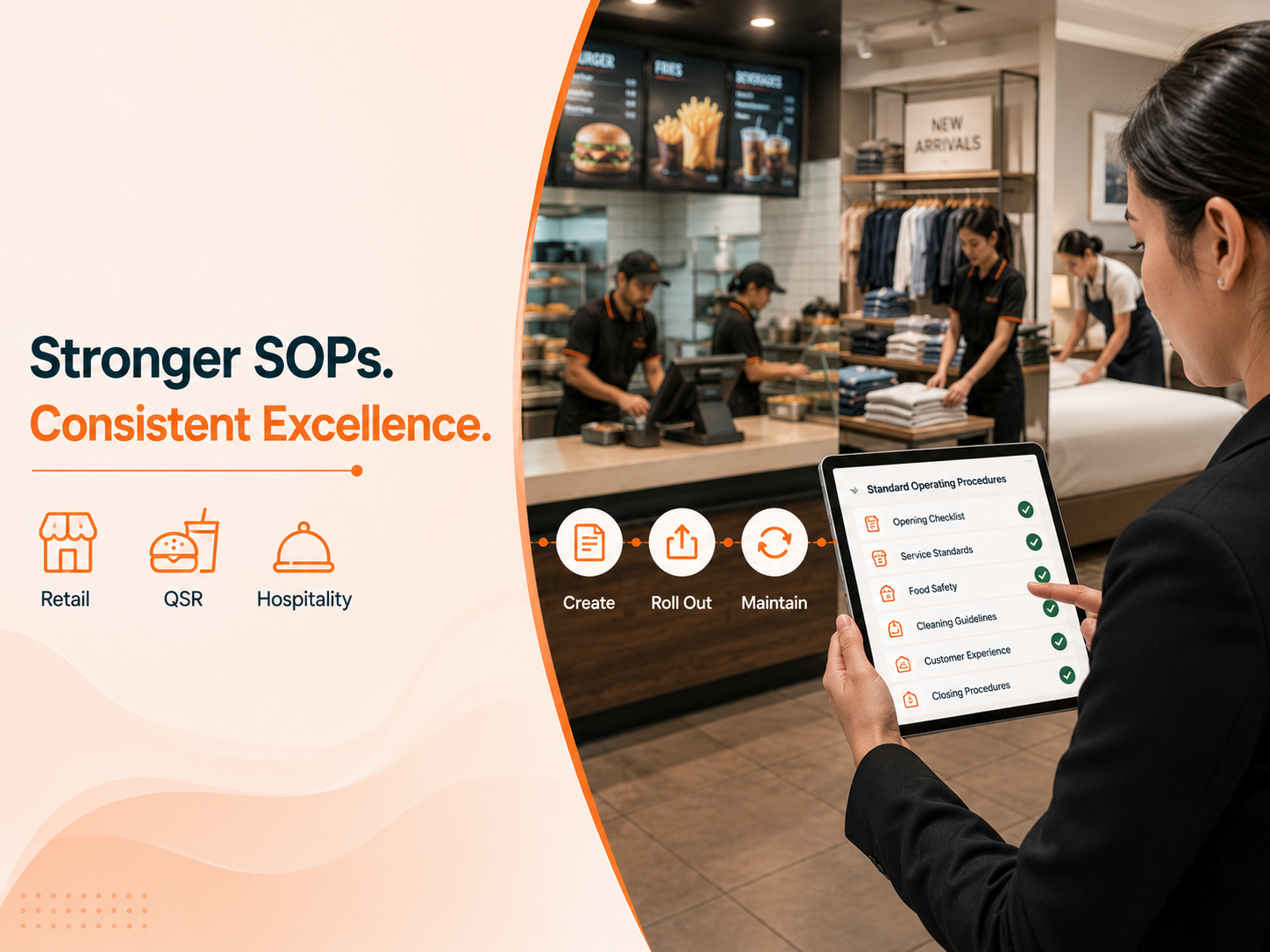
Standard Operating Procedures (SOPs): A Complete Guide for Multi-Location Businesses
Learn what SOPs are, why they matter for multi-location retail, QSR, and hospitality brands, and how to create, roll out, and maintain them …
Read more