

What Happens to Training Content 24 Hours After Your New Hire Learns It
Traditional onboarding is losing ground in QSR and retail. See what completion, retention, and turnover data reveal about switching to microlearning.
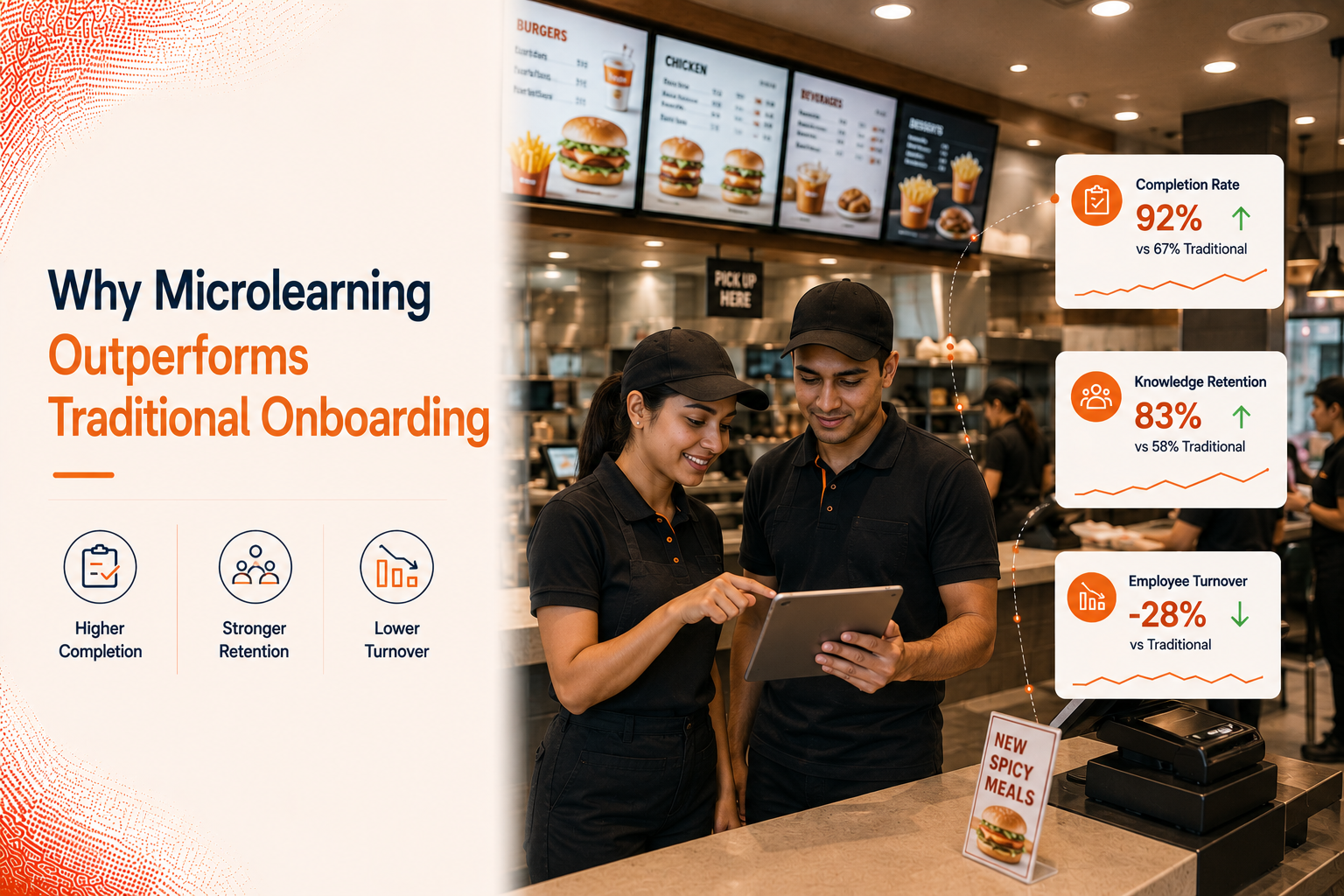
Every new hire in a QSR or retail chain goes through the same ritual: a stack of manuals, a long orientation video, and a quiz at the end that gets forgotten by the second shift. It's not that the content is wrong. It's that the format was never built for how frontline employees actually learn.
Microlearning has emerged as the alternative: short, focused lessons, usually five to ten minutes, delivered on mobile, right when an employee needs them. The question for operations leaders isn't whether microlearning is trendy. It's whether the data backs it up for high-turnover, multi-location environments like QSR and retail.
The completion gap is the first signal
Traditional e-learning courses are long, and long courses don't get finished. Employers have reported that a large share of traditional training budgets goes toward content employees never fully consume, often because dense, hour-long modules simply don't fit around a shift schedule. Microlearning inverts this: shorter lessons in the five-to-ten-minute range consistently show meaningfully higher completion rates than longer-format courses, largely because they can be finished in a single break or between tasks.
For a QSR or retail chain onboarding dozens of hourly employees a month across multiple locations, completion rate isn't a vanity metric. It's the difference between a new hire being certified on food-safety or POS procedures before their first solo shift, or not.
Retention: the forgetting curve is real
The underlying problem microlearning solves isn't attention span, it's memory decay. Learning science has long shown that people forget the majority of new information within days if it isn't reinforced. Long-form training front-loads everything at once, with no repetition built in, which is exactly the condition under which forgetting happens fastest.
Microlearning counters this with spaced repetition: short lessons revisited at intervals rather than a single info-dump. Multiple industry studies on corporate training report retention improvements in the range of 20 to 50% when spaced, bite-sized formats replace single-session courses. The exact number varies by study and industry, but the direction is consistent across nearly every dataset available: spaced, short-form learning sticks better than marathon sessions.
Where it matters most: onboarding speed and turnover
Retail and QSR have two problems traditional training wasn't designed to solve: high turnover and constant new-location rollouts. Structured onboarding overall, not microlearning alone, has been linked to significantly better three-year retention compared to informal or no structured onboarding. Microlearning fits naturally into structured onboarding because it aligns with how new hires actually absorb information under pressure: short, task-specific lessons tied to what they're about to do, not a syllabus front-loaded on day one.
Some real-world deployments illustrate the scale of the shift. Walmart's large-scale rollout of immersive, bite-sized training modules has been associated with measurable engagement and safety improvements, and other large employers have reported cutting onboarding timelines dramatically after moving away from long-form, classroom-style programs. These aren't retail-specific numbers pulled from a vendor's marketing page. They're the kind of outcomes operations leaders are increasingly citing as the bar for what "modern onboarding" should deliver.
What this means for multi-location operators
For a single-location business, the format of training is a preference. For a chain running dozens or hundreds of outlets, it's an operational lever:
- Faster time-to-productivity: new hires reach competence in days, not weeks, when lessons are broken into task-specific modules instead of one long orientation.
- Consistency across locations: every store gets the same five-minute module instead of a manager's interpretation of a 40-page manual.
- Lower cost to update: when a SOP changes, you edit one short module instead of re-recording a full training video.
- Better fit for hourly, high-turnover roles: microlearning matches the reality of shift work, where employees don't have an hour of uninterrupted time to sit through a course.
The takeaway
The data doesn't say traditional training is worthless. Some skills genuinely need longer, hands-on sessions. But for the bulk of what QSR and retail chains need to onboard fast, POS procedures, food safety, customer service basics, compliance refreshers, the evidence consistently favors short, spaced, mobile-first lessons over long-form courses that get skipped, forgotten, or delivered inconsistently across locations.
For multi-location operators, the real cost of traditional onboarding isn't the time it takes to build. It's the weeks it takes new hires to become productive, and the inconsistency it creates across stores. Microlearning, delivered through a connected LMS, closes both gaps at once.
NymbleUp's LMS lets QSR, retail, and hospitality chains deliver short, role-specific training modules across every location, keeping onboarding fast and consistent without rebuilding a full training program every time a process changes.
Ready to cut onboarding time across your stores? Get in touch to see NymbleUp's LMS in action.
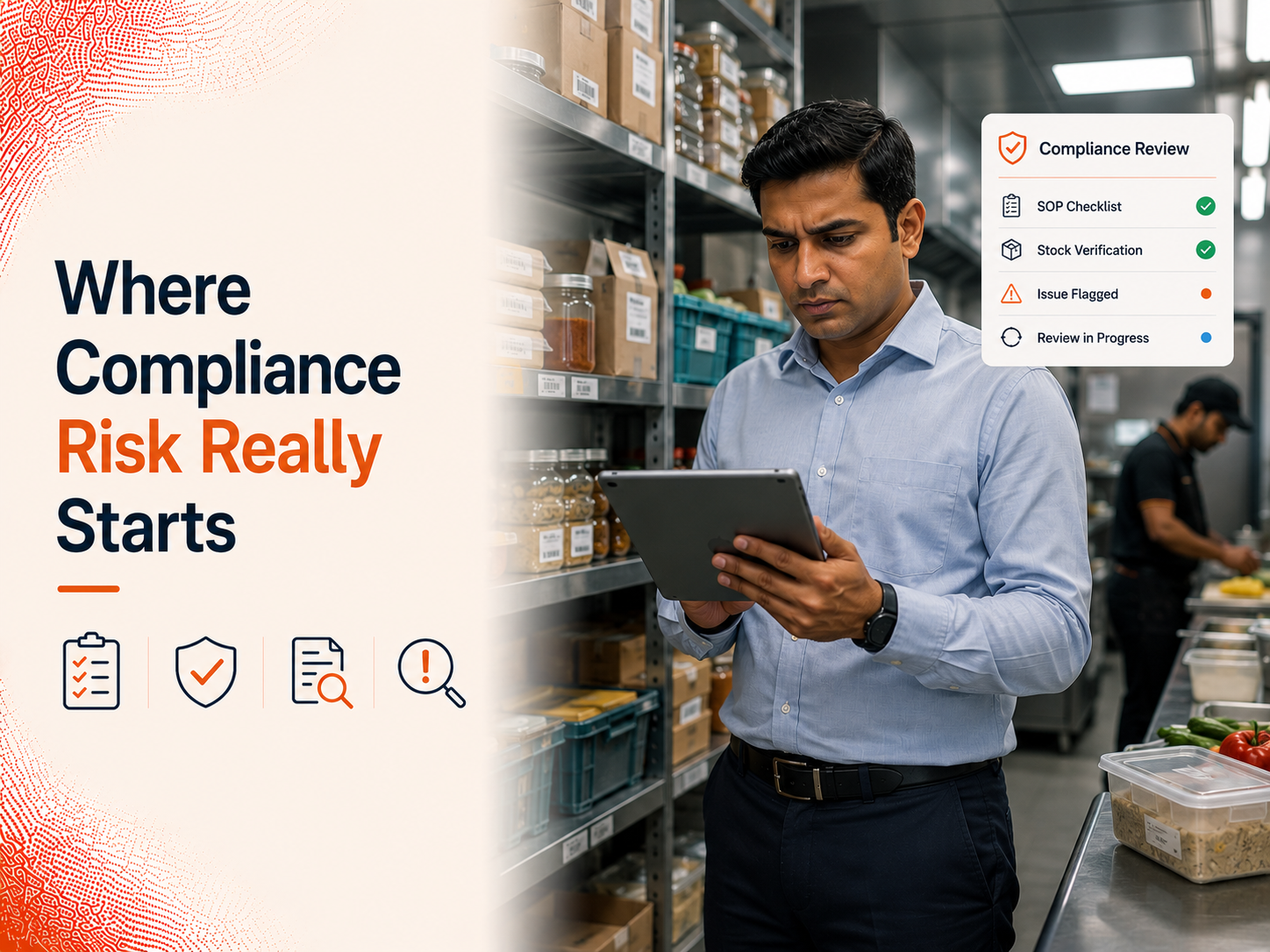
What Your Failed Audits Are Actually Trying to Tell You
Skill gaps rarely show up as skill gaps. They show up as failed audits and compliance incidents. Here's why the gap exists, and what closing…
Read more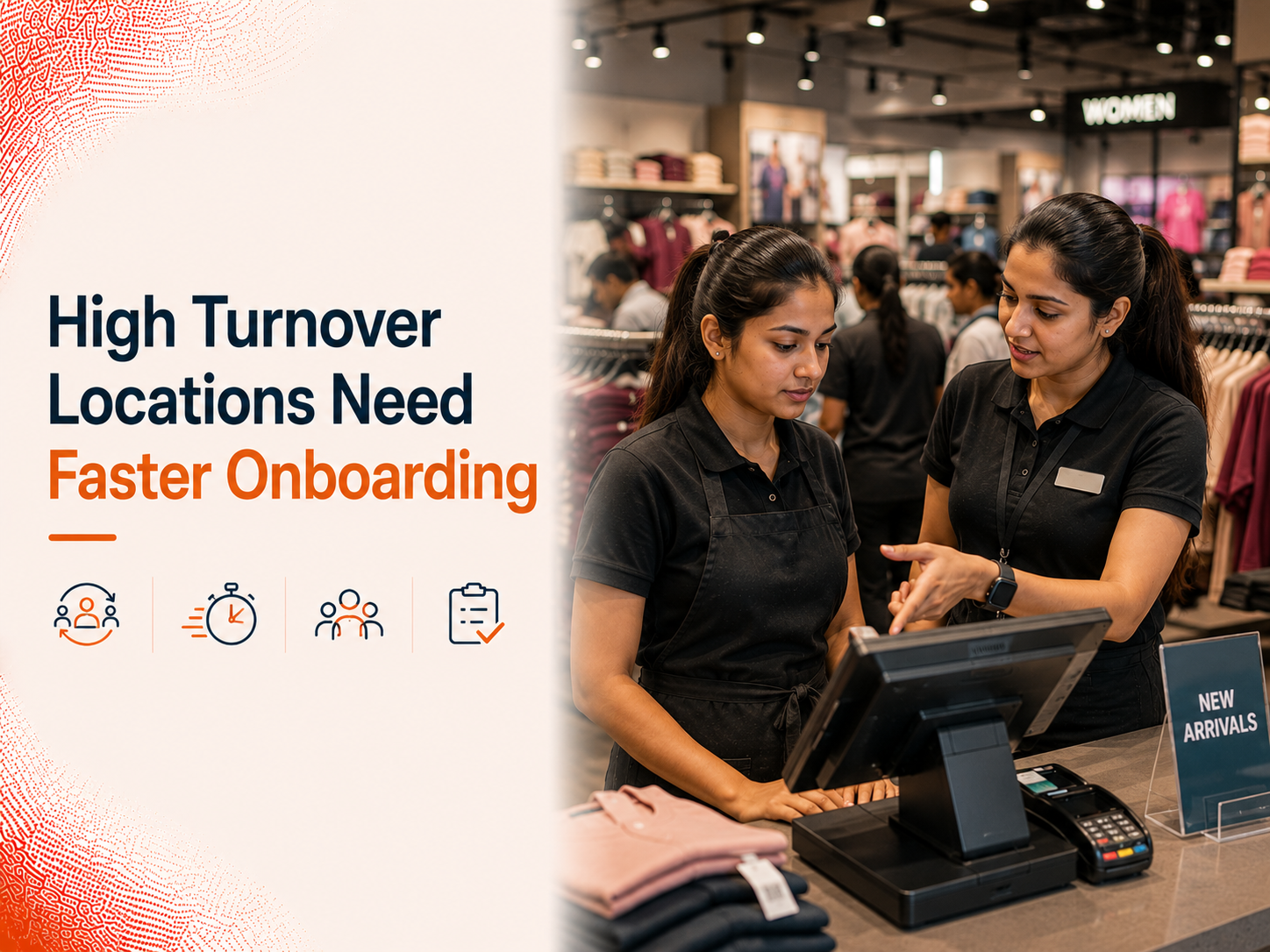
Why High Turnover Locations Need Faster Onboarding, Not More Training Time
QSR and retail turnover often exceeds 60 to 100% a year. Here's why longer training programs don't fix it, and what faster onboarding actual…
Read more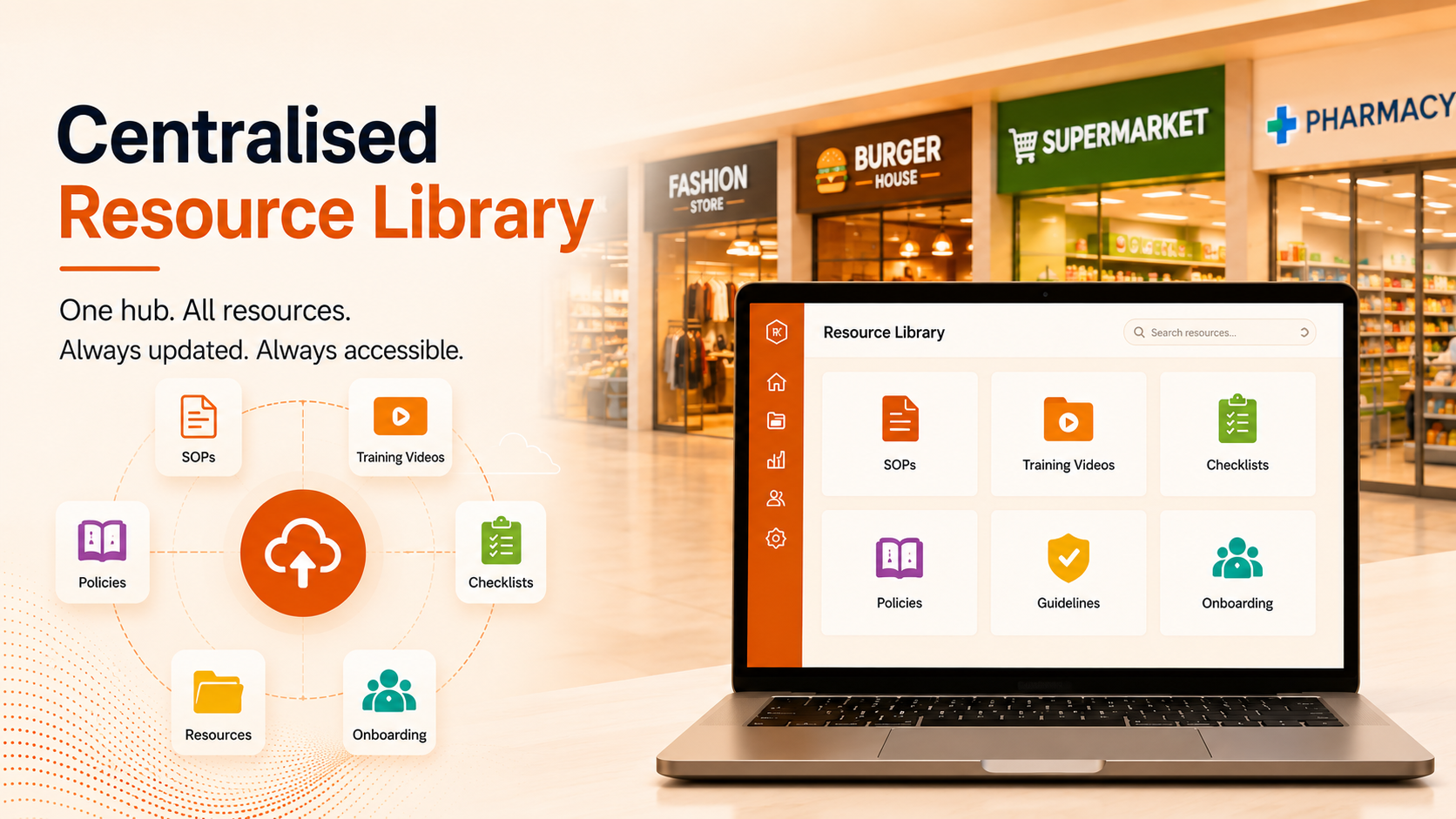
Why Every Multi-Location Business Needs a Centralised Resource Library
A Centralised Resource Library helps businesses bring all training materials, SOPs, compliance documents, and onboarding resources into one …
Read more