

What Is an Employee Roster? Everything You Need to Know
Learn what an employee roster is, why it matters, the different types of employee rosters, common rostering challenges, and how businesses can manage employee schedules more efficiently.
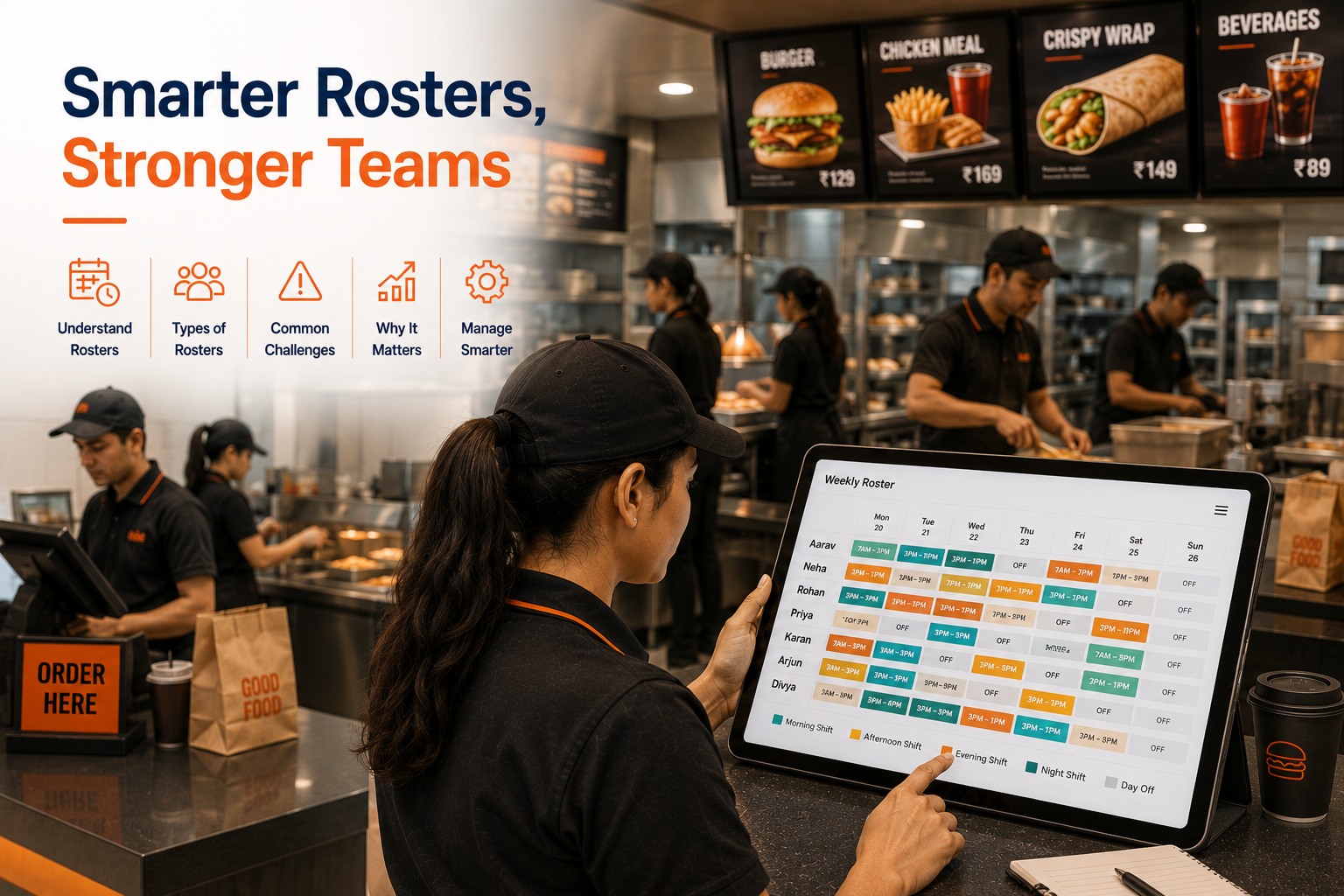
Whether you manage a retail store, restaurant, supermarket, pharmacy, hotel, or any other shift-based business, one question needs to be answered every day:
Who is working, where, and when?
As businesses grow, answering that question becomes more complex. Different shifts, multiple locations, employee availability, and varying customer demand all need to be coordinated while ensuring operations continue without disruption.
This is where an employee roster becomes essential.
A well-planned roster provides structure to daily operations by assigning employees to the right shifts and locations. It helps managers organize their workforce while giving employees clarity about their schedules and responsibilities.
In this guide, we'll explore what an employee roster is, why it's important, the different types of rosters businesses use, and the challenges involved in managing employee schedules.
What Is an Employee Roster?
An employee roster is a work schedule that outlines when employees are expected to work, which shifts they are assigned to, and, where applicable, the location or department they will work in.
It acts as a central schedule for managers and employees, ensuring that every shift is adequately staffed and business operations continue smoothly.
A typical employee roster includes:
- Employee names
- Shift timings
- Working days
- Weekly offs
- Store, department, or work location
- Job role or responsibility
- Approved leave information, where applicable
Although employee rosters were traditionally created using paper schedules or spreadsheets, many businesses now rely on digital platforms to manage schedules more efficiently, especially across multiple locations.
Why Employee Rosters Matter
An employee roster is much more than an administrative document. It directly influences operational efficiency, labor costs, employee satisfaction, and customer experience.
Here are some of the biggest benefits of maintaining an effective employee roster.
1. Better Workforce Utilization
A structured roster helps managers allocate employees where they are needed most. This reduces situations where one shift is understaffed while another has more employees than required.
2. Improved Customer Experience
Having the right employees available during operating hours helps businesses maintain service standards, reduce waiting times, and provide better support to customers.
3. Better Labor Cost Management
Labor is one of the largest operating expenses for many businesses. A well-managed roster helps distribute working hours efficiently and provides better visibility into staffing requirements.
4. Improved Employee Satisfaction
Employees value schedules that are communicated clearly and planned in advance. Organized rosters reduce confusion, improve transparency, and make it easier for employees to manage their work-life balance.
5. Operational Consistency Across Locations
For businesses operating multiple stores or outlets, standardized employee rosters help ensure similar staffing practices across every location, making day-to-day operations more consistent.
Types of Employee Rosters
There is no single roster that works for every business. The right approach depends on operating hours, workforce size, and business requirements.
Fixed Roster
Employees work the same shifts each week. Fixed rosters are commonly used in businesses with predictable workloads and consistent operating hours.
Rotating Roster
Employees rotate between different shifts according to a planned schedule. This approach is useful for businesses that operate extended hours or around the clock.
Flexible Roster
Schedules change based on operational requirements and employee availability. Flexible rosters are common in retail and hospitality, where customer demand can vary throughout the week.
Split Shift Roster
Employees work two separate shifts during the same day with a break in between. Businesses experiencing peak demand during specific hours often use this approach to improve staffing efficiency.
Common Challenges in Employee Rostering
Creating a roster may sound straightforward, but it becomes increasingly challenging as businesses grow and operations become more dynamic.
Managers often deal with challenges such as:
- Managing employee schedules across multiple locations.
- Accommodating leave requests and shift preferences.
- Handling last-minute absences and shift changes.
- Coordinating full-time and part-time employees.
- Balancing staffing requirements across different shifts.
- Maintaining fairness in shift allocation.
- Keeping employees informed about schedule updates.
Without a structured rostering process, these challenges can consume valuable managerial time and increase the likelihood of scheduling errors.
Manual Rostering vs Digital Rostering
Many businesses begin with spreadsheets, printed schedules, or even whiteboards to manage employee rosters.
While these methods may work for smaller teams, they often become difficult to maintain as operations expand.
Updating schedules manually can be time-consuming, communicating last-minute changes becomes more difficult, and managing multiple locations often leads to version control issues.
Digital rostering simplifies the process by allowing managers to create, update, and share schedules from a centralized platform. Employees can access the latest roster in real time, while managers gain better visibility into staffing across locations.
As businesses continue to grow, digital rostering provides greater flexibility, improves communication, and reduces the administrative effort involved in managing employee schedules.
Employee Rosters Are Part of a Bigger Workforce Strategy
An employee roster helps answer an important operational question: who is working and when?
However, creating a roster is only one part of workforce management.
As organizations expand, employee rostering becomes a critical operational function that supports productivity, service quality, workforce coordination, and business continuity.
Conclusion
An employee roster is one of the most important tools for managing a shift-based workforce.
It provides structure, improves visibility, helps managers coordinate teams, and ensures employees know when and where they are expected to work.
Whether you're managing a single location or a growing network of stores, an effective employee roster helps businesses maintain operational consistency while supporting both employees and customers.
As workforce management continues to evolve, businesses are increasingly moving beyond manual schedules and adopting digital rostering solutions that make employee scheduling simpler, more transparent, and easier to manage at scale.
10 Workforce Scheduling Best Practices Every Business Should Follow
Discover 10 workforce scheduling best practices that help businesses improve staffing efficiency, control labor costs, increase employee sat…
Read more
How Historical Data Improves Workforce Scheduling
Learn how historical data helps businesses improve workforce scheduling by identifying demand patterns, optimizing staffing levels, reducing…
Read more
How Overstaffing and Understaffing Affect Profitability and Customer Experience
Getting staffing levels wrong can cost businesses far more than additional payroll expenses. Overstaffing reduces productivity and profitabi…
Read more