

How Historical Data Improves Workforce Scheduling
Learn how historical data helps businesses improve workforce scheduling by identifying demand patterns, optimizing staffing levels, reducing labor costs, and delivering better customer experiences.
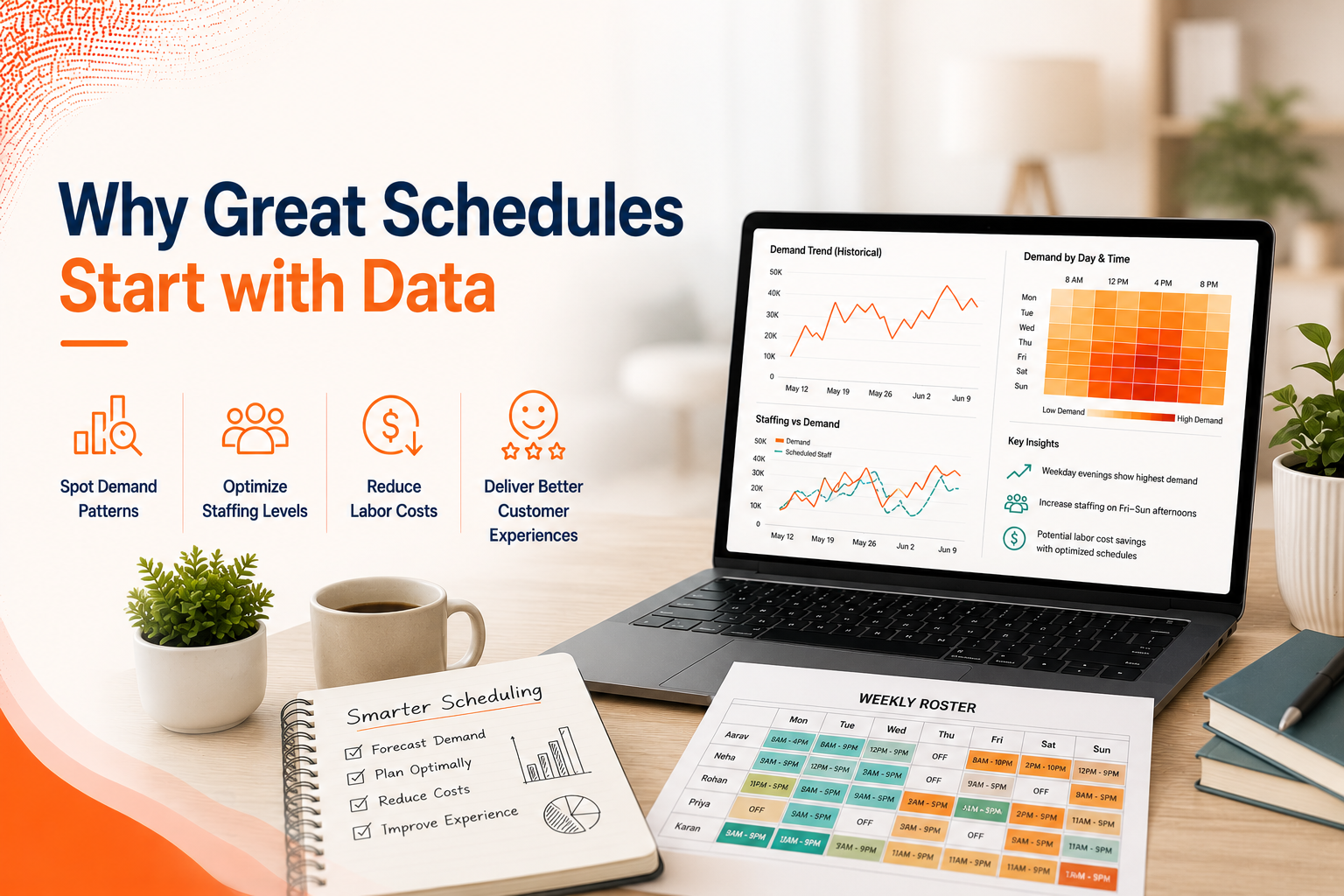
Creating a workforce schedule isn't always straightforward. Schedule too many employees, and labor costs increase unnecessarily.
Schedule too few, and businesses risk longer customer wait times, slower service, increased employee workload, and missed sales opportunities.
Finding the right balance is one of the biggest challenges for businesses with shift-based workforces.
While manager experience and operational knowledge remain valuable, they don't always tell the complete story. Customer demand changes throughout the day, across seasons, during promotional campaigns, and around public holidays.
This is where historical data becomes an important part of workforce scheduling.
By understanding what has happened in the past, businesses can better understand demand patterns and make more informed staffing decisions.
What Is Historical Data?
Historical data refers to information collected from previous business operations over a period of time.
Instead of relying on assumptions, businesses use this information to identify recurring trends, understand customer demand, and recognize patterns that influence workforce requirements.
Depending on the industry, historical data may include:
- Daily or weekly sales
- Customer footfall
- Transaction volumes
- Employee attendance
- Leave records
- Overtime hours
- Peak shopping periods
- Seasonal demand
- Promotional campaigns
- Public holidays and special events
Rather than looking at individual numbers, businesses analyze these metrics together to build a clearer understanding of how operations change over time.
Why Historical Data Matters in Workforce Scheduling
Historical data provides operational visibility that helps businesses make more informed workforce decisions. Some of its biggest advantages include:
1. Better Visibility into Demand Patterns
Historical trends help businesses identify recurring periods of high and low demand.
This could include busy weekends, seasonal shopping peaks, festive periods, or quieter weekdays.
Understanding these patterns makes it easier to anticipate staffing requirements.
2. Improved Workforce Allocation
Not every shift requires the same number of employees.
Historical data helps managers understand when additional staff may be required and when fewer employees can comfortably manage operations.
3. Better Labor Cost Management
Labor is one of the largest operating expenses for retail and hospitality businesses.
Understanding historical demand helps businesses align staffing with operational needs, reducing unnecessary labor costs while maintaining service quality.
4. Improved Customer Experience
Having the right employees available during busy periods helps reduce waiting times, improve service levels, and ensure stores continue operating efficiently even during peak demand.
5. Greater Confidence in Operational Decisions
Historical data supports scheduling decisions with measurable information instead of relying solely on assumptions or previous experience.
Managers can make decisions with greater confidence because they are supported by real business trends.
What Historical Data Should Businesses Track?
Businesses don't need to collect every available metric.
The most valuable information is the data that directly influences workforce requirements.
Key operational metrics include:
- Sales trends by hour, day, week, or month
- Customer footfall
- Transaction volumes
- Employee attendance
- Leave patterns
- Overtime records
- Seasonal demand
- Public holidays
- Promotional campaigns
- Special events that affect customer traffic
The combination of metrics will vary depending on the industry, business model, and operating hours.
How Different Industries Use Historical Data
Although the concept remains the same, every industry monitors different operational trends.
Retail
Retail businesses commonly review:
- Hourly and daily sales
- Customer footfall
- Seasonal shopping patterns
- Promotional campaigns
These insights help retailers understand when customer traffic is likely to increase throughout the year.
Restaurants and QSRs
Restaurant businesses often monitor:
- Lunch and dinner rush periods
- Weekend demand
- Delivery order volumes
- Seasonal dining trends
Understanding these patterns helps businesses prepare for fluctuations in customer demand.
Supermarkets
Supermarkets typically review:
- Weekend shopping trends
- Festival demand
- Promotional activity
- Monthly purchasing patterns
These trends provide valuable insight into staffing requirements during high-volume trading periods.
This helps businesses understand when additional staff may be required to support operations.
Common Misconceptions About Historical Data
Historical data is extremely valuable, but there are a few common misconceptions.
1. Historical Data Predicts the Future Perfectly
Historical trends provide useful guidance, but unexpected events, weather conditions, local activities, and changing customer behaviour can still influence demand.
2. More Data Always Means Better Decisions
Collecting unnecessary information often creates complexity rather than clarity. Businesses benefit most from tracking operational data that directly supports workforce decisions.
3. Historical Data Replaces Operational Experience
Historical insights and manager experience should complement each other. The strongest workforce decisions combine business knowledge with operational data.
Historical Data Helps Businesses Make Better Workforce Decisions
Historical data doesn't create workforce schedules by itself.
Instead, it provides the information businesses need to understand operational patterns, recognise changing demand, and make more informed staffing decisions.
Over time, regularly reviewing historical data gives managers greater visibility into workforce requirements and helps businesses respond more effectively to changing operational conditions.
Conclusion
Historical data is one of the most valuable resources for businesses managing shift-based workforces.
By understanding past sales, customer traffic, attendance patterns, and seasonal demand, businesses gain valuable insights that support more informed workforce scheduling decisions.
As workforce management becomes increasingly data-driven, businesses that effectively use historical insights will be better positioned to balance labor costs, support employees, and deliver consistent customer experiences.
10 Workforce Scheduling Best Practices Every Business Should Follow
Discover 10 workforce scheduling best practices that help businesses improve staffing efficiency, control labor costs, increase employee sat…
Read more
What Is an Employee Roster? Everything You Need to Know
Learn what an employee roster is, why it matters, the different types of employee rosters, common rostering challenges, and how businesses c…
Read more
How Overstaffing and Understaffing Affect Profitability and Customer Experience
Getting staffing levels wrong can cost businesses far more than additional payroll expenses. Overstaffing reduces productivity and profitabi…
Read more