

10 Workforce Scheduling Best Practices Every Business Should Follow
Discover 10 workforce scheduling best practices that help businesses improve staffing efficiency, control labor costs, increase employee satisfaction, and deliver better customer experiences.
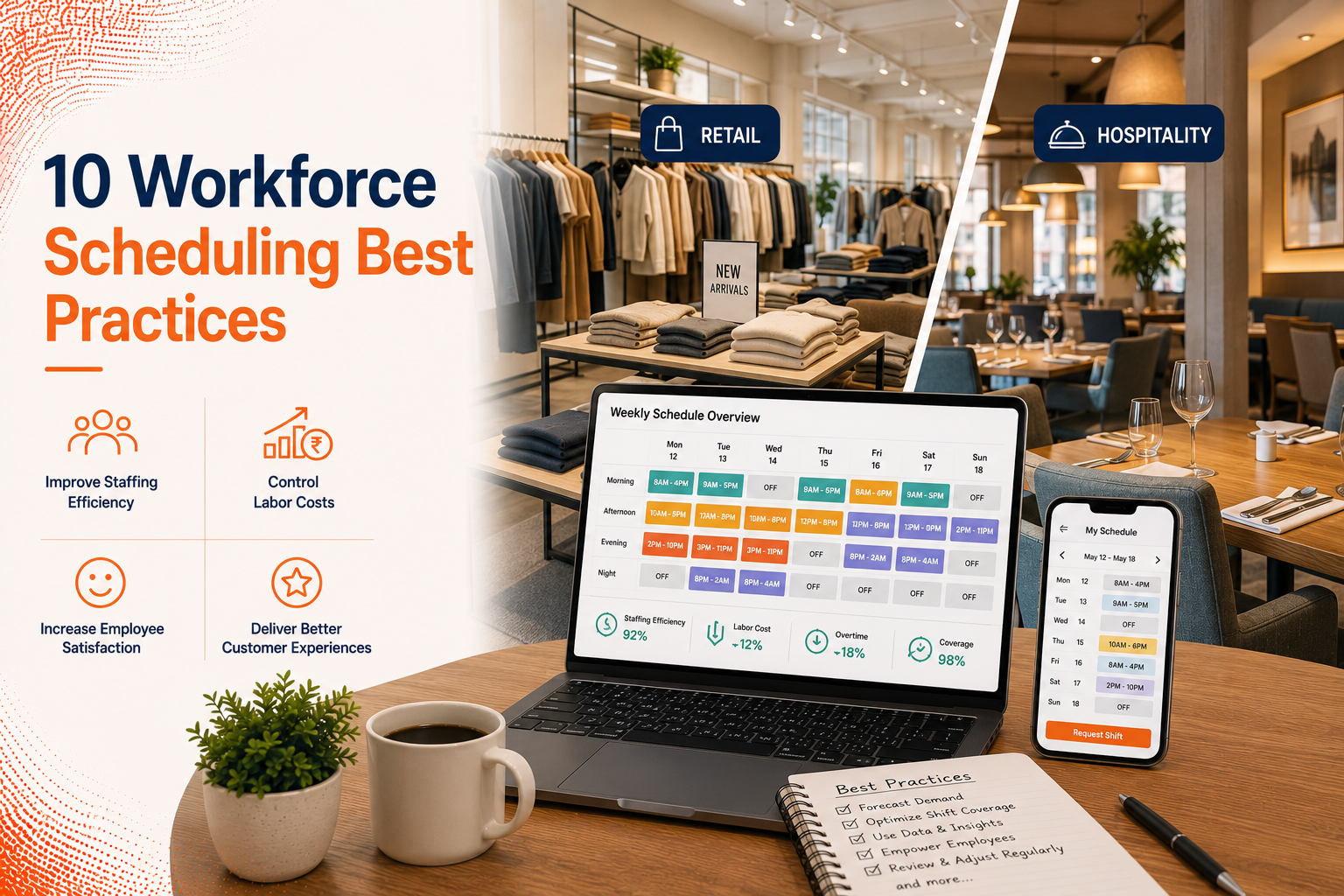
Workforce scheduling has a direct impact on how efficiently a business operates.
A well-planned schedule ensures the right employees are available at the right time, helping businesses maintain service quality, manage labor costs, and support day-to-day operations.
Poor scheduling, on the other hand, can lead to understaffed shifts, unnecessary overtime, inconsistent customer experiences, and employee dissatisfaction.
While every business has unique workforce requirements, there are several scheduling principles that consistently contribute to better operational outcomes.
Here are ten workforce scheduling best practices that every business should consider.
1. Schedule Based on Business Demand
Every day doesn't require the same level of staffing.
Customer demand can vary depending on weekdays, weekends, seasonal trends, promotional campaigns, or business hours.
Aligning schedules with expected demand helps businesses maintain service standards while using labor resources more efficiently.
2. Match Employees to the Right Skills
Availability alone shouldn't determine who is assigned to a shift.
Employees have different skills, certifications, and levels of experience.
Assigning the right people to the right roles helps businesses maintain operational efficiency and ensures critical responsibilities are always covered.
3. Publish Schedules in Advance
Advance scheduling also gives managers more time to address potential staffing gaps before shifts begin.
4. Consider Employee Availability
An effective workforce schedule balances business requirements with employee availability wherever possible.
Taking approved leave, shift preferences, and availability into account creates more practical schedules while improving employee satisfaction.
5. Prepare for Peak Trading Periods
Certain days and seasons consistently require additional staffing.
Businesses should identify recurring high-demand periods such as weekends, public holidays, festivals, promotional campaigns, or major local events and prepare schedules accordingly.
Planning ahead helps reduce operational pressure during busy periods.
6. Build Flexibility Into Every Schedule
Even the most carefully planned schedules can change.
Unexpected absences, higher customer demand, or operational disruptions can affect staffing requirements.
Building flexibility into schedules allows managers to respond more effectively without significantly impacting daily operations.
7. Maintain Compliance With Labor Policies
Workforce schedules should align with applicable labor regulations and company policies.
This includes considerations such as maximum working hours, mandatory breaks, weekly offs, and overtime limits.
Following consistent scheduling policies helps businesses remain compliant while supporting employee well-being.
8. Standardize Scheduling Across Locations
For businesses operating multiple stores or outlets, maintaining a consistent scheduling approach is essential.
Standardized scheduling practices make it easier to manage teams, improve workforce visibility, and maintain similar service standards across locations.
9. Review Scheduling Trends Regularly
Creating a schedule is only one part of workforce management.
Managers should also review scheduling trends to understand how workforce requirements evolve over time.
Useful indicators to monitor include:
- Overtime patterns
- Employee attendance
- Shift coverage
- Labor utilization
- Staffing gaps
- Employee feedback
Regular reviews help identify recurring operational challenges and support continuous improvement.
10. Continuously Improve the Scheduling Process
Business requirements, customer expectations, and workforce needs continue to evolve.
Scheduling should be viewed as an ongoing process rather than a weekly administrative task.
Regularly reviewing schedules, gathering feedback, and refining scheduling approaches helps businesses remain efficient as operations grow and change.
Why Workforce Scheduling Matters
Effective workforce scheduling delivers benefits across the entire business.
When schedules are planned thoughtfully, organizations can:
- Improve operational efficiency.
- Deliver more consistent customer experiences.
- Utilize employees more effectively.
- Improve workforce visibility.
- Reduce scheduling conflicts.
- Support long-term business growth.
Rather than viewing scheduling as an administrative responsibility, leading businesses recognize it as a strategic function that contributes to operational success.
Conclusion
Workforce scheduling is about far more than assigning employees to shifts.
It is a continuous process of aligning people, operations, and business requirements to ensure the workforce is prepared to meet customer demand.
By following these best practices, businesses can improve workforce coordination, strengthen operational consistency, and create a better experience for both employees and customers.
As organizations grow, investing time in improving workforce scheduling processes becomes increasingly important for maintaining productivity, controlling labor costs, and supporting sustainable business growth.

How Historical Data Improves Workforce Scheduling
Learn how historical data helps businesses improve workforce scheduling by identifying demand patterns, optimizing staffing levels, reducing…
Read more
What Is an Employee Roster? Everything You Need to Know
Learn what an employee roster is, why it matters, the different types of employee rosters, common rostering challenges, and how businesses c…
Read more
How Overstaffing and Understaffing Affect Profitability and Customer Experience
Getting staffing levels wrong can cost businesses far more than additional payroll expenses. Overstaffing reduces productivity and profitabi…
Read more