

What Is Workforce Scheduling? A Complete Guide for Multi-Location Businesses
Learn what workforce scheduling is, why it matters, common challenges, best practices, and how AI-powered scheduling helps retail, restaurant, and hospitality businesses optimize labor costs and operations.
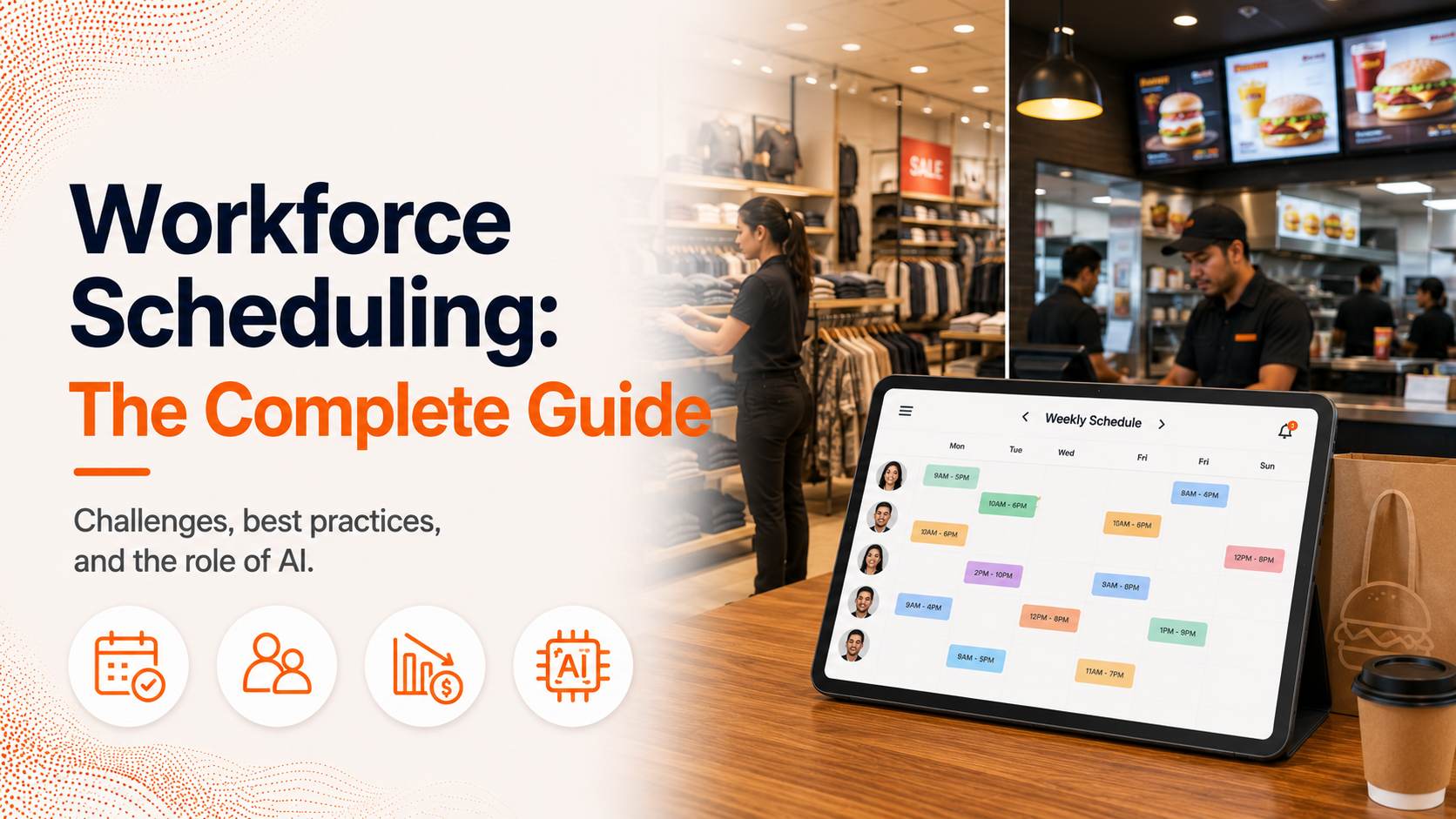
Workforce Scheduling: A Complete Guide for Multi-Location Retail and Hospitality Businesses
Managing employees across multiple locations is no easy task. Retail stores, restaurant chains, cafes, supermarkets, hotels, and other multi-location businesses face constant pressure to ensure the right people are available at the right place and at the right time.
At the same time, businesses must control labor costs, maintain service quality, accommodate employee availability, and respond to changing customer demand. This is where workforce scheduling becomes critical.
A well-planned workforce schedule helps businesses improve productivity, reduce labor costs, enhance employee satisfaction, and deliver a consistent customer experience across every location.
In this guide, we'll explore what workforce scheduling is, why it matters, common challenges businesses face, and how AI-powered workforce scheduling software is transforming workforce management.
What Is Workforce Scheduling?
Workforce scheduling is the process of assigning employees to shifts based on business requirements, employee availability, skills, labor regulations, and anticipated customer demand.
The objective is simple: ensure every location has the right number of employees available to meet operational needs without overstaffing or understaffing.
For multi-location businesses, workforce scheduling involves balancing staffing requirements across stores, restaurants, hotels, or outlets while maintaining efficiency and controlling labor expenses.
Whether you're managing 10 stores or 500 locations, effective employee scheduling plays a significant role in operational success.
Why Workforce Scheduling Matters
Many businesses view scheduling as an administrative task. In reality, workforce scheduling directly impacts profitability, customer satisfaction, and operational efficiency.
Better Labor Cost Management
Labor is often one of the largest operating expenses for retail and hospitality businesses. Poor scheduling can result in excessive overtime, overstaffing, or inefficient labor allocation. Optimized workforce scheduling helps ensure labor resources are aligned with actual business demand.
Improved Customer Experience
Customer experience often depends on having sufficient staff available during peak periods. When businesses are understaffed, customers face longer wait times, reduced service quality, and poor experiences. When schedules are aligned with demand patterns, businesses can maintain consistent service levels throughout the day.
Increased Employee Satisfaction
Employees prefer predictable schedules and fair shift allocation. Well-structured scheduling improves employee engagement, reduces scheduling conflicts, and contributes to better retention.
Operational Consistency Across Locations
For multi-location businesses, maintaining consistent staffing standards across all outlets is critical. A centralized workforce scheduling approach helps ensure every location follows the same staffing strategy and operational standards.
Common Workforce Scheduling Challenges
Despite its importance, workforce scheduling remains a challenge for many organizations.
Overstaffing
Overstaffing occurs when more employees are scheduled than necessary. This increases labor costs without generating additional revenue and can negatively impact profitability.
Understaffing
Understaffing creates operational bottlenecks, long customer wait times, increased employee stress, and lost sales opportunities.
Last-Minute Schedule Changes
Unexpected absences, shift swaps, and demand fluctuations can disrupt operations and place additional pressure on managers.
Managing Multiple Locations
As businesses expand, scheduling becomes increasingly complex. Managers often struggle to maintain visibility across locations, resulting in inconsistent staffing decisions.
Manual Scheduling Processes
Many businesses still rely on spreadsheets, paper rosters, or messaging platforms to manage schedules. Manual scheduling consumes valuable managerial time and increases the risk of errors.
Signs Your Workforce Scheduling Process Needs Improvement
Many organizations don't realize their scheduling process is inefficient until operational issues begin affecting performance.
Some common warning signs include:
- Frequent overtime costs
- Regular staff shortages
- Constant shift changes
- Employee complaints about scheduling
- Difficulty managing multiple locations
- High absenteeism rates
- Managers spending hours creating schedules
- Rising labor costs despite stable business volumes
If these challenges sound familiar, it may be time to rethink your workforce management strategy.
How Workforce Scheduling Has Evolved
- From manual planning → to automated schedule generation
- From spreadsheets → to centralized workforce management
- From reactive staffing decisions → to predictive workforce planning
- From limited visibility → to real-time workforce insights
- From scheduling errors → to data-driven accuracy
- From labor inefficiencies → to optimized staffing levels
AI-powered scheduling enables businesses to proactively manage staffing requirements rather than reacting to issues after they occur.
Key Features of Modern Workforce Scheduling Software
Modern workforce scheduling solutions offer capabilities that go far beyond creating shift rosters.
Shift Planning and Scheduling
Create schedules based on business needs, employee availability, and staffing requirements.
Employee Availability Management
Managers can track employee availability and preferences to create more effective schedules.
Multi-Location Workforce Management
Centralized scheduling enables businesses to manage staffing across multiple outlets from a single platform.
Overtime Monitoring
Track overtime hours and prevent unnecessary labor costs.
Demand Forecasting
Use historical data and business trends to predict future staffing requirements.
Real-Time Schedule Updates
Managers and employees can instantly access schedule changes through mobile devices.
Workforce Analytics
Gain visibility into labor utilization, attendance trends, scheduling efficiency, and workforce productivity.
Workforce Scheduling Best Practices
Businesses can improve scheduling outcomes by following a few proven practices.
Schedule Based on Demand
Use historical sales data, footfall trends, occupancy rates, or transaction volumes to determine staffing requirements.
Plan for Peak Periods
Identify high-demand periods and schedule employees accordingly.
Monitor Labor Costs Regularly
Review labor performance metrics to ensure staffing levels remain aligned with business objectives.
Improve Schedule Visibility
Provide employees with easy access to schedules and updates.
Leverage Scheduling Automation
Automation reduces administrative workload and helps managers focus on operational priorities.
Workforce Scheduling in Retail Businesses
Retail businesses often experience fluctuating customer traffic throughout the day, week, and year.
Effective retail workforce scheduling helps businesses:
- Align staffing with footfall patterns
- Manage seasonal demand
- Reduce overtime expenses
- Improve store productivity
- Deliver consistent customer experiences
For growing retail chains, centralized scheduling becomes essential to maintain operational consistency across all stores.
Workforce Scheduling in Restaurant and QSR Chains
Restaurants and QSR chains operate in highly dynamic environments where staffing needs can change rapidly.
Effective restaurant workforce scheduling helps businesses:
- Manage lunch and dinner rush periods
- Improve customer service levels
- Control labor costs
- Reduce employee burnout
- Improve operational efficiency
Balancing service quality and labor optimization is one of the biggest workforce management challenges in the restaurant industry.
Workforce Scheduling in Hotels and Hospitality Businesses
Hotels require staffing across multiple departments including housekeeping, front office, maintenance, food and beverage, and guest services.
Effective workforce scheduling helps hospitality businesses:
- Improve guest experiences
- Maintain service standards
- Optimize labor allocation
- Improve workforce productivity
- Manage staffing during peak occupancy periods
How AI Is Transforming Workforce Scheduling
Artificial intelligence is changing how businesses approach workforce management.
Instead of relying solely on manager intuition, AI-powered workforce scheduling software uses data-driven insights to make smarter staffing decisions.
Organizations can now:
- Forecast staffing requirements more accurately
- Optimize labor allocation
- Reduce overtime costs
- Improve workforce utilization
- Respond quickly to operational changes
- Increase scheduling efficiency across locations
As businesses continue to expand, AI-driven workforce scheduling will play an increasingly important role in improving operational performance.
Conclusion
Workforce scheduling is no longer just about assigning shifts. It is a strategic business function that directly impacts labor costs, customer experience, employee satisfaction, and operational efficiency.
For multi-location retail and hospitality businesses, effective workforce scheduling helps ensure the right employees are available at the right time while maintaining operational consistency and controlling costs.
As workforce challenges become more complex, businesses are increasingly turning to AI-powered workforce scheduling software to automate planning, improve visibility, and optimize workforce performance across every location.
By investing in smarter workforce scheduling practices today, businesses can build more efficient operations and create better experiences for both employees and customers.
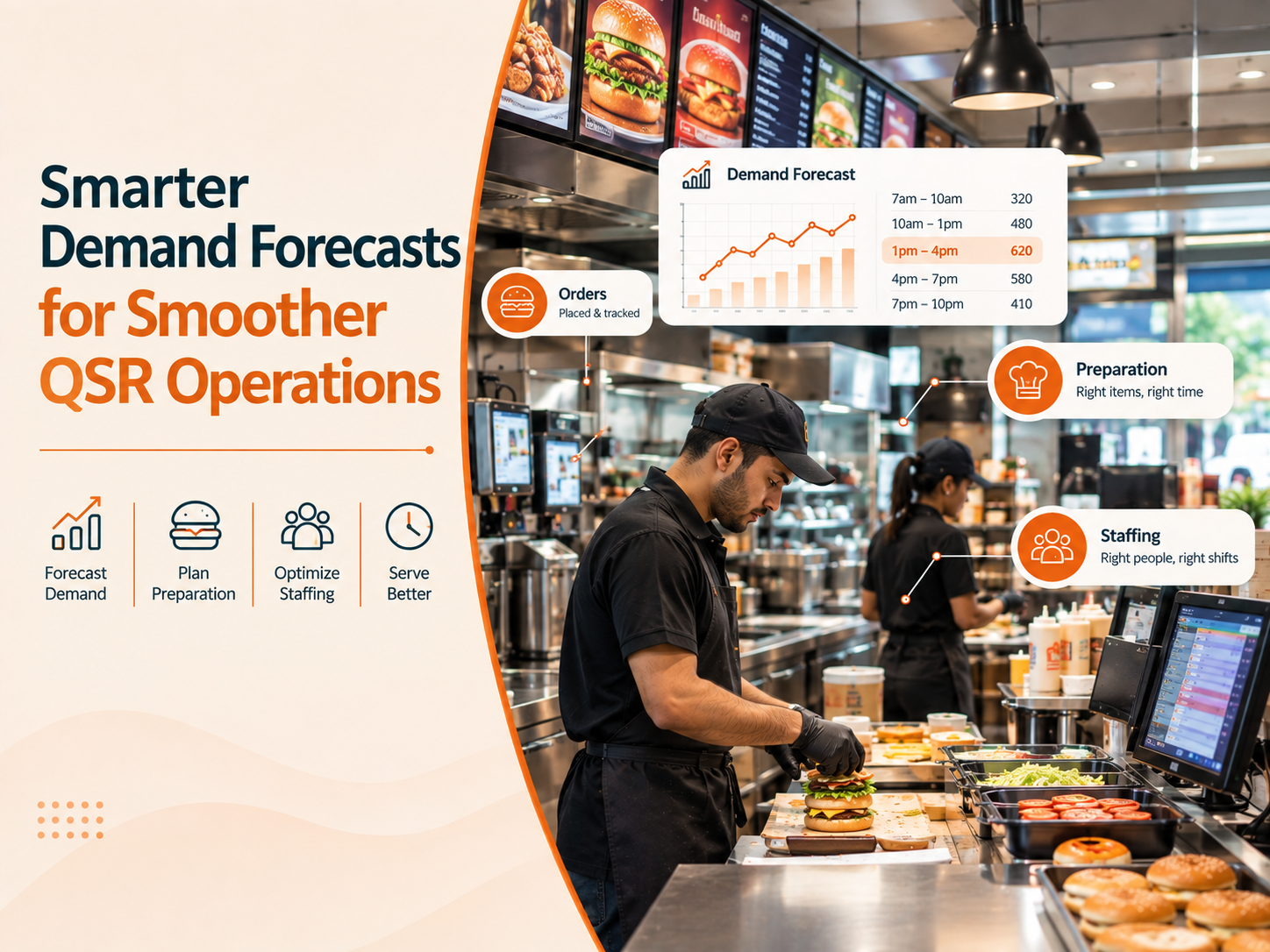
Demand Forecasting in QSR: How Outlets Predict Orders, Prep, and Staffing
Learn how QSR demand forecasting helps predict orders, plan food preparation, optimize staffing, manage perishability, and improve outlet op…
Read more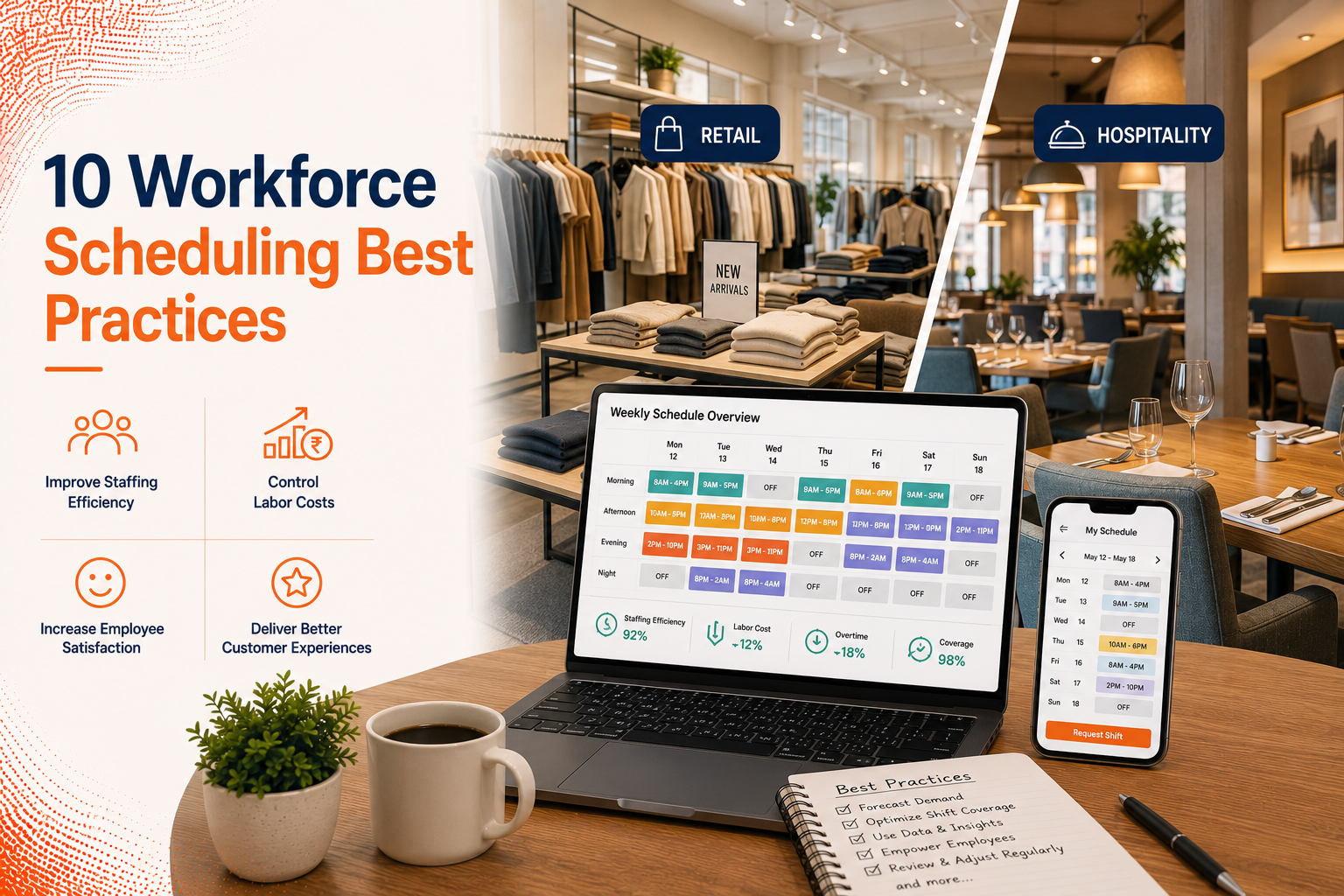
10 Workforce Scheduling Best Practices Every Business Should Follow
Discover 10 workforce scheduling best practices that help businesses improve staffing efficiency, control labor costs, increase employee sat…
Read more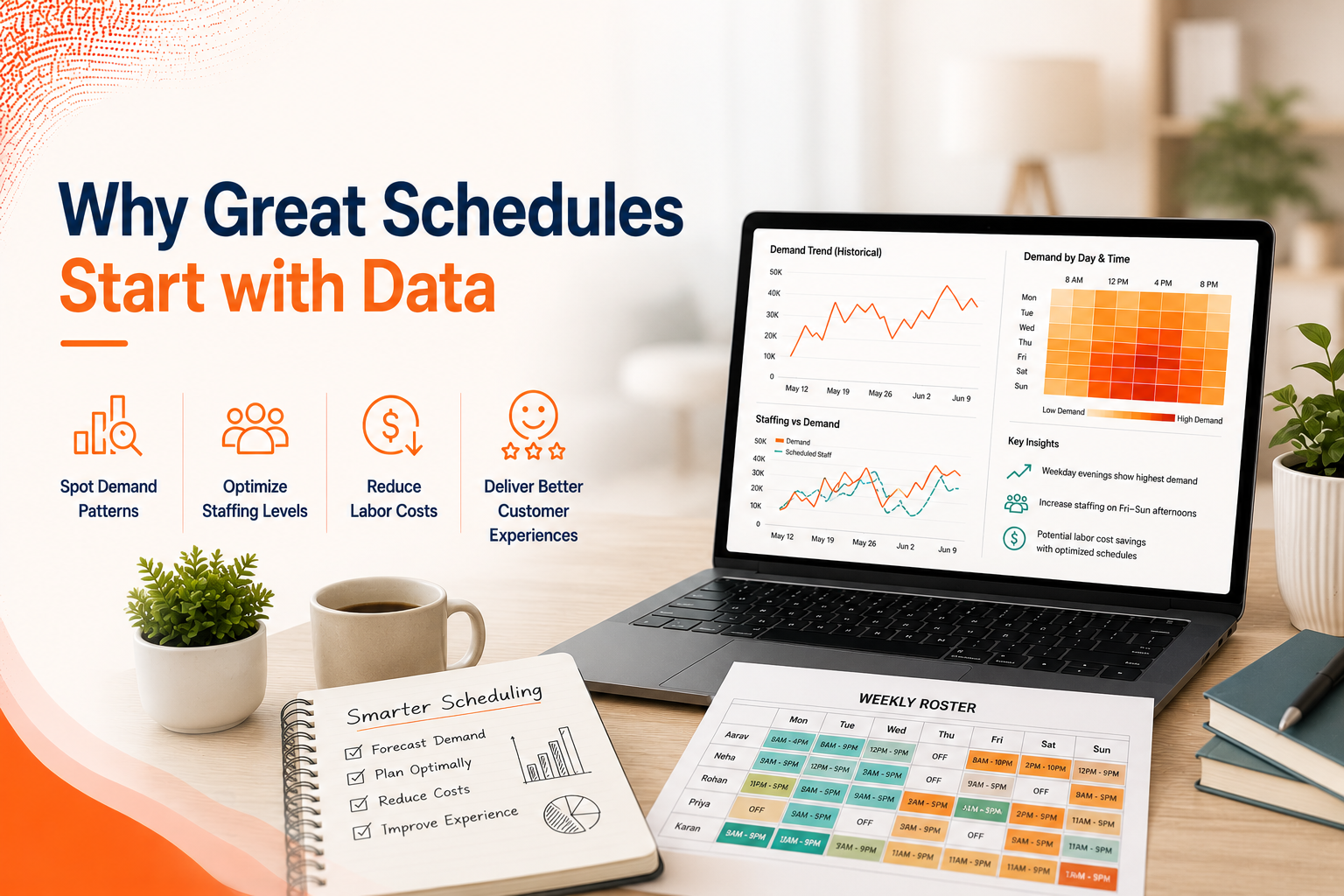
How Historical Data Improves Workforce Scheduling
Learn how historical data helps businesses improve workforce scheduling by identifying demand patterns, optimizing staffing levels, reducing…
Read more