

Incident Management in QSR: Why Response Speed Now Determines Brand Reputation
QSR incidents now go public before they're reported internally. Here's how incident management systems close that gap and protect brand reputation.
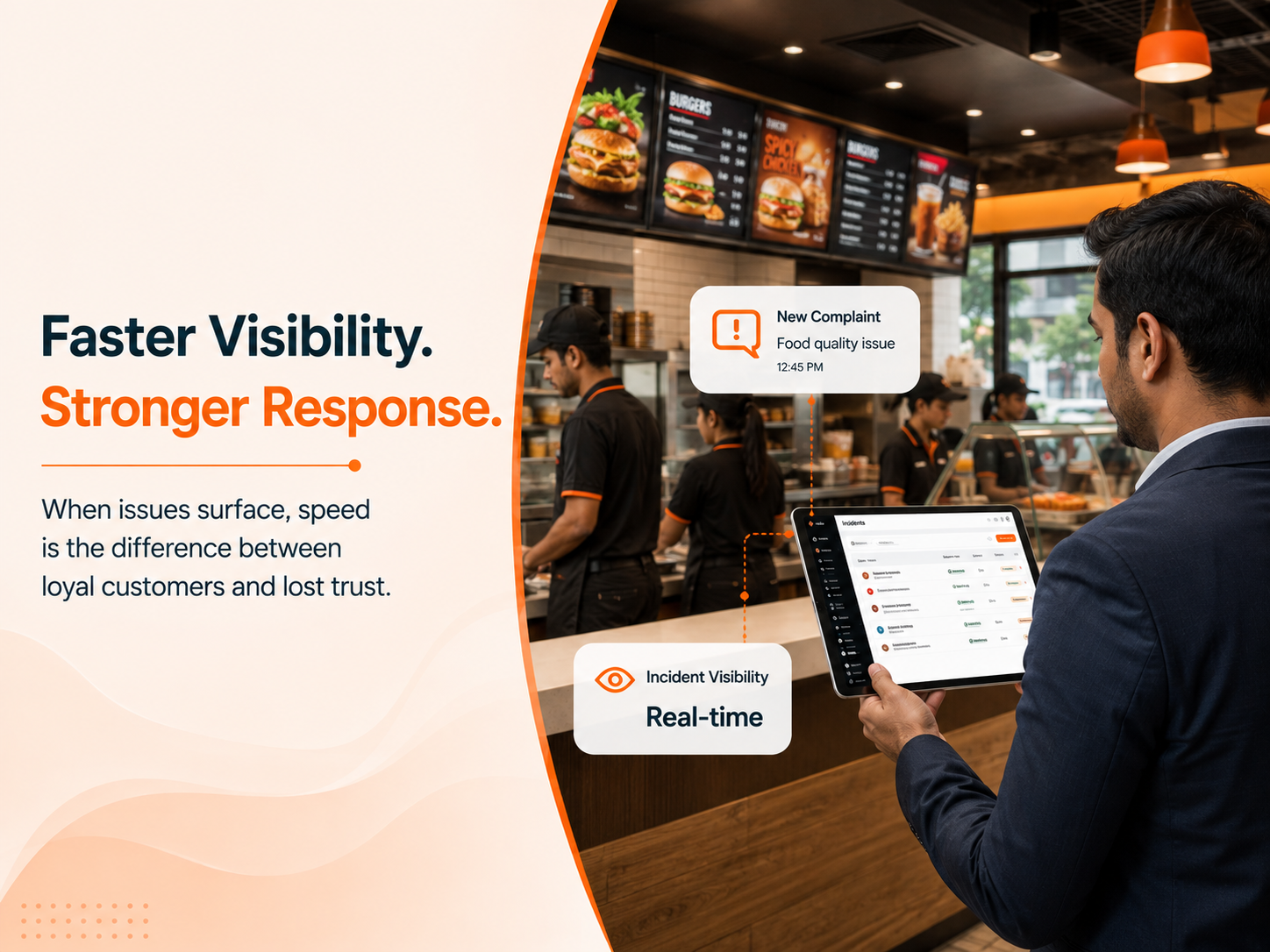
Why Incident Reporting Speed Has Become a QSR Priority
A customer has a bad experience at one of your locations. Undercooked food, a hygiene issue, a rude interaction at the counter, a drive-thru wait with no explanation. They pull out their phone before they've even pulled out of the lot. By the time anyone at head office hears about it, it's not a customer complaint anymore. It's a public post, and the brand's silence is already part of the story.
This is quickly becoming the default sequence for QSR brands: incident happens, incident gets posted, incident gets seen, and only then, sometimes, does it reach the people equipped to actually respond. That sequence is exactly why incident management has moved from an operational afterthought to a frontline reputation issue.
How Fast Customers Expect a Response After a Complaint
Consumer expectations around response speed have tightened considerably. Multiple studies now show that a majority of customers who complain on social media expect a response within an hour, and most businesses aren't hitting that mark. That expectation doesn't pause for the complaint to reach the right manager first. It starts the moment the post goes up, regardless of whether anyone internally has even seen it yet.
For a single-location business, that's already a tight window. For a multi-location QSR chain, it's tighter still, because the gap between an incident happening at one outlet and someone at head office finding out about it is often measured in hours or days, not minutes.
Why QSR Feels This Pressure More Than Most
Data on negative customer experiences shows that a significant share of customers reduce or stop spending after a bad interaction, and that number climbs noticeably higher for fast food specifically, higher than almost any other retail or service category.
QSR guests aren't just less forgiving of a bad experience. They're also more likely to document it in the moment, because the interaction itself is fast, visual, and easy to capture, a food photo, a receipt, a short video at the counter.
That combination, low tolerance for a bad experience and high likelihood of it being posted, means QSR brands are operating with less margin for a slow internal response than almost any other category.
The Real Gap Isn't Social Media, It's Internal Reporting
It's tempting to treat this as a social media monitoring problem: watch the mentions, respond fast, manage the narrative. That's necessary, but it's downstream of the actual issue.
The real gap is internal. Most incidents at the outlet level, a food safety concern, an equipment failure at the fryer or grill, a cleanliness issue, an employee conflict during a rush, still get reported informally: a note to a shift manager, a verbal handoff at shift change, a message on a group chat that may or may not get escalated depending on who's on shift. If that internal chain is slow or inconsistent, the business finds out about its own incident the same way a stranger scrolling social media does, after the fact, in public, with no head start.
What Effective Incident Management Actually Requires
Fixing this isn't about reacting to a public complaint faster. It's about shrinking the time between when something happens on the floor and when the right person knows about it, before it becomes a public conversation.
Reporting has to be immediate, not end-of-shift. An incident logged at the end of a shift, or the next morning, has already had hours to escalate on its own, especially during peak rush periods when it's easiest to let something slide.
Escalation has to be automatic, not dependent on memory. The right person, whether that's a district manager, a food safety lead, or a comms team, should be notified based on the type and severity of the incident, not on whether a shift manager remembered to flag it after a busy service.
Visibility has to exist above the outlet level. Leadership shouldn't be finding out about a pattern of incidents at a location from a review site or a social post. That pattern should be visible internally long before it becomes external.
Response has to be informed, not reactive. Once a team is responding publicly to a complaint, they should already know what actually happened, not scrambling to find out at the same time as everyone watching.
A Quick Way to Check Your Own Exposure
Think about the last customer complaint that surprised leadership, one that showed up on a review site, a social post, or a call from someone above the outlet, before it had been formally reported internally. How much time passed between the incident happening and someone with authority finding out? If the honest answer is measured in days rather than hours, that gap is the actual risk, not the complaint itself.
This is the exact problem incident management systems are built to close: getting reports out of memory and informal shift-change conversations, and into something that reaches the right person immediately, with visibility that holds across every outlet.
Get in touch to see how NymbleUp's incident management tools help QSR teams catch and escalate issues before they become someone else's story to tell.
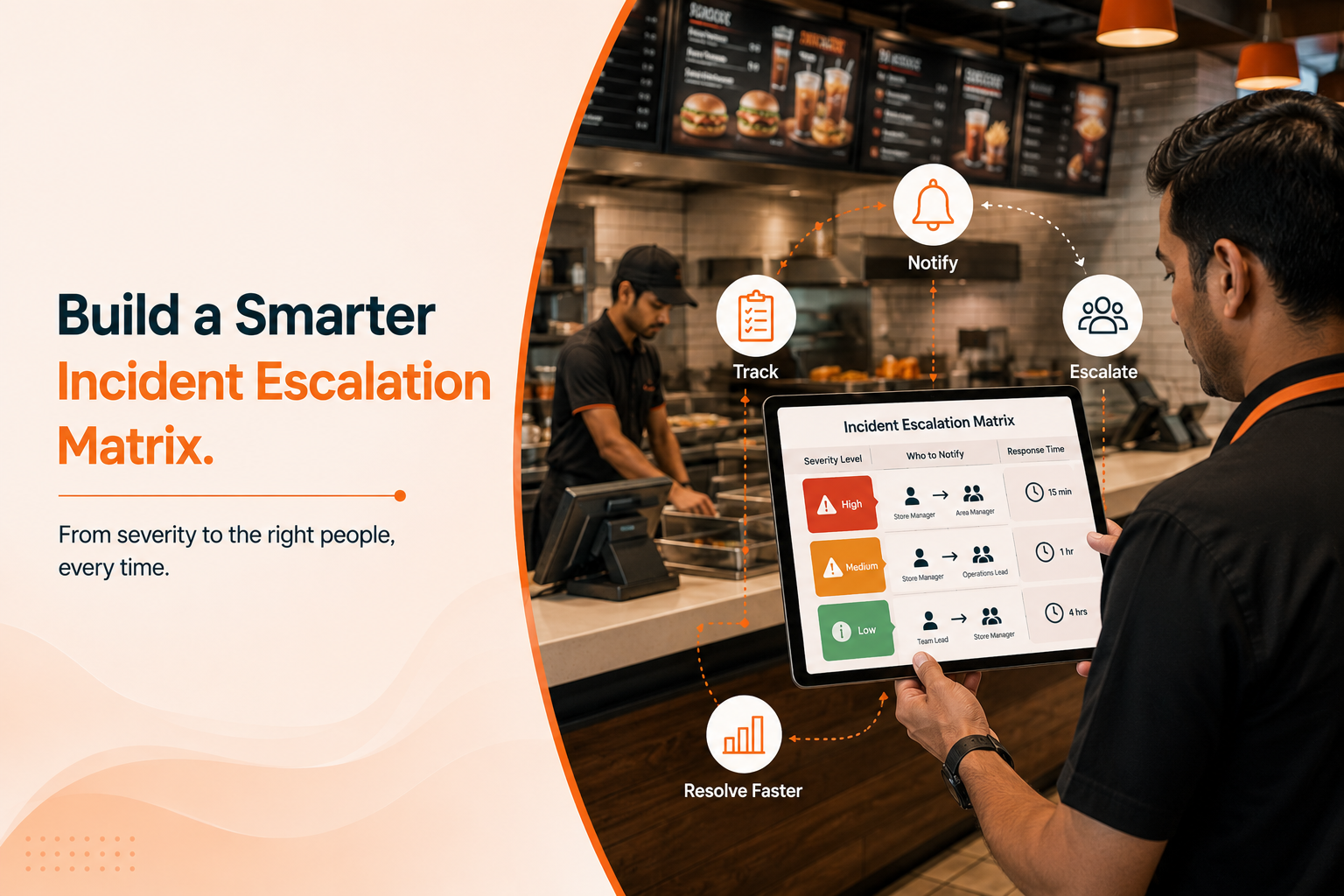
How to Build an Incident Escalation Matrix for Multi-Location QSR Brands
Learn how to build a restaurant incident escalation matrix, from severity levels to notification hierarchies, for faster multi-location resp…
Read more
Why WhatsApp Is Not an Incident Management System
WhatsApp is great for communication, but it lacks the accountability, tracking, and visibility required to manage operational incidents effe…
Read more