

How QSR Chains Ensure Food Safety Compliance Across Every Outlet
Discover how leading QSR chains maintain food safety compliance across every outlet through standardized SOPs, digital audits, real-time monitoring, and operational accountability.
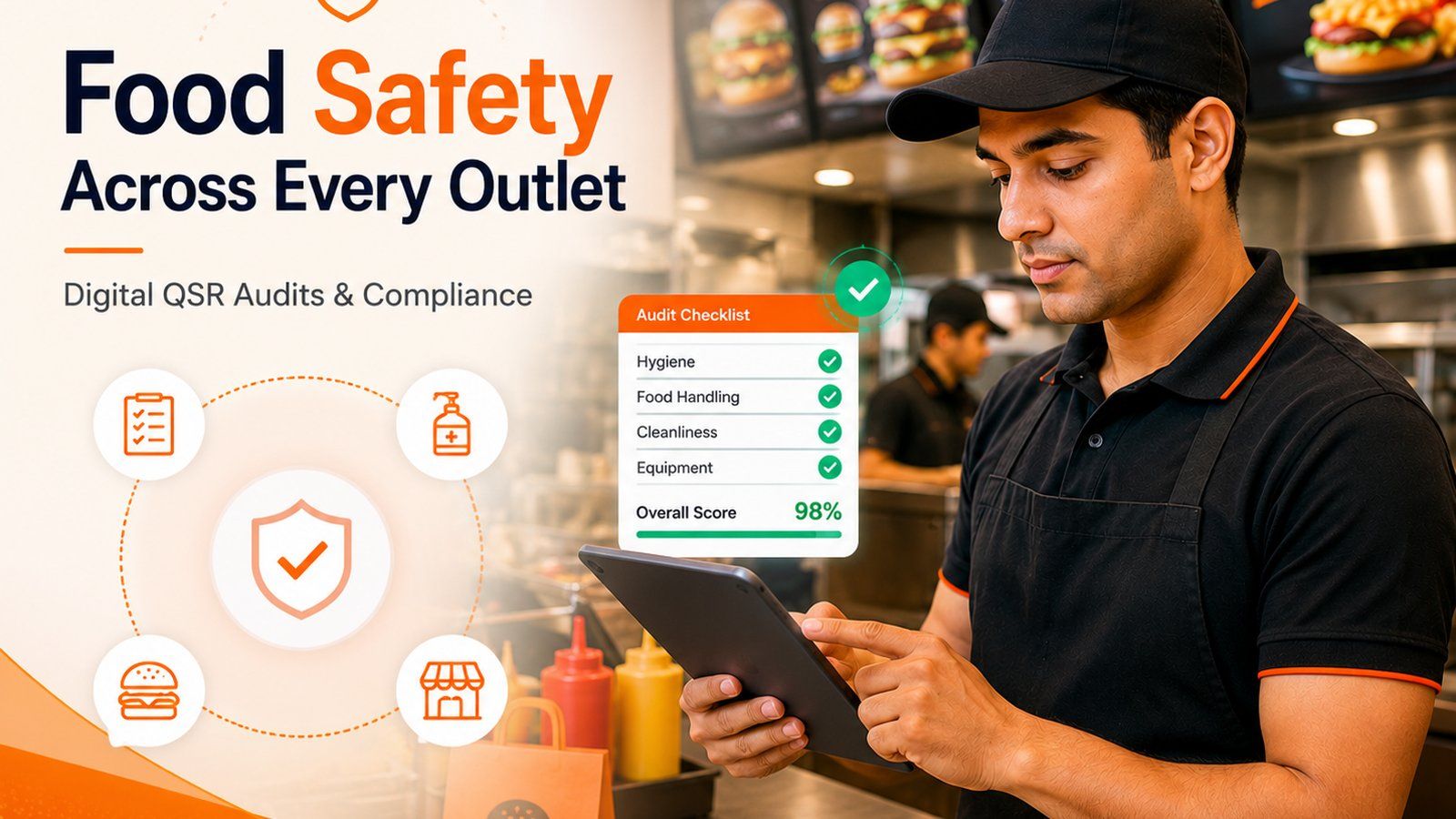
Customers visit a quick service restaurant expecting three things: good food, fast service, and a consistent experience. What they don't see is the operational discipline that makes those expectations possible.
Behind every successful QSR chain are hundreds of food safety tasks performed every day. Refrigeration temperatures are monitored, food preparation areas are cleaned, ingredients are checked for expiry, cooking equipment is inspected, and hygiene standards are maintained across every shift.
When you're operating a single restaurant, managing these processes is relatively straightforward. But when your business grows to dozens or hundreds of outlets, ensuring every location follows the same food safety standards becomes significantly more challenging.
That's why leading QSR brands don't rely solely on periodic inspections. They build systems that make food safety part of everyday operations.
Why Food Safety Becomes Harder as Restaurant Chains Grow
Expansion brings operational complexity.
Every outlet has different employees, different shift timings, varying customer volumes, and unique operational pressures. Despite these differences, customers expect the same quality and safety standards wherever they visit.
Common challenges include:
- Maintaining consistent food preparation standards.
- Ensuring temperature logs are completed on time.
- Verifying daily cleaning and sanitation routines.
- Managing expiry checks across hundreds of products.
- Monitoring staff hygiene practices.
- Maintaining documentation for regulatory inspections.
- Identifying recurring compliance issues across locations.
Without standardized processes, even well-designed SOPs become difficult to execute consistently.
Food Safety Is Built Through Daily Habits, Not Annual Inspections
Many restaurant businesses still depend on manual audits and paper checklists.
While these methods help document compliance, they rarely prevent operational issues before they occur.
Paper-based systems often result in:
- Delayed reporting.
- Missing or incomplete records.
- Limited accountability.
- No real-time visibility.
- Difficulty tracking corrective actions.
- Time-consuming manual reporting.
More importantly, they provide only a snapshot of operations rather than continuous oversight.
Modern QSR chains are shifting towards proactive food safety management instead of reactive compliance.
The Four Pillars of Consistent Food Safety
1. Standardized SOPs Across Every Outlet
Every employee should follow the same process regardless of location.
Whether it's receiving inventory, storing ingredients, preparing food, cleaning equipment, or closing the kitchen, standardized SOPs eliminate variation and reduce operational risks.
Consistency starts with ensuring everyone follows the same playbook.
2. Digital Audits Instead of Paper Checklists
Digital audits make food safety easier to monitor and manage.
Managers can complete inspections on mobile devices, attach photographs, assign corrective actions, and instantly share results with regional teams.
This creates:
- Faster reporting.
- Better documentation.
- Improved accountability.
- Standardized audit formats.
- Easier regulatory compliance.
Instead of waiting days for reports, operations teams gain immediate visibility into store performance.
3. Real-Time Corrective Actions
Finding a problem is only half the job.
The real value comes from resolving it quickly.
When food safety issues are identified, corrective actions should be assigned immediately, tracked through completion, and verified before the issue affects customers.
This reduces the likelihood of recurring problems while strengthening operational accountability.
4. Continuous Performance Monitoring
Leading QSR brands don't wait for health inspections to understand how stores are performing.
They continuously monitor operational metrics such as:
- Audit completion rates.
- Store compliance scores.
- Temperature monitoring compliance.
- Cleaning schedule adherence.
- Outstanding corrective actions.
- Repeat compliance failures.
These insights help operations teams identify trends early and support stores before small issues become larger problems.
Technology Is Transforming Food Safety Management
Modern restaurant operations are becoming increasingly data-driven.
Many QSR chains now combine digital audits with technologies such as:
- IoT temperature sensors.
- Mobile inspection applications.
- AI-powered video analytics.
- Automated reminders for recurring tasks.
- Centralized compliance dashboards.
These technologies reduce manual work while improving consistency across every outlet.
Instead of relying solely on human supervision, operations teams receive continuous visibility into daily food safety practices.
Building a Culture of Accountability
Technology alone cannot guarantee food safety.
Successful QSR brands combine digital systems with strong operational culture.
That means:
- Clearly documented SOPs.
- Regular employee training.
- Defined ownership for every task.
- Consistent operational reviews.
- Recognition for high-performing stores.
- Continuous process improvement.
When every employee understands their role in maintaining food safety, compliance becomes part of the culture rather than another task to complete.
Food Safety Protects More Than Compliance
Strong food safety practices don't just help restaurants pass inspections.
They also contribute to:
- Greater customer trust.
- Better brand reputation.
- Reduced food waste.
- Improved operational consistency.
- Lower business risk.
- Higher employee accountability.
- Increased customer loyalty.
For growing QSR chains, these benefits have a direct impact on long-term profitability.
Final Thoughts
As restaurant businesses continue to expand, maintaining consistent food safety standards becomes increasingly difficult.
The brands that succeed aren't necessarily those with the most detailed SOP manuals. They're the ones that consistently execute those SOPs across every outlet, every shift, and every day.
By combining standardized processes, digital audits, real-time monitoring, and a strong culture of accountability, QSR chains can build food safety into everyday operations while protecting both their customers and their brand.
Retail Store and QSR Closing Checklist: Complete Guide
Read more
How to Open a Retail Store or QSR : A Step-by-Step Opening Checklist Guide
Why most opening checklists fail before the first mistake even happens, and how to build one that actually holds up across every shift and l…
Read more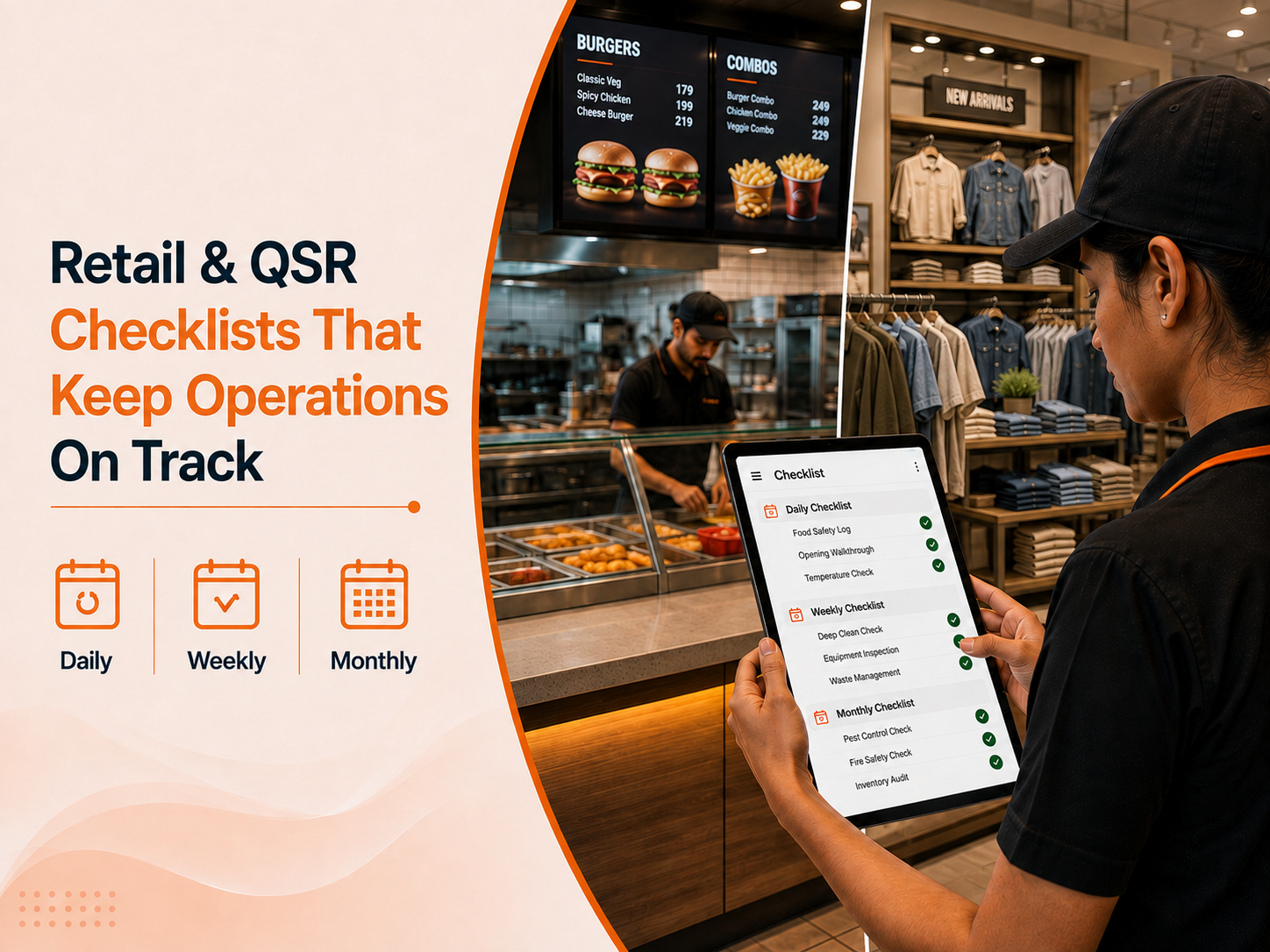
Types of Checklists Every Retail and QSR Store Needs
A detailed breakdown of daily, weekly, and monthly checklists for retail and QSR stores, including food safety logs, walkthroughs, and mobil…
Read more