

Why WhatsApp Is Not an Incident Management System
WhatsApp is great for communication, but it lacks the accountability, tracking, and visibility required to manage operational incidents effectively. Learn why growing businesses need a dedicated incident management system to ensure issues are resolved, monitored, and documented properly.

For many retail stores, restaurant chains, cafés, hotels, and multi-location businesses, WhatsApp has become the default tool for reporting operational issues. A store manager notices a broken freezer, a maintenance issue, a cleanliness concern, or a POS malfunction and immediately shares it in a WhatsApp group.
While this may seem convenient, WhatsApp was designed for communication not incident management.
As businesses scale across multiple locations, relying on WhatsApp for issue reporting creates operational blind spots, delays resolution times, and makes accountability difficult. What starts as a quick message can easily become a missed issue that impacts customer experience, compliance, and revenue.
The Growing Problem with WhatsApp-Based Issue Reporting
Imagine a restaurant manager reports a refrigeration issue in a WhatsApp group containing operations managers, maintenance teams, and regional supervisors.
Within minutes, the message is buried under discussions about staffing, inventory updates, and daily sales reports.
Questions start appearing:
- Who is responsible for fixing the issue?
- Has anyone acknowledged it?
- What is the current status?
- When is it expected to be resolved?
- Was the issue actually fixed?
In most cases, finding these answers requires scrolling through hundreds of messages.
This is where WhatsApp begins to fail as an operational management tool.
1. No Clear Ticket Ownership
One of the biggest challenges with WhatsApp is the lack of accountability.
When an issue is reported in a group, multiple people may see it, but nobody is officially responsible for resolving it.
Common responses include:
- "Noted."
- "Will check."
- "Someone from maintenance is looking into it."
Without assigned ownership, issues can remain unresolved for hours or even days.
An incident management system automatically assigns incidents to the right person or department, ensuring every issue has a clear owner and accountability is maintained throughout the resolution process.
2. No Status Tracking
After reporting an issue on WhatsApp, there is often no structured way to understand its progress.
Managers frequently ask:
- Is the issue open?
- Is someone working on it?
- Has it been resolved?
- Is it waiting for vendor support?
Because WhatsApp conversations are unstructured, status updates are scattered across multiple messages.
An incident management platform provides defined workflows such as:
- Open
- Assigned
- In Progress
- Escalated
- Resolved
- Closed
This gives every stakeholder real-time visibility into issue progress.
3. Critical Issues Get Lost in Chats
WhatsApp groups are constantly active.
Operational updates, attendance discussions, sales numbers, inventory concerns, and maintenance requests all compete for attention.
As message volume increases, important incidents quickly disappear from view.
A critical equipment failure reported in the morning may be buried under hundreds of messages by the afternoon.
When incidents are not centrally tracked, organizations risk:
- Delayed responses
- Increased downtime
- Compliance failures
- Poor customer experiences
Incident management systems ensure every reported issue remains visible until it is resolved.
4. No SLA Monitoring
Many operational issues require resolution within a specific timeframe.
For example:
- POS outage: Immediate action required
- Refrigerator failure: Resolution within hours
- Water leakage: Same-day response
- Store cleanliness issue: Immediate corrective action
WhatsApp offers no way to track response times or resolution commitments.
As a result, businesses struggle to measure:
- Average response time
- Resolution time
- Escalation rates
- Team performance
An incident management platform automatically monitors Service Level Agreements (SLAs), sends reminders, and escalates unresolved incidents when deadlines are missed.
5. No Audit Trail or Compliance Records
In industries such as retail, hospitality, food service, and healthcare, documentation is essential.
When auditors or management teams ask questions such as:
- When was the issue reported?
- Who handled it?
- What corrective action was taken?
- How long did resolution take?
WhatsApp provides limited visibility and makes historical records difficult to retrieve.
Searching through months of conversations is inefficient and often incomplete.
A dedicated incident management system creates a permanent audit trail containing:
- Incident details
- Time stamps
- Ownership history
- Resolution notes
- Supporting images and documents
This helps organizations maintain compliance and demonstrate operational control.
6. Reporting and Analytics Are Nearly Impossible
One of the biggest disadvantages of WhatsApp is the inability to generate meaningful operational insights.
Business leaders need answers to questions like:
- Which stores report the most incidents?
- What are the most common operational problems?
- Which vendors have the longest resolution times?
- What recurring issues impact customer experience?
WhatsApp cannot provide these insights.
Without structured data, organizations lose the opportunity to identify trends and prevent recurring problems.
Incident management platforms transform operational issues into actionable data through dashboards, reports, and analytics.
Communication Is Not Incident Management
WhatsApp is an excellent communication tool.
It is fast, familiar, and widely adopted across teams.
However, communication alone does not ensure accountability, resolution, visibility, or compliance.
True incident management requires:
- Structured reporting
- Ticket ownership
- Status tracking
- Automated escalations
- SLA monitoring
- Audit trails
- Analytics and reporting
As organizations expand across multiple locations, relying solely on WhatsApp creates operational inefficiencies that become increasingly difficult to manage.
The Smarter Approach to Incident Management
Modern retail, restaurant, café, hotel, and multi-location brands need more than messaging apps to manage operational issues effectively.
A dedicated incident management platform ensures every issue is tracked from reporting to resolution while providing complete visibility to store teams, operations managers, and leadership.
Instead of searching through chat messages, businesses can focus on resolving issues faster, maintaining compliance, and delivering consistent customer experiences across every location.
Conclusion
WhatsApp may be convenient for reporting issues, but it was never designed to manage them.
As operational complexity increases, businesses need structured systems that provide accountability, visibility, and measurable outcomes.
The difference between communication and incident management is simple: one sends messages, the other ensures problems get solved.
Streamline Incident Management with NymbleUp
NymbleUp helps multi-location businesses manage incidents, corrective actions, SOP compliance, learning management, and operational excellence from a single platform.
With automated ticketing, issue tracking, escalation workflows, and real-time visibility, teams can resolve incidents faster and maintain consistent standards across every location.
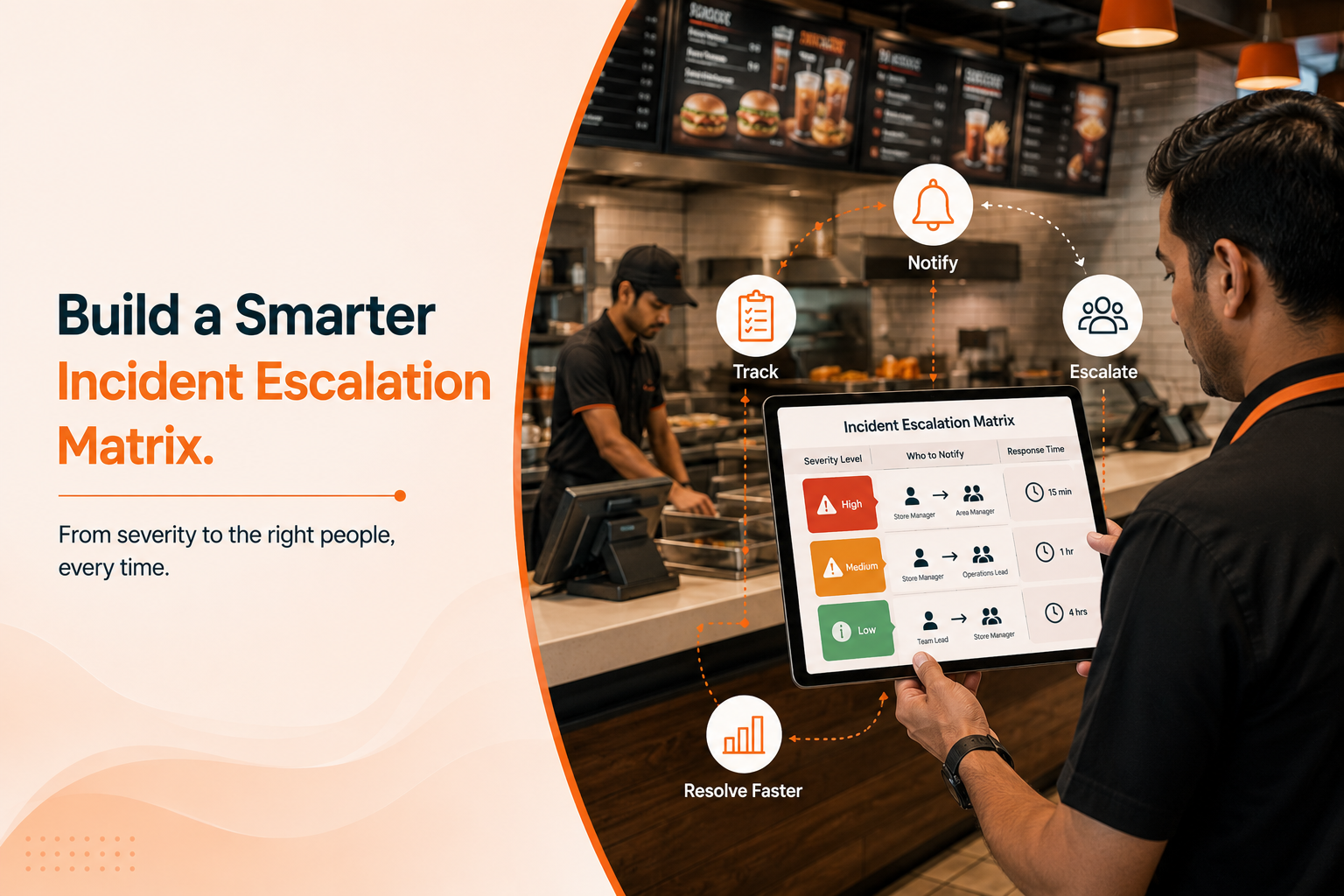
How to Build an Incident Escalation Matrix for Multi-Location QSR Brands
Learn how to build a restaurant incident escalation matrix, from severity levels to notification hierarchies, for faster multi-location resp…
Read more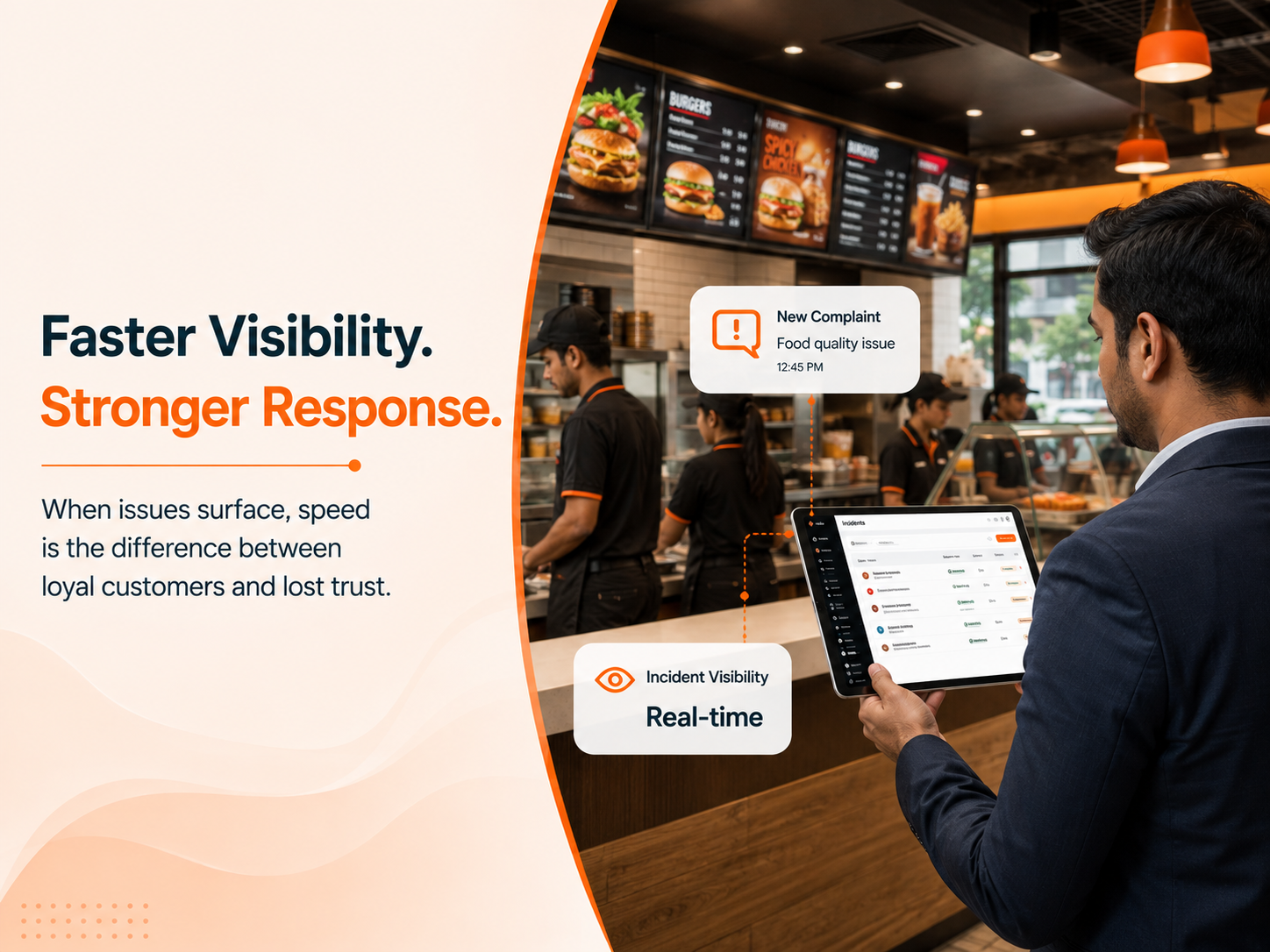
Incident Management in QSR: Why Response Speed Now Determines Brand Reputation
QSR incidents now go public before they're reported internally. Here's how incident management systems close that gap and protect brand repu…
Read more