

Why Fashion Retailers Are Moving to Digital Task Management
Discover why leading fashion retail brands are replacing WhatsApp, spreadsheets, and paper checklists with digital task management to improve store execution, accountability, and operational consistency.
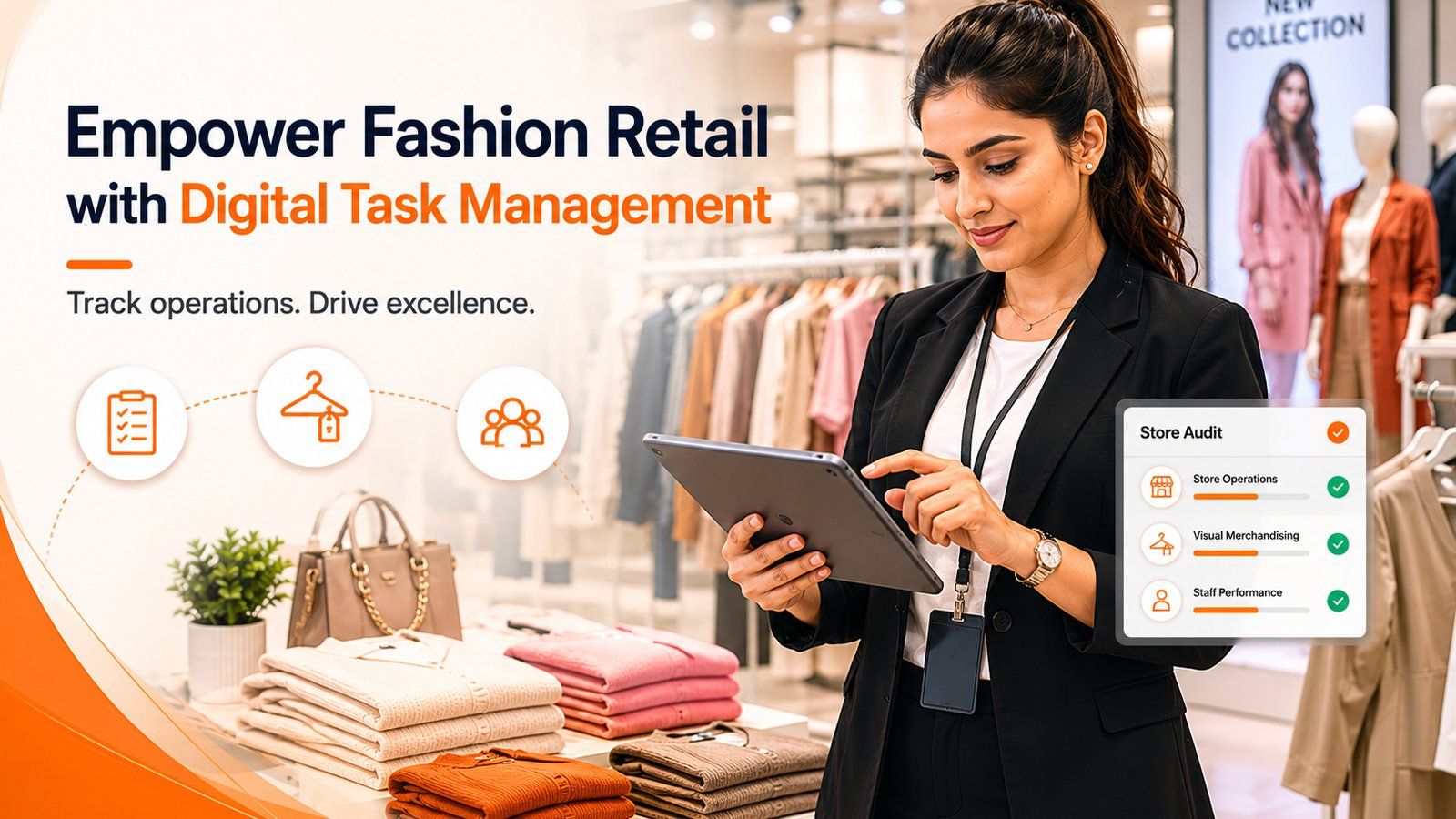
Walk into any successful fashion retail store and you'll notice immaculate displays, organized shelves, clean trial rooms, knowledgeable staff, and products that are always available when customers need them. None of this happens by chance.
Behind every well-run store are hundreds of operational tasks that must be completed every single day. Window displays need updating, stock must move from the backroom to the sales floor, promotions have to go live on time, trial rooms require regular checks, and store managers need to ensure every brand standard is followed.
The challenge isn't creating these tasks. It's making sure they're completed consistently across every store.
As fashion brands expand to multiple locations, many are discovering that traditional ways of managing store operations simply don't scale. That's why more retailers are replacing WhatsApp groups, spreadsheets, and paper checklists with digital task management platforms.
The Reality of Running Multiple Fashion Stores
Every store manager starts the day with dozens of responsibilities.
- Some are routine.
- Some are urgent.
- Some are unexpected.
On a typical day, teams may need to:
- Update window displays for a new campaign.
- Replenish fast-moving products.
- Verify promotional pricing.
- Complete opening and closing checklists.
- Inspect trial rooms.
- Conduct cycle counts.
- Report maintenance issues.
- Ensure visual merchandising standards are maintained.
- Prepare for regional audits.
Now multiply these activities across 20, 50, or 200 stores.
Without a structured system, it becomes almost impossible for head office to know what's happening at the store level.
Why Traditional Methods No Longer Work
Many fashion retailers still depend on:
- WhatsApp groups
- Phone calls
- Emails
- Excel sheets
- Paper checklists
These methods may work when managing a handful of stores, but they create several operational challenges as brands grow.
Common issues include:
- Tasks getting lost in conversations.
- No clear ownership or accountability.
- Delayed implementation of promotions.
- Inconsistent visual merchandising.
- No proof that tasks were completed.
- Managers spending hours following up instead of leading their teams.
- Limited visibility for regional and head office teams.
The result is inconsistent execution across stores, even when the brand has clearly defined SOPs.
Digital Task Management Brings Structure to Store Operations
Digital task management isn't simply about assigning work digitally.
It creates a single operational platform where every task is planned, assigned, monitored, and verified.
Instead of asking stores whether something has been completed, head office can see real-time progress across every location.
Every task includes:
- Clear ownership
- Due dates
- Priority levels
- SOPs or instructions
- Images or reference documents
- Photo proof after completion
- Automatic reminders for overdue tasks
This removes ambiguity and creates accountability across the organization.
Where Fashion Retailers See the Biggest Impact
1. Better Visual Merchandising Execution
Seasonal collections and promotional campaigns require every store to execute displays exactly as planned.
Digital task management helps ensure:
- Window displays are updated before store opening.
- Mannequins follow brand guidelines.
- Promotional signage is correctly installed.
- Campaign rollouts happen simultaneously across stores.
- Regional managers receive photo verification without visiting each location.
The result is a consistent brand experience for customers regardless of which store they visit.
2. Faster Stockroom Operations
Products sitting in the stockroom cannot generate revenue.
Task management platforms help teams prioritize:
- Stock replenishment
- New arrivals
- Cycle counting
- Price tag updates
- Damaged inventory reporting
- Inventory transfers
With better visibility, products move faster from the backroom to the sales floor.
3. Improved Store Maintenance
Small maintenance issues can negatively affect customer perception.
Digital workflows make it easy for employees to report:
- Broken fixtures
- Trial room repairs
- Lighting failures
- Air-conditioning issues
- Housekeeping concerns
Each issue is assigned to the right team, tracked until completion, and visible to management throughout the process.
4. Stronger SOP Compliance
Every fashion retailer has operational standards.
The challenge is ensuring they're followed consistently.
Digital task management helps standardize:
- Opening and closing procedures
- Trial room inspections
- Store cleanliness
- Cash counter checks
- Staff grooming
- Safety inspections
- Visual merchandising audits
Instead of relying on memory, every activity follows a documented process.
Better Visibility for Operations Teams
For regional and operations managers, one of the biggest advantages is complete visibility.
Instead of spending hours collecting updates from stores, they can instantly monitor:
- Task completion rates
- Pending activities
- Overdue tasks
- Store-wise performance
- Region-wise execution trends
- Recurring operational issues
This enables faster decision-making and allows managers to focus on improving performance instead of chasing updates.
Digital Task Management Is Becoming a Competitive Advantage
Fashion retail has become faster than ever.
- Collections change frequently.
- Campaigns launch every few weeks.
- Customer expectations continue to rise.
Brands that still rely on manual coordination often struggle to keep pace.
Digital task management enables retailers to execute faster, maintain consistency, improve accountability, and scale operations without increasing complexity.
It's no longer just an operational tool. It's becoming a competitive advantage for multi-store fashion retailers.
Final Thoughts
Every customer expects the same experience regardless of which store they visit.
Delivering that consistency requires more than well-written SOPs. It requires a system that ensures every operational task is completed correctly, on time, and across every location.
As fashion retail continues to evolve, digital task management is helping brands move from reactive store management to proactive store execution creating stronger operations, more accountable teams, and a consistently better customer experience.

Festive Season Readiness Checklist for Retail Stores
Prepare your retail stores for festive season with a checklist covering pricing accuracy, stock readiness, billing, staffing, crowd safety, …
Read more
Retail Store and QSR Closing Checklist: Complete Guide
Read more
How to Open a Retail Store or QSR : A Step-by-Step Opening Checklist Guide
Why most opening checklists fail before the first mistake even happens, and how to build one that actually holds up across every shift and l…
Read more