

Retail Store and QSR Closing Checklist: Complete Guide
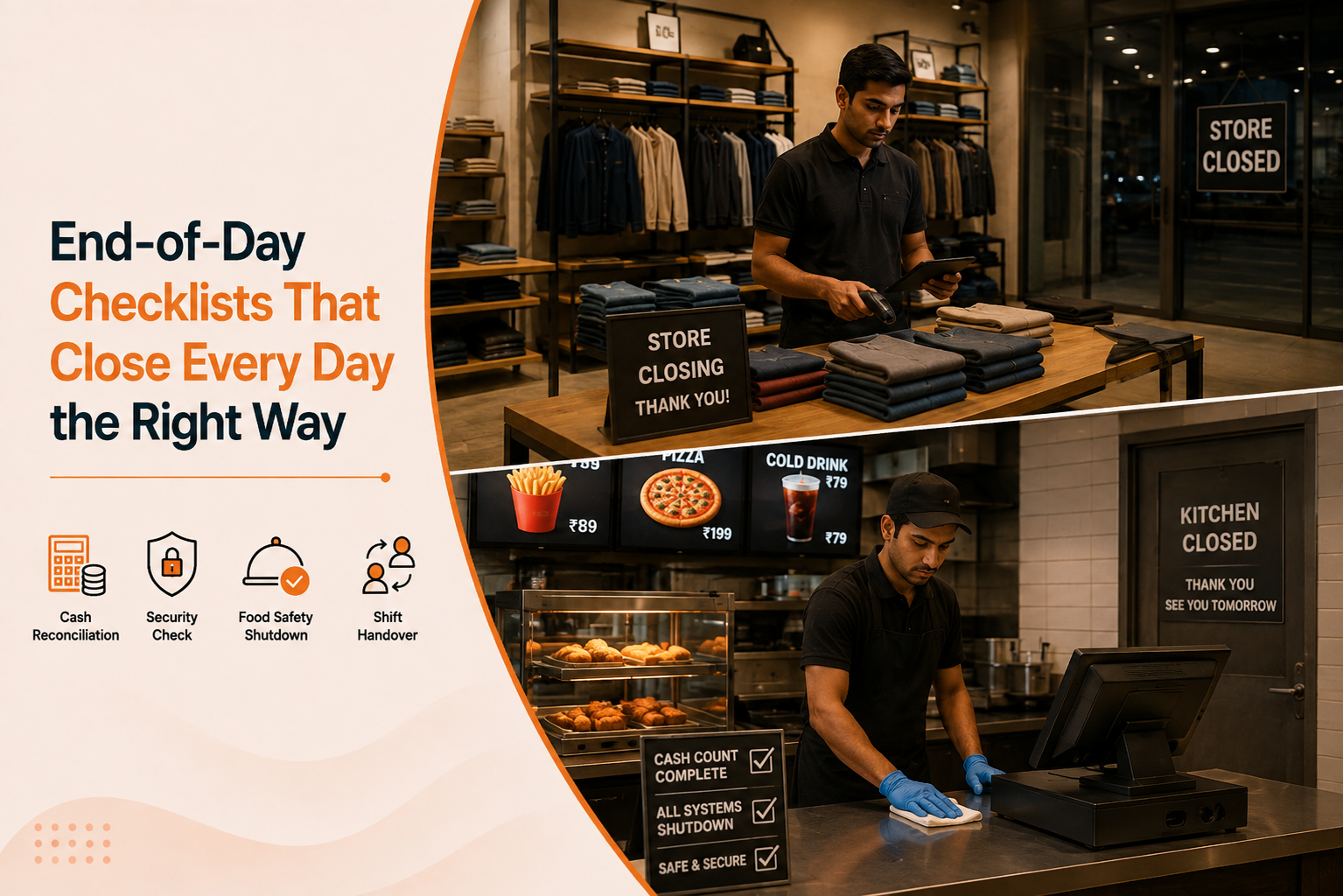
Closing gets treated as the wind-down part of the day, the checklist that gets rushed through once the last customer has left. That's the wrong way to think about it. Closing is actually the last point in the day where a problem, a cash variance, a food safety lapse, a security gap, can still be caught and fixed while it's still solvable. Miss it at close, and it often isn't caught until it's no longer traceable back to a cause.
This is one reason cash reconciliation in particular is widely considered one of the most fraud-sensitive tasks in daily retail and restaurant operations. A documented variance caught the same night is usually a quick fix. The same variance discovered a week later, after several more shifts have come and gone, is rarely solvable at all.
This guide covers the full closing sequence for retail and QSR stores. It follows on from our opening checklist guide and our guide to types of checklists every store needs, and closes the loop on our complete guide to Standard Operating Procedures, since closing well is what sets up the next day's opening to actually go smoothly.
Cash and Register Reconciliation
This is the highest-stakes part of closing, and where most of the real risk sits.
- Print and review the end-of-day POS or sales report before touching the drawer
- Confirm all transactions or open checks are closed out
- Count the drawer completely, then reconcile against POS totals
- Document any variance against a set threshold, past which a recount and a written explanation become mandatory before the drawer is finalized
- Prepare the deposit and secure it properly, not left in an open drawer overnight
A common failure worth calling out directly: skipping the POS or till report entirely when time is short. Without it, there's nothing to reconcile the cash count against, which means the whole exercise stops being a real reconciliation and becomes a guess dressed up as one.
Equipment and Food Safety Shutdown
For QSR locations especially, closing has its own safety responsibilities, not just cleanup:
- Cooking equipment powered down safely, in the correct order
- Final temperature checks and logs completed before leaving, not skipped because service is over
- Food storage, labeling, and FIFO positioning set up correctly for the next day
- Sanitizing stations and prep areas washed down properly, not just wiped
Getting this right at close means the opening team walks into a kitchen that's actually ready, not one that's quietly carrying yesterday's shortcuts.
Security and Premises Checks
- All doors and windows locked
- Alarm set and confirmed active before anyone leaves
- Security cameras confirmed operational
- Cash secured in the safe, never left in a register or drawer overnight
These checks take a few minutes and are the ones most likely to get rushed when everyone just wants to go home. They're also the ones with the least room for a shortcut.
Store and Floor Reset
- A cleaning pass across both customer-facing and back-of-house areas
- Restocking for the next day, so the opening team isn't spending their first twenty minutes catching up on tonight's gaps
- Displays reset, and any expiring stock or outdated promotions flagged
- Same logic as the areas covered in our opening checklist guide, the highest customer-impact spots, but the goal here is next-day readiness rather than first impression
Shift Handover Notes
Whatever the opening team needs to know shouldn't depend on someone remembering to mention it in passing. Handover notes should cover:
- Any unresolved customer or operational issues
- Low stock or items that need reordering
- Equipment problems or anything flagged during shutdown
- Cash notes, particularly if a variance was recorded and investigated
Verbal handoffs fail here for the same reason they fail at opening, a written note is what actually survives a shift change. A comment made in passing at the end of a long shift rarely makes it to the next morning intact.
Final Walkthrough and Sign-Off
The last step is a short, deliberate walkthrough, confirming everything above was actually done, followed by a sign-off. A time-stamped record of who closed and when is what makes the process accountable afterward. If a discrepancy surfaces later, or a customer complaint references something from that evening, this record is the difference between being able to trace what happened and having no way to check.
What to Prioritize When Closing Late
Some nights run long, a delayed rush, a staffing gap, a system slowdown. When time is short, cash reconciliation and security checks are never the ones that get compressed, the risk they cover doesn't shrink just because the night ran late. Cleaning and restocking are what can reasonably slip and get picked up first thing the next morning instead.
Benefits of a Digital Closing Checklist
A paper closing checklist can confirm tasks were marked done. It's far weaker at proving a reconciliation was accurate, that a temperature was actually checked rather than estimated, or that a variance was properly investigated rather than just noted and ignored.
A digital checklist changes this in the same three ways it does at opening:
- Reconciliation records become time-bound. A cash count logged the moment it's completed, rather than filled in from memory later, is far more trustworthy, and gives a manager an actual record of when closing happened, not just that it eventually did.
- Photo proof backs up the numbers. A photo of the counted drawer or the final temperature reading attached to a variance report makes that record something a manager can verify without having been there.
- Reporting stops waiting for someone to collect paper. Across multiple locations, a district manager can see which stores closed clean and which ones flagged a variance or an issue, in real time, from a single dashboard, rather than finding out the next afternoon once forms have been gathered.
Book a personalized demo to see how NymbleUp helps teams run a consistent, time-stamped, photo-verified closing checklist across every store.
FAQ
What should be included in a retail or QSR closing checklist? Cash and register reconciliation, equipment and food safety shutdown, security checks, a store and floor reset, shift handover notes, and a final walkthrough with sign-off.
What should you do if the cash drawer doesn't reconcile? Recount the drawer, and if the variance still exceeds the set threshold, document the amount and investigate before finalizing the deposit. This should happen the same night, since a variance becomes far harder to trace once more shifts have passed.
What should you prioritize if closing is running late? Cash reconciliation and security checks should never be skipped or rushed, regardless of the time. Cleaning and restocking are the tasks that can reasonably be picked up the next morning instead.
Why does the closing checklist matter for the next day's opening? A store that closes properly, restocked, reconciled, and with clear handover notes, sets the opening team up to start the day smoothly instead of spending the first part of their shift fixing what closing left behind.
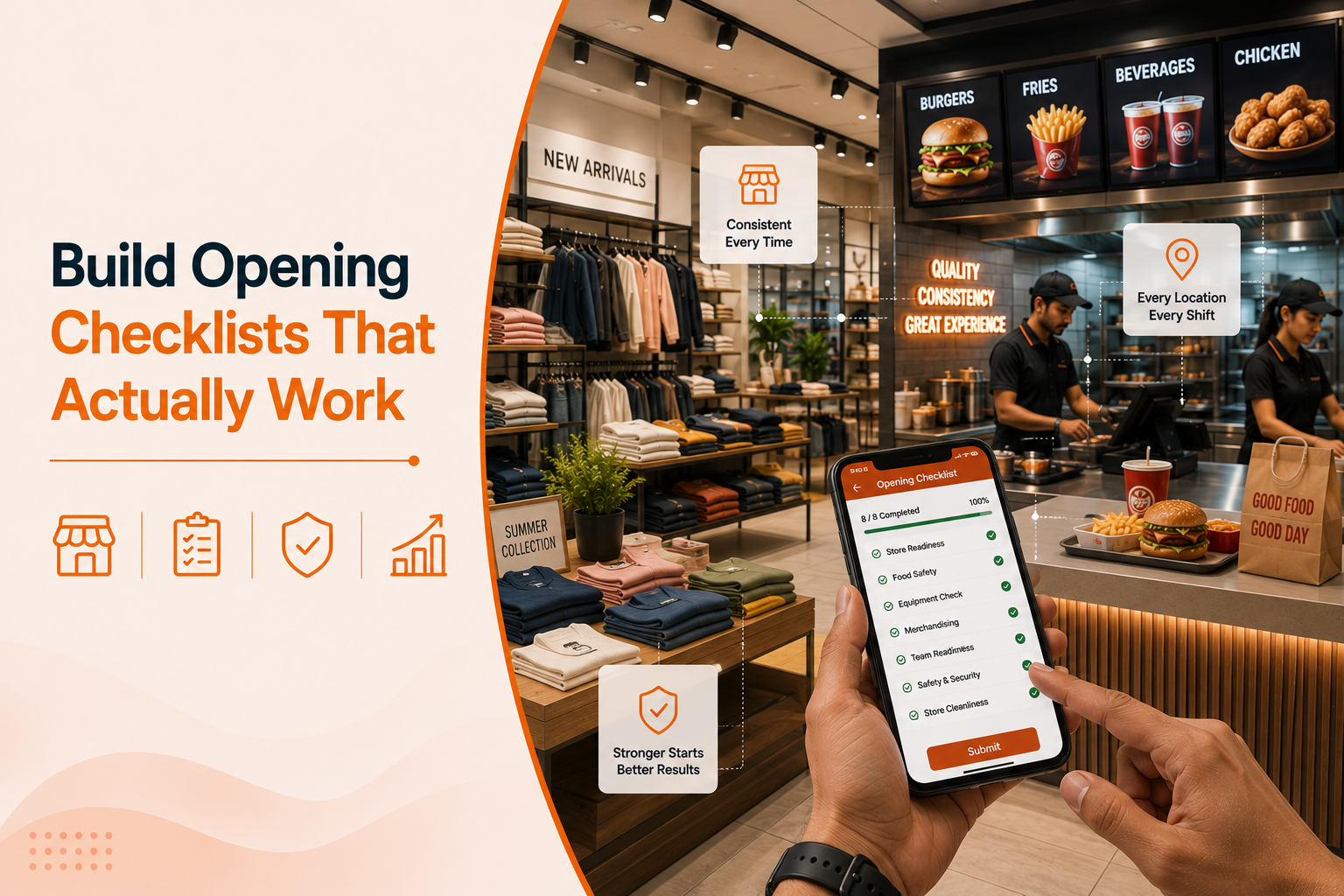
How to Open a Retail Store or QSR : A Step-by-Step Opening Checklist Guide
Why most opening checklists fail before the first mistake even happens, and how to build one that actually holds up across every shift and l…
Read more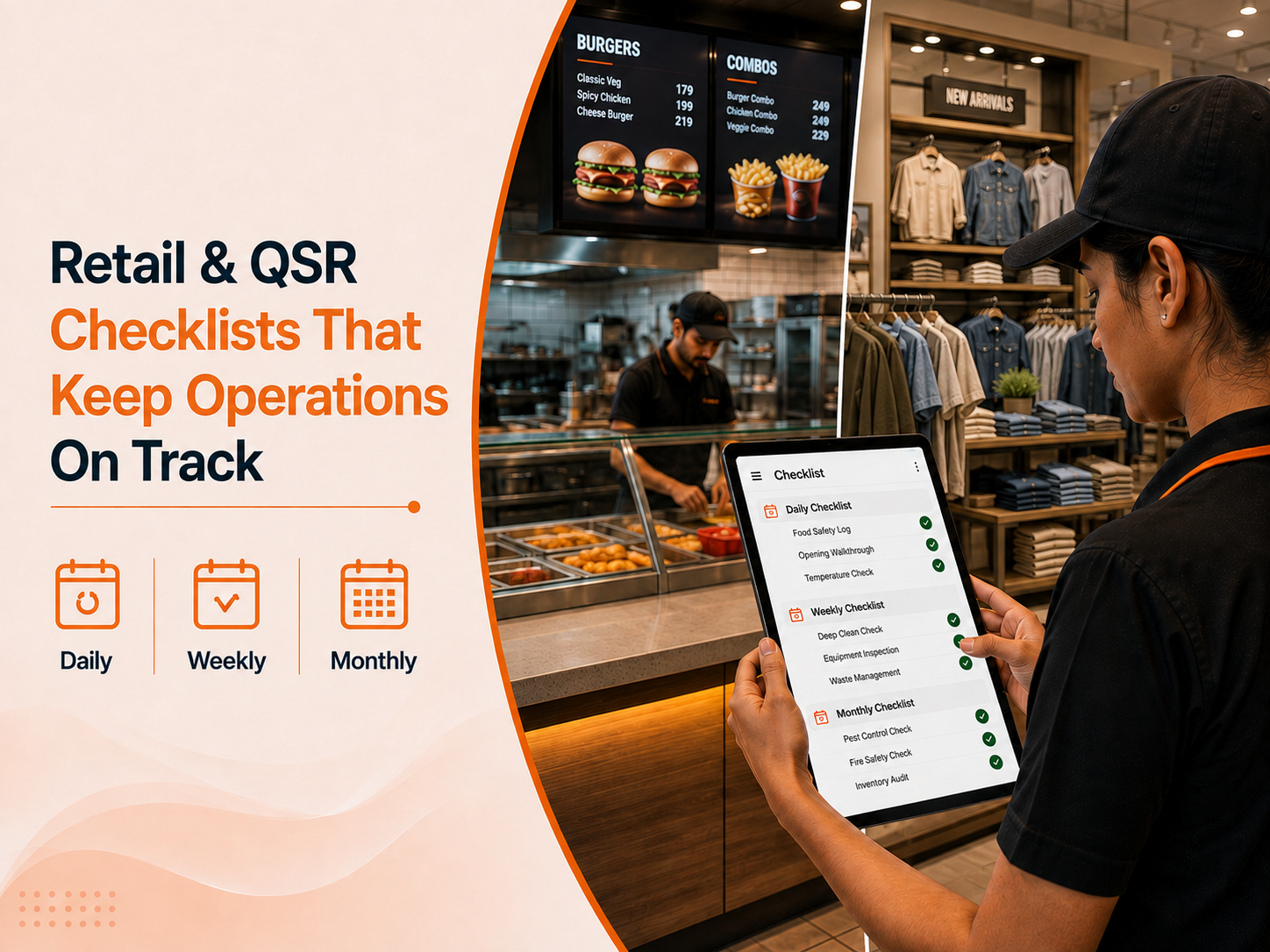
Types of Checklists Every Retail and QSR Store Needs
A detailed breakdown of daily, weekly, and monthly checklists for retail and QSR stores, including food safety logs, walkthroughs, and mobil…
Read more
Standard Operating Procedures (SOPs): A Complete Guide for Multi-Location Businesses
Learn what SOPs are, why they matter for multi-location retail, QSR, and hospitality brands, and how to create, roll out, and maintain them …
Read more