

Why Every New Hotel or Restaurant Location Should Open with an LMS, Not a Training Manual
Discover why leading hospitality and QSR brands are replacing training manuals with Learning Management Systems (LMS) to ensure faster onboarding, consistent service, and scalable operations across every location.
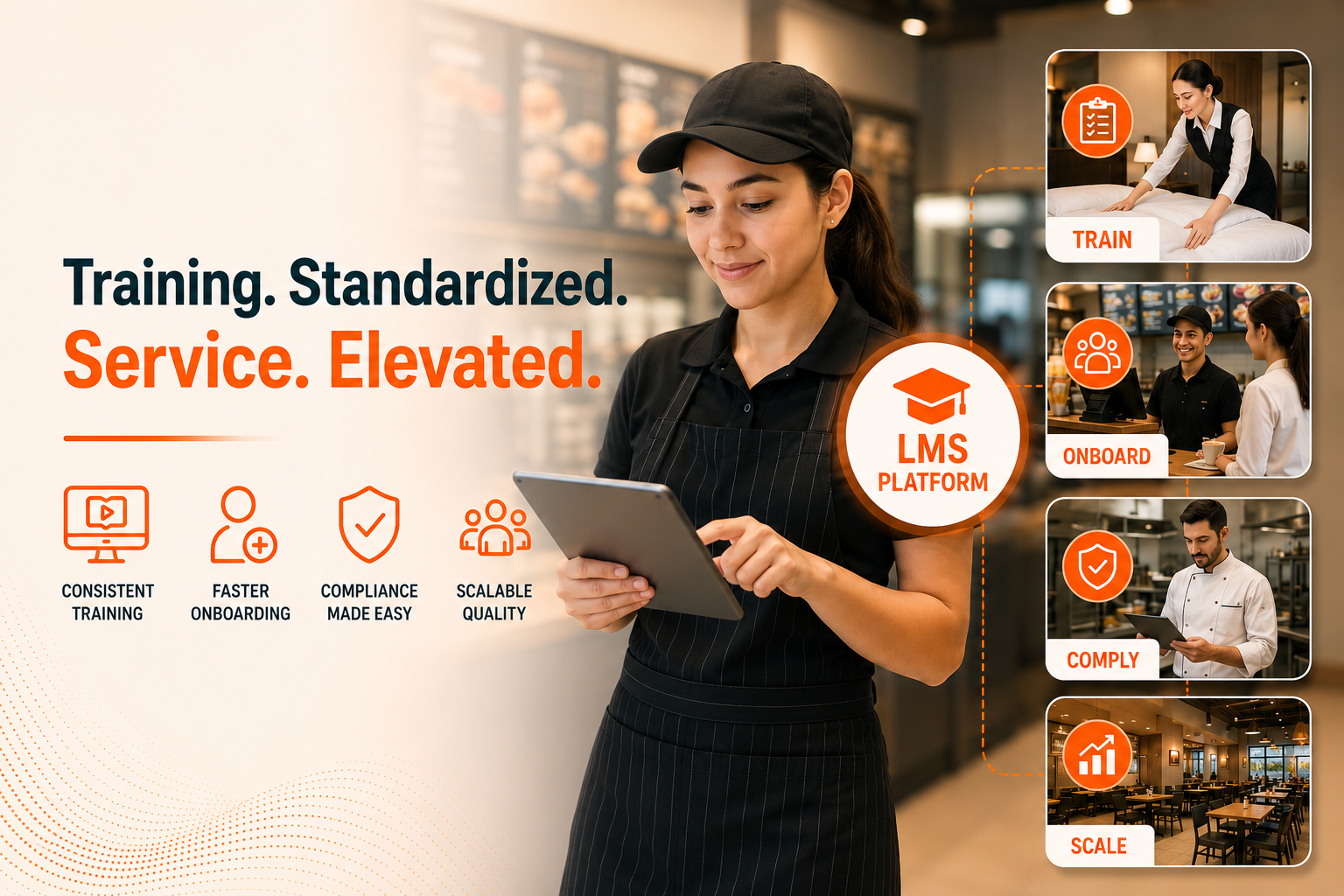
Opening a new hotel or restaurant is exciting.
Weeks before launch, teams are busy hiring employees, stocking inventory, setting up kitchens, installing POS systems, and preparing for opening day.
But there's one challenge that almost every growing hospitality brand underestimates:
How do you make an entirely new team deliver the same guest experience as your existing locations?
A beautiful property or a premium menu isn't enough.
Guests remember how they were greeted.
How quickly they received service.
Whether their room was clean.
Whether the food tasted exactly like it did at another outlet.
Those experiences are created by people—not buildings.
And people need consistent training.
That's why leading hospitality brands no longer rely on printed SOP manuals or one-time classroom sessions. Instead, they make a Learning Management System (LMS) part of every new store opening.
Imagine Opening Your 50th Outlet
Your first location was easy.
The founders personally trained every employee.
Managers knew every SOP.
Questions were answered instantly.
Now imagine opening your 50th location.
You have:
- Hundreds of employees
- Multiple managers
- Different cities
- Different trainers
- Different experience levels
Now consistency becomes much harder.
If every manager trains employees differently, your brand slowly starts looking different in every location.
An LMS eliminates this problem by giving every employee access to exactly the same training, regardless of where they work.
Training Doesn't End After Onboarding
Many businesses treat training as something employees complete once.
Hospitality doesn't work that way.
Menus change.
Promotions launch.
Guest expectations evolve.
Compliance rules get updated.
Employees change roles.
New equipment arrives.
Without continuous learning, standards begin to slip.
An LMS turns training into an ongoing process instead of a one-time event.
One Update Reaches Every Location
Imagine introducing a new breakfast menu across 120 hotels.
Without an LMS:
- Regional managers brief property managers.
- Property managers train supervisors.
- Supervisors explain it to staff.
- Information changes slightly at every step.
With an LMS:
Head office uploads one training module.
Every employee receives it instantly.
Completion is tracked automatically.
Everyone learns exactly the same process.
Managers Spend Less Time Training and More Time Leading
One of the biggest hidden costs in hospitality is manager time.
Store managers often spend hours:
- Explaining SOPs
- Repeating onboarding sessions
- Answering the same questions
- Demonstrating operational tasks
An LMS handles repetitive training.
Managers can instead focus on:
- Coaching employees
- Improving guest experience
- Monitoring operations
- Solving customer issues
Compliance Becomes Easier
Hospitality businesses deal with strict compliance requirements.
Food safety.
Housekeeping standards.
Fire safety.
Health regulations.
Brand audits.
Instead of reminding employees manually, an LMS can:
- Assign mandatory courses
- Track certifications
- Send reminders
- Record completion history
- Generate compliance reports
Everything becomes documented and audit-ready.
Learning Fits Into Daily Operations
Frontline teams don't have hours available for classroom sessions.
Modern LMS platforms allow employees to complete learning in short modules on their mobile devices.
Five minutes before a shift.
During downtime.
Between operational tasks.
Learning becomes part of everyday work instead of interrupting it.
Better Training Leads to Better Guest Experiences
Guests never see your LMS.
But they notice its impact.
They experience:
- Faster service
- Consistent food quality
- Better housekeeping
- Confident employees
- Fewer operational mistakes
- Higher service standards
Ultimately, that's what training is meant to achieve.
Choosing an LMS That Supports Operations
The best hospitality LMS doesn't work in isolation.
It should connect with day-to-day operations by supporting:
- SOP management
- Employee onboarding
- Compliance training
- Department-wise learning paths
- Progress tracking
- Mobile learning
- Assessments and certifications
- Multi-location reporting
When training and operations work together, maintaining consistency becomes much easier.
Final Thoughts
As hospitality brands continue expanding across cities and countries, maintaining a consistent guest experience becomes increasingly difficult.
A Learning Management System helps solve this challenge by standardizing training, reducing onboarding time, simplifying compliance, and ensuring every employee understands the brand's operating standards.
For growing hotel groups, restaurant chains, cafés, and QSR brands, an LMS is no longer just a training platform, it's part of the operational infrastructure that supports consistent service at scale.
What Your Failed Audits Are Actually Trying to Tell You
Skill gaps rarely show up as skill gaps. They show up as failed audits and compliance incidents. Here's why the gap exists, and what closing…
Read more
Why High Turnover Locations Need Faster Onboarding, Not More Training Time
QSR and retail turnover often exceeds 60 to 100% a year. Here's why longer training programs don't fix it, and what faster onboarding actual…
Read more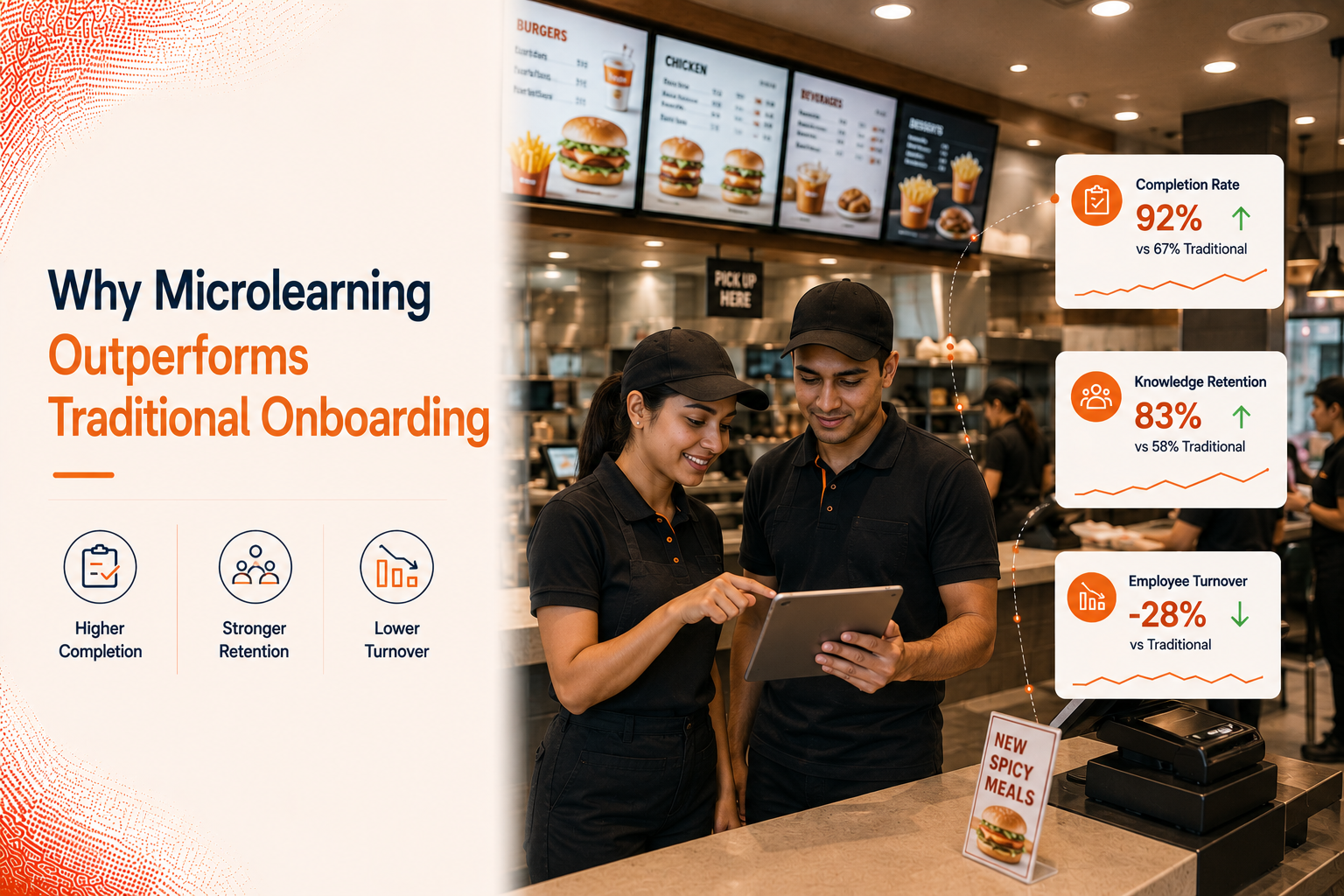
What Happens to Training Content 24 Hours After Your New Hire Learns It
Traditional onboarding is losing ground in QSR and retail. See what completion, retention, and turnover data reveal about switching to micro…
Read more