

Why High Turnover Locations Need Faster Onboarding, Not More Training Time
QSR and retail turnover often exceeds 60 to 100% a year. Here's why longer training programs don't fix it, and what faster onboarding actually looks like.
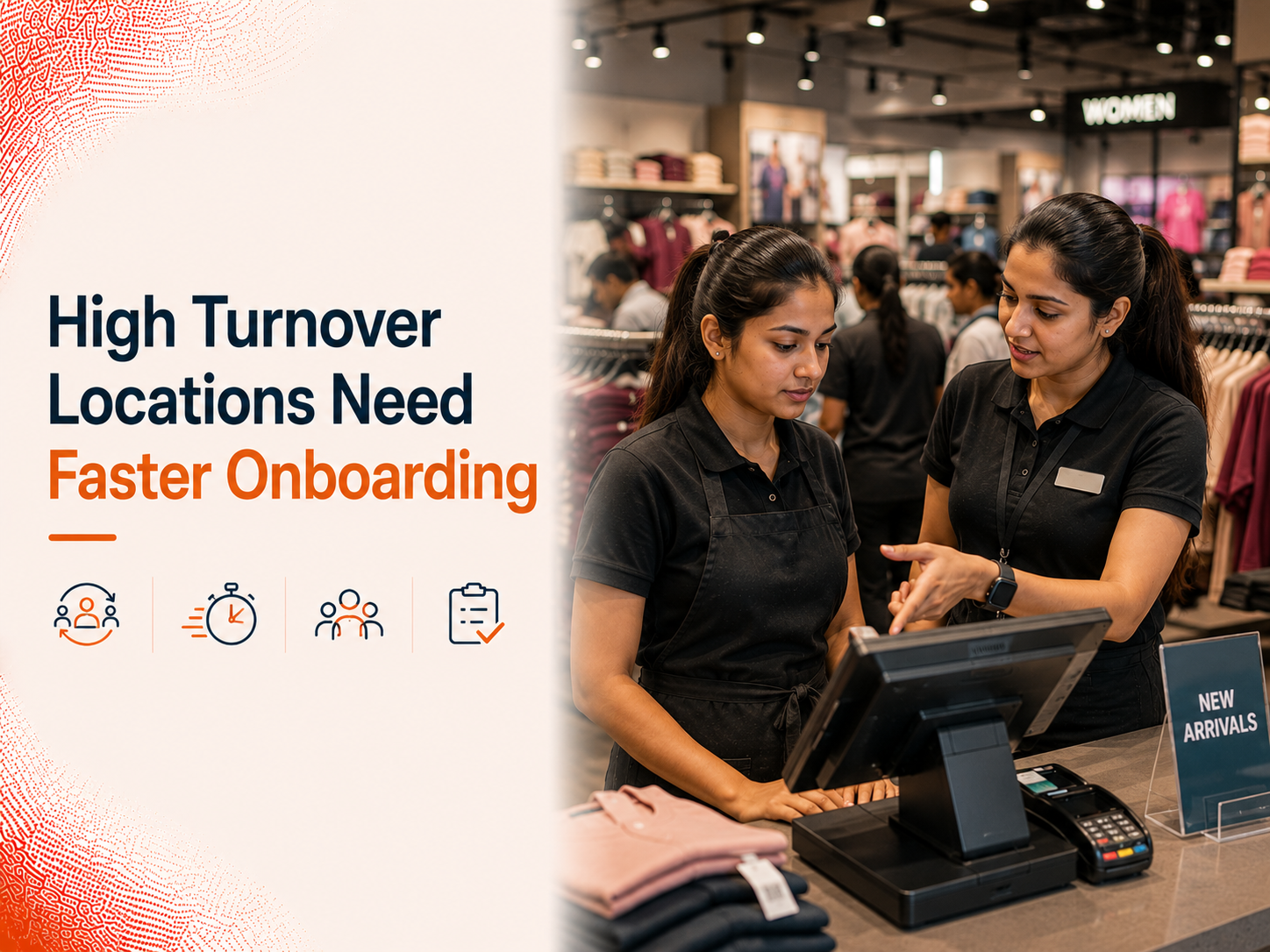
Anyone who has spent time on a retail floor or behind a QSR counter has seen this pattern play out: a new hire shows up on day one, gets handed a binder or sat in front of a video, and by day three, half of what they were told is gone. Not because they weren't paying attention. Because the training was never built around the pace of the job they were about to do.
Every time turnover spikes, the same instinct tends to kick in from leadership: add more training. A longer orientation. One more module. A thicker manual. It feels responsible. It rarely works.
The instinct to train more, and why it backfires
In QSR and retail, where annual turnover regularly climbs past 60% and quick-service locations frequently exceed 100%, the problem was never a shortage of content. It's the gap between the day someone is hired and the day they're actually useful on the floor. That gap doesn't close by teaching more. It closes by teaching smarter, and faster.
The weeks nobody puts a number on
There's a cost to turnover that shows up on a spreadsheet: recruiting, paperwork, the time a manager spends interviewing instead of managing the floor.
But the cost that quietly does the most damage is the one nobody tracks: the weeks a new hire spends being slower, making more mistakes, and needing more supervision before they're pulling their weight.
Industry estimates suggest new retail hires can take close to two months to hit expected performance benchmarks under a traditional onboarding path. In a high-turnover store, that's longer than some employees stick around.
When "finally trained" and "already leaving" happen in the same week
It's a familiar story on many floors: a new hire's first genuinely confident, mistake-free day arrives right around the time they give notice. That's not a coincidence that happens once in a while. It's a pattern operators run into again and again.
That's not a training gap. That's a design problem, and it's worth sitting with before jumping to fixes.
Long training assumes people who aren't leaving
Most long-form training programs share an unspoken assumption: this person will be here long enough for the investment to pay off.
That assumption has quietly stopped holding true for a lot of frontline retail and hospitality roles. A large share of the workforce is young, part-time, and treating the job as something to get through, not build a career on. That's not a knock on the workforce. It's the reality operators are training into.
Why people actually leave
People don't usually leave because training was too short. In most cases, it comes down to one of these:
- Chaotic scheduling. Shifts that change last minute, or feel unpredictable week to week.
- Unclear expectations. Nobody explained what "doing well" actually looks like in this role.
- No backup when things go sideways. A tough shift with no support makes the job feel unmanageable fast.
Piling on more training hours doesn't touch any of that. All it does is push out the day a new hire starts feeling capable, and in a high-turnover environment, that's a day the business may not get.
The manager's real bottleneck
Ask most floor managers where their time goes during onboarding, and it's rarely the training content itself. It's tracking who's been trained on what, chasing down whether a new hire actually finished a module, and re-explaining the same basics because there was no consistent record of what was already covered.
That's a visibility problem as much as a training problem, and it's one that compounds every time turnover forces the cycle to restart. It's also usually the first thing that improves once training moves off paper checklists and into a system that tracks completion automatically, rather than relying on a manager's memory.
What faster onboarding actually looks like
Getting this right doesn't start with a curriculum. It starts with the first shift.
- Train for the first shift first. Cover exactly what someone needs to handle it competently, and layer in the rest as they go, not all at once before they've touched a register or a fryer.
- Deliver lessons just in time. The next module should land right when it's relevant, not two weeks before there's anything to apply it to.
- Keep it consistent across stores. A new hire's training shouldn't depend on which manager happened to train them, or which location they landed in.
- Make progress visible. Managers need a way to actually see where someone stands in onboarding, instead of relying on memory or informal check-ins.
None of this means covering less. It means sequencing training around the actual rhythm of the job, so a new hire is contributing in days instead of weeks. This is also where a connected LMS tends to make the biggest practical difference: it's the difference between hoping onboarding happened consistently and knowing it did.
The question worth sitting with
If the busiest locations in a chain are also the highest-turnover ones, it's worth asking honestly: will more training time fix that, or does it just feel like doing something? Operators who have tried both approaches tend to land on the same answer, and it's rarely "more hours."
For chains where turnover is structurally part of the business, and for QSR and retail, it usually is, the real lever isn't training volume. It's how fast someone gets from hired to genuinely useful, and how consistent that path is across every location.
Not ready for a full conversation yet? Try this: pull up your last five new hires and check how long each one took to run a shift without help. If the answer varies wildly by location or by manager, that's usually the first sign the gap isn't a training content problem, it's a structure problem.
Ready to see what a faster path looks like for your locations? Book a short walkthrough of how NymbleUp's LMS sequences onboarding around the first shift and gives managers real-time visibility into who's ready and who isn't.

What Your Failed Audits Are Actually Trying to Tell You
Skill gaps rarely show up as skill gaps. They show up as failed audits and compliance incidents. Here's why the gap exists, and what closing…
Read more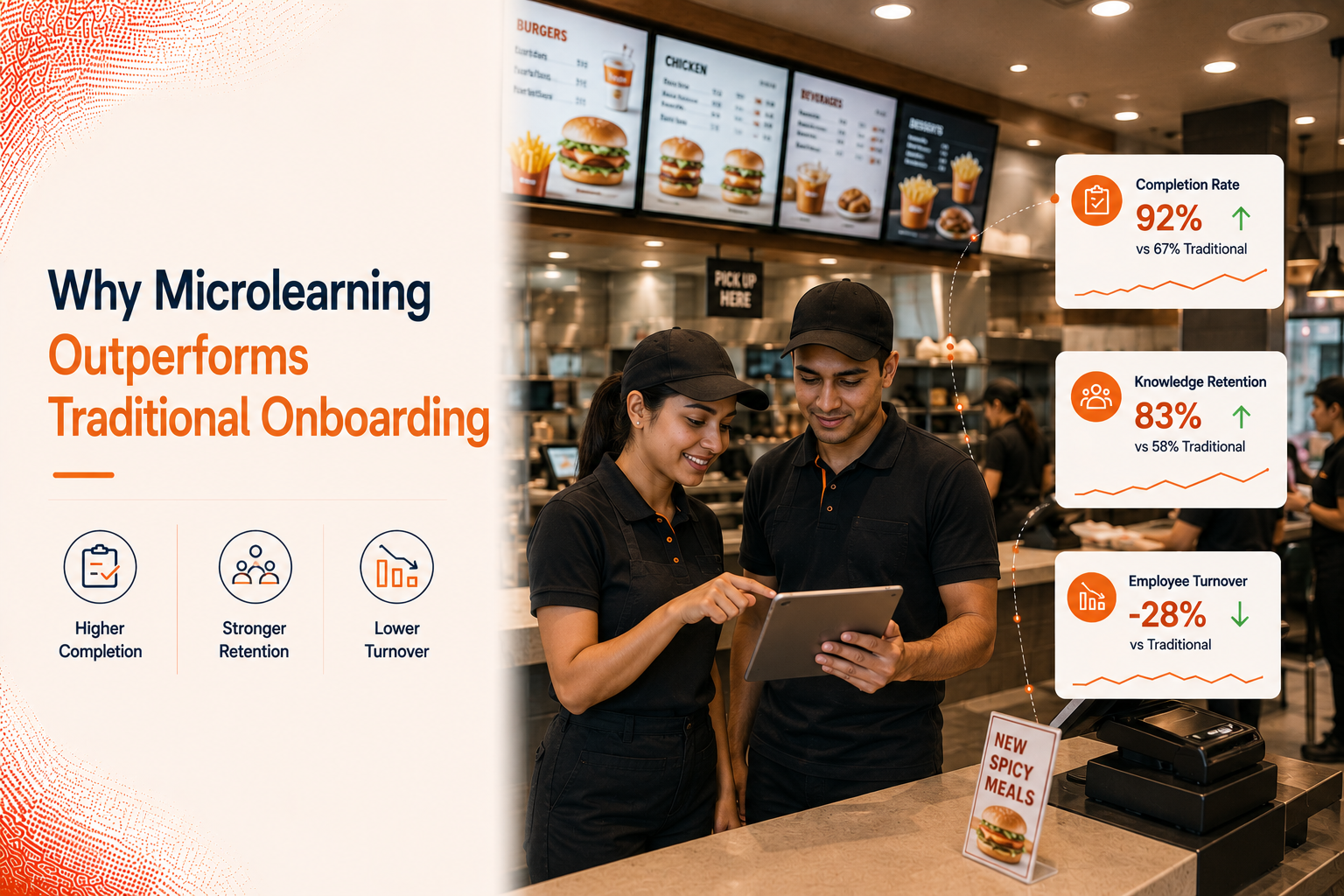
What Happens to Training Content 24 Hours After Your New Hire Learns It
Traditional onboarding is losing ground in QSR and retail. See what completion, retention, and turnover data reveal about switching to micro…
Read more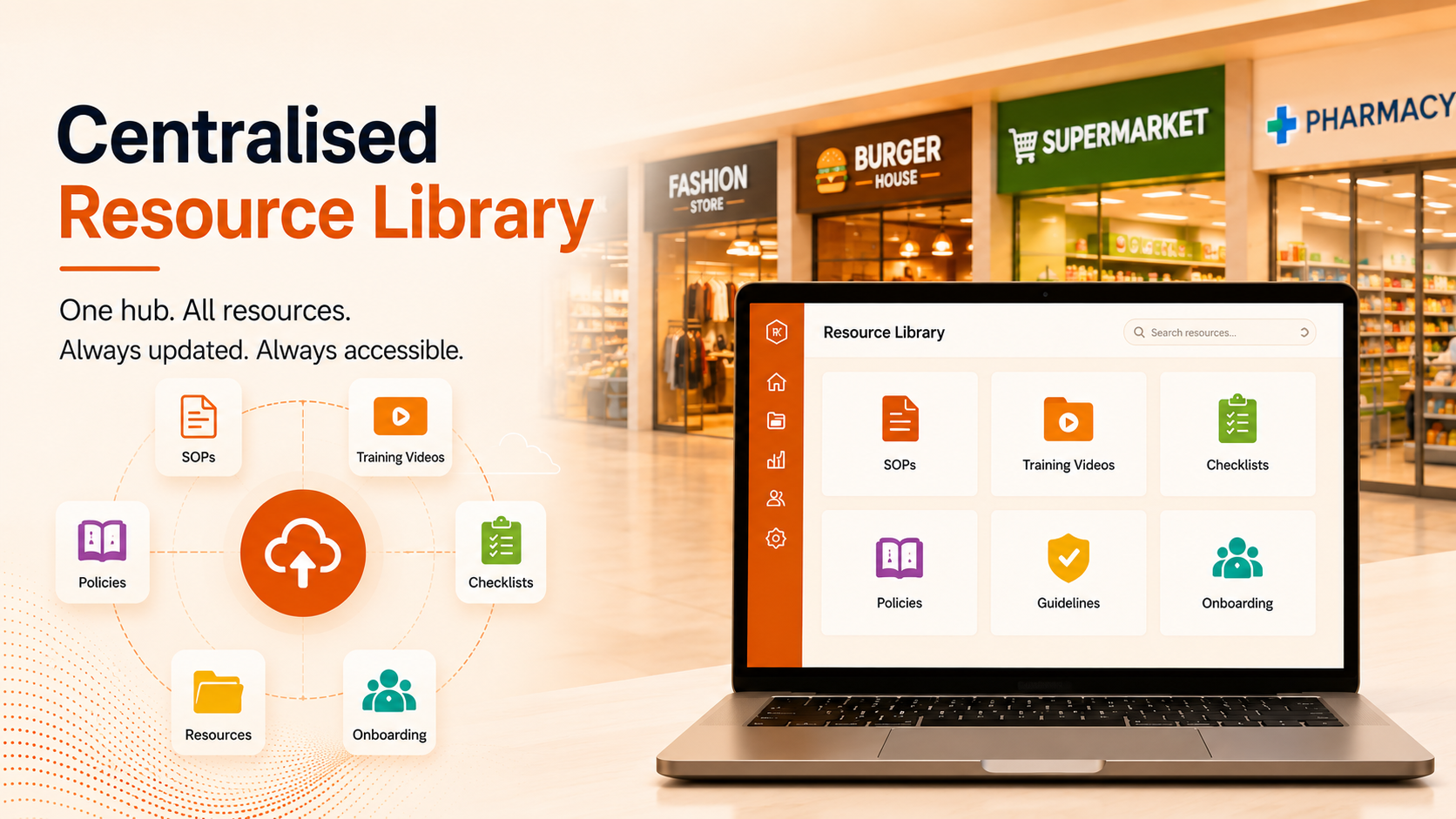
Why Every Multi-Location Business Needs a Centralised Resource Library
A Centralised Resource Library helps businesses bring all training materials, SOPs, compliance documents, and onboarding resources into one …
Read more