

What Your Failed Audits Are Actually Trying to Tell You
Skill gaps rarely show up as skill gaps. They show up as failed audits and compliance incidents. Here's why the gap exists, and what closing it earlier actually looks like.
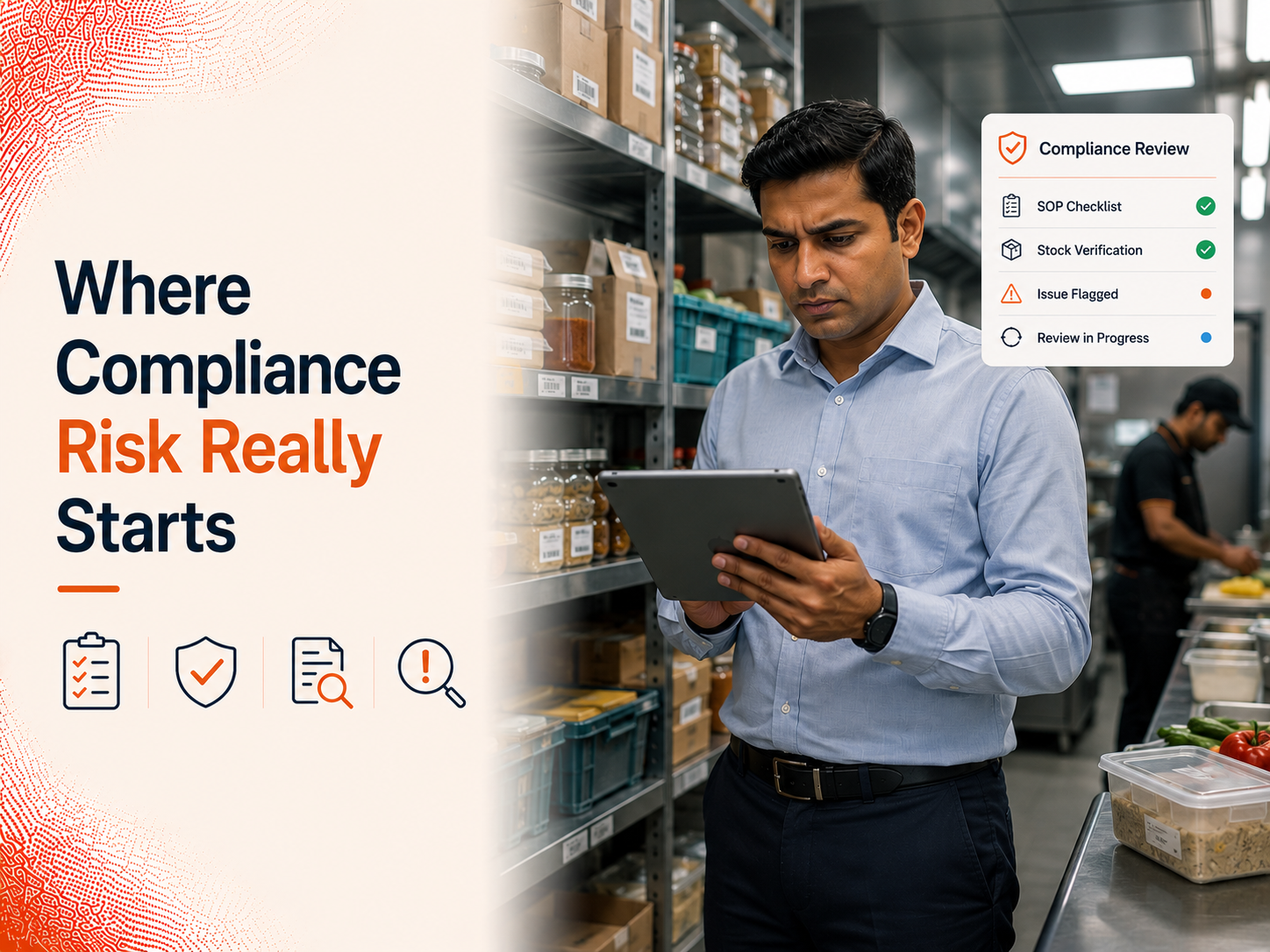
Most compliance failures get blamed on the same thing: someone didn't follow procedure. But look closer at a lot of these incidents, and the real story is different. The employee was trained. Their certification was marked complete in the system. The gap wasn't a failure to train, it was a gap between finishing training and actually being able to perform under real conditions.
That distinction matters more than it gets credit for, because it changes where the problem actually lives.
Completion is not the same thing as competency
Most training programs, and most LMS platforms, are built to answer one question: did this person finish the module? That's a useful data point, but it's not the same as asking whether someone can actually execute the task correctly when it counts.
An employee can complete a food-safety module, pass the quiz at the end, and still not follow proper procedure three weeks later during a rushed shift. The system shows "certified." The floor shows something else. As long as completion is treated as a stand-in for competency, that gap stays invisible, right up until it shows up somewhere that actually costs the business.
Skills fade faster than training schedules assume
Training programs are usually built around a calendar: annual refreshers, onboarding modules completed once, certifications renewed on a fixed cycle. Skills don't decay on that same schedule.
Tasks performed daily stay sharp. Tasks performed occasionally, like handling a rare allergen request, following an emergency protocol, or executing a less common cash-handling procedure, fade faster than most training calendars account for. A module completed four months ago doesn't guarantee the same competency today, especially for the tasks employees don't do often enough to stay naturally sharp on.
This is where the real risk builds. Not in a training failure, but in the quiet stretch of time between when training happened and when it was actually needed.
Audits usually catch the gap after it's already a problem
This is where the connection to compliance becomes clear. A failed audit line item, a repeated non-compliance flag, an inspection finding that shows up more than once, these are rarely the first sign of a skill gap. They're usually the first documented sign, arriving weeks or months after the actual gap opened up.
Audits are built to catch problems, not to predict them. By the time a specific SOP violation shows up on an audit report, it's often already happened multiple times undetected. The audit isn't wrong to flag it, but it's a lagging indicator, not an early one.
Where this is heading across the industry
Increasingly, operators and platforms in this space are moving toward connecting training history, audit results, and task performance data instead of treating them as three separate systems. The idea is straightforward even if the execution is still maturing industry-wide: if a location shows a training gap, an audit flag, and a performance dip on the same task around the same time, that's a pattern worth catching before it repeats, not after.
This is a direction the industry is moving toward, not something every platform, including LMS and audit tools generally, has fully solved today. But the shift in thinking, from measuring whether training happened to tracking whether competency actually held up, is where compliance tooling is headed.
What proactive skill-gap detection should look like
Regardless of how automated this becomes, the practical shape of it is worth outlining:
- Refreshers timed to risk, not just a calendar. High-risk, infrequent tasks should trigger a refresher sooner than low-risk, frequent ones, rather than treating every certification on the same fixed renewal cycle.
- Audit patterns traced back to training. When the same violation shows up more than once at a location, that should prompt a look at when the relevant employees were last trained on that specific task, not just a note in the audit report.
- Prioritization based on consequence, not convenience. A gap in food safety or equipment operation deserves faster attention than a gap in a general policy refresher, even if both are technically "due."
- One place to see where the risk actually sits. Rather than compliance teams cross-referencing training records and audit logs manually after an incident, having that connection visible before an incident is the goal worth building toward.
Compliance works better as a leading indicator, not a paper trail
Most compliance programs are built to document what already went wrong. That has value, but it's fundamentally reactive. Treating skill gaps as something that can be seen coming, not just recorded after the fact, shifts compliance from a paperwork exercise toward actual risk prevention.
That shift doesn't require a fully automated system to start. It starts with asking a different question: instead of "did everyone complete their training," ask "where are we most likely to have a gap between training and current performance, and how would we know before an audit tells us."
A quick exercise worth trying: pull your last three failed or flagged audit items. For each one, check when the relevant employee last completed training on that specific task. If there's a gap of several months, or if the training and the audit finding never got connected in the first place, that's usually where the real risk was sitting the whole time.
NymbleUp's LMS and Task & Audit tools already share data across training and audit workflows, giving teams a clearer view of where gaps tend to form. Smarter, more automatic gap-detection across that data is part of what we're actively building toward. Get in touch to see how the connected workflow works today, and where it's headed.
Why High Turnover Locations Need Faster Onboarding, Not More Training Time
QSR and retail turnover often exceeds 60 to 100% a year. Here's why longer training programs don't fix it, and what faster onboarding actual…
Read more
What Happens to Training Content 24 Hours After Your New Hire Learns It
Traditional onboarding is losing ground in QSR and retail. See what completion, retention, and turnover data reveal about switching to micro…
Read more
Why Every Multi-Location Business Needs a Centralised Resource Library
A Centralised Resource Library helps businesses bring all training materials, SOPs, compliance documents, and onboarding resources into one …
Read more