

Why Task Management Is Critical to Modern Supermarket Operations
Discover how smart task management helps supermarkets improve operational efficiency, strengthen accountability, standardize store execution, and deliver better customer experiences.
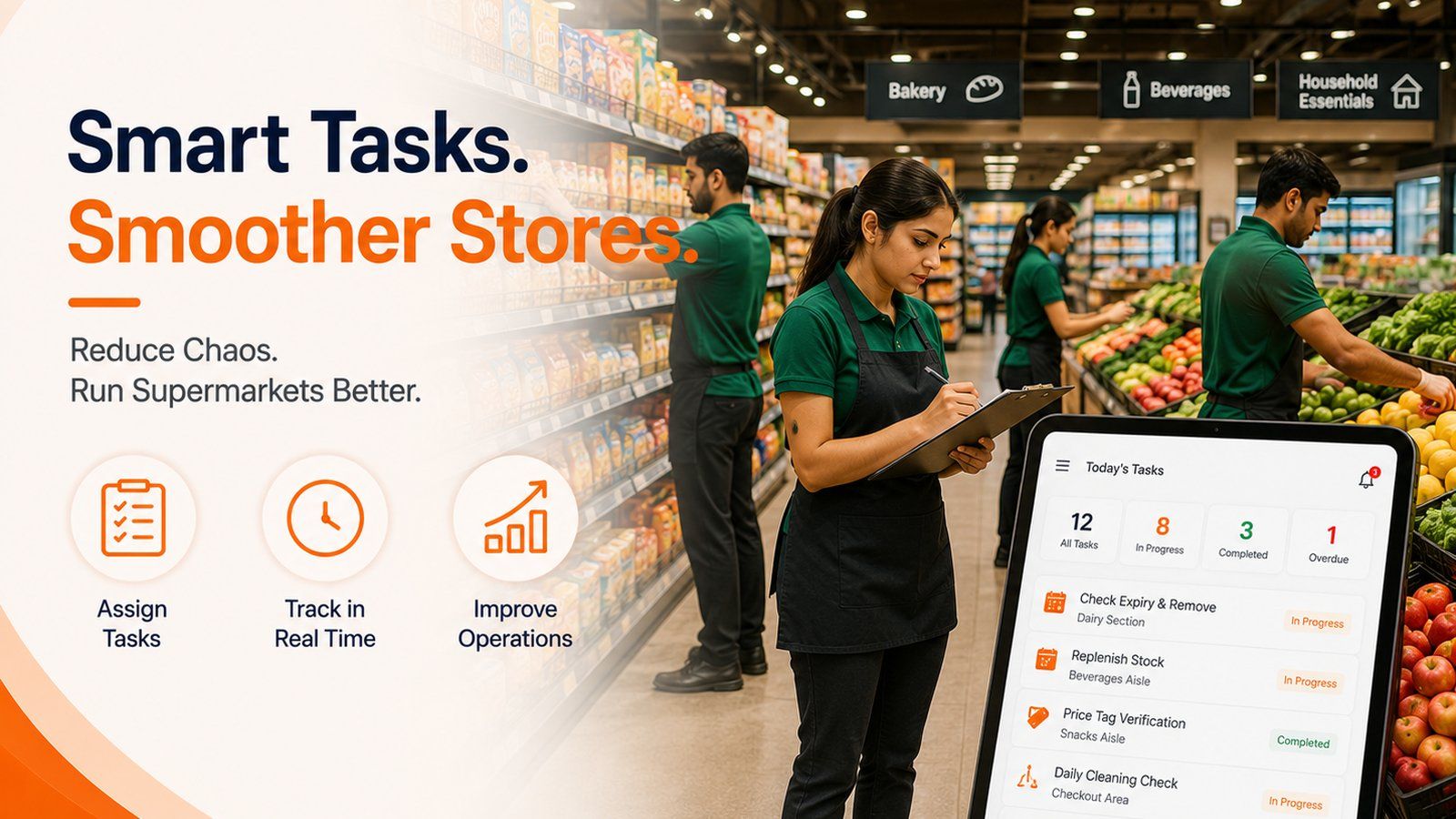
Walk into any supermarket before opening hours and you'll see hundreds of activities happening simultaneously:
- Fresh produce is being replenished.
- Bakery teams are preparing the day's products.
- Pricing labels are being updated.
- Promotional displays are being set up.
- Online orders are being picked.
- Cash counters are being prepared.
All of these tasks must be completed before the first customer walks through the door.
Now imagine managing this across dozens or even hundreds of stores.
Without a structured task management process, small operational delays quickly become bigger problems that affect customer experience, employee productivity, and store performance.
Why Supermarket Operations Are More Complex Than Ever
Modern supermarkets manage far more than inventory.
They are responsible for fresh food quality, promotional execution, online order fulfilment, food safety, housekeeping, staffing, customer service, and regulatory compliance.
Each department follows its own operational routines, but they all depend on one thing.
The right task being completed by the right person at the right time.
When that doesn't happen, operations begin to suffer.
The Hidden Cost of Poor Task Management
Most operational issues don't begin as major problems.
They start as small tasks that were delayed, forgotten, or completed incorrectly.
For example:
- Promotional displays are not ready when stores open.
- High-demand products remain in the backroom instead of reaching shelves.
- Expiry date checks are missed.
- Cleaning routines are delayed during busy trading hours.
- Temperature logs are completed late.
- Queue management receives little attention during peak periods.
Individually these may seem minor.
Collectively they reduce operational efficiency and create an inconsistent shopping experience.
Why Manual Processes No Longer Work
Many supermarkets still depend on printed checklists, WhatsApp groups, phone calls, or verbal instructions to coordinate daily work.
While these methods may work for individual stores, they become increasingly difficult to manage as store networks expand.
Managers often face challenges such as:
- Limited visibility into task completion
- Inconsistent execution between stores
- Delayed reporting
- Difficulty tracking recurring operational issues
- Limited accountability
Without real time information, regional teams often discover problems only during store visits or customer complaints.
What Smart Task Management Looks Like
Leading supermarket chains are moving towards digital task management that standardizes daily operations across every store.
Instead of relying on memory or manual follow-ups, tasks are automatically assigned, monitored, and tracked throughout the day.
This helps ensure critical operational activities are completed consistently.
Examples include:
Shelf Replenishment
Teams receive scheduled replenishment tasks based on department priorities, helping improve product availability throughout trading hours.
Fresh Food Quality Checks
Routine inspections for fresh produce, bakery, dairy, meat, and frozen products can be scheduled throughout the day to maintain quality standards.
Promotional Execution
Store teams receive clear instructions for campaign setup, ensuring promotional displays, pricing, and signage are implemented consistently across every location.
Housekeeping and Store Standards
Cleaning schedules, equipment inspections, and safety checks become part of structured daily workflows rather than ad hoc activities.
Better Visibility Leads to Better Decisions
Digital task management provides store managers and regional teams with greater operational visibility.
Instead of simply knowing whether tasks were assigned, they can understand:
- Which tasks are overdue
- Which stores consistently achieve high compliance
- Which operational activities are frequently missed
- Which departments require additional support
This allows managers to resolve issues before they affect customers.
Supporting Employees Instead of Creating More Work
Task management should simplify operations, not create additional administration.
When employees receive clear priorities, standard operating procedures, and mobile access to their daily activities, they spend less time looking for instructions and more time serving customers.
Managers also spend less time following up on routine activities and more time coaching teams and improving store performance.
The Role of AI in Supermarket Operations
Artificial intelligence is helping supermarkets move beyond simple task tracking.
AI powered video analytics can identify empty shelves, monitor checkout queues, detect housekeeping issues, and provide real time operational alerts using existing CCTV infrastructure.
When combined with digital task management, AI gives operations teams continuous visibility into store execution throughout the day.
Instead of reacting to operational problems, supermarkets can address them before they affect customers.
Conclusion
Running a successful supermarket depends on thousands of small operational tasks being completed consistently every day.
As supermarket operations become more complex, manual coordination becomes increasingly difficult to sustain.
Smart task management helps standardize execution, improve accountability, increase operational visibility, and ensure every store delivers a consistent shopping experience.
For supermarkets focused on operational excellence, better task management is no longer simply an efficiency initiative. It is a critical part of delivering reliable customer experiences and supporting long term business growth.

Festive Season Readiness Checklist for Retail Stores
Prepare your retail stores for festive season with a checklist covering pricing accuracy, stock readiness, billing, staffing, crowd safety, …
Read more
Retail Store and QSR Closing Checklist: Complete Guide
Read more
How to Open a Retail Store or QSR : A Step-by-Step Opening Checklist Guide
Why most opening checklists fail before the first mistake even happens, and how to build one that actually holds up across every shift and l…
Read more