

How Overstaffing and Understaffing Affect Profitability and Customer Experience
Getting staffing levels wrong can cost businesses far more than additional payroll expenses. Overstaffing reduces productivity and profitability, while understaffing can lead to lost sales, employee burnout, and poor customer experiences. This blog explores the hidden business impact of staffing imbalances and why finding the right workforce balance is critical for retail and hospitality operations.
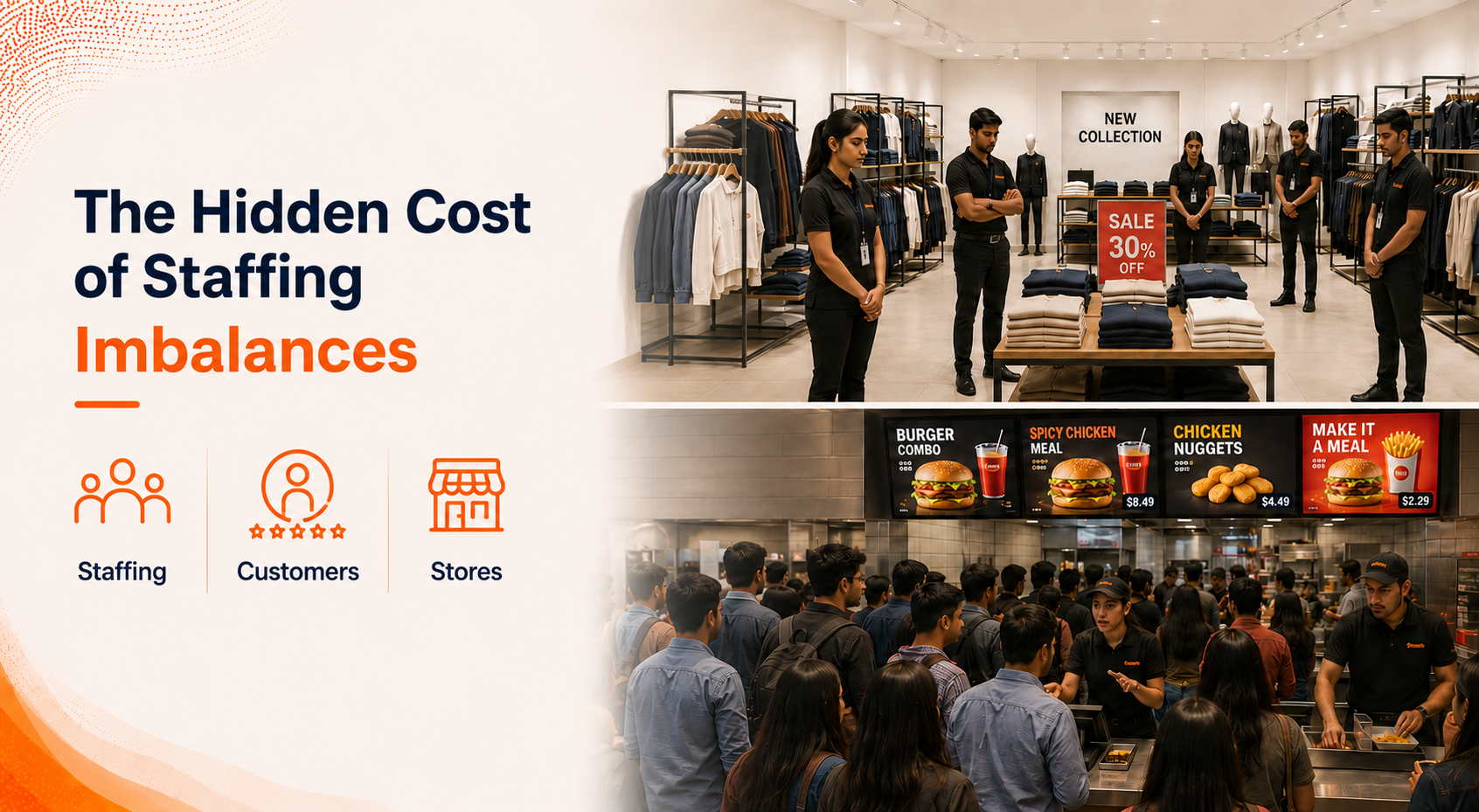
For retail and hospitality businesses, staffing decisions influence far more than labor costs. The number of employees scheduled at a particular location can directly impact productivity, customer experience, employee satisfaction, and profitability.
While most businesses focus on payroll expenses, the true cost of overstaffing and understaffing often remains hidden until it begins affecting operational performance.
For businesses operating across multiple locations, even small staffing inefficiencies can multiply quickly and create significant business challenges.
Why Staffing Levels Matter
Getting staffing levels right helps businesses:
- Match workforce availability with business demand
- Improve labor productivity
- Maintain service quality
- Control labor costs
- Create a better employee experience
- Deliver consistent customer experiences
When staffing levels don't align with operational needs, businesses often experience hidden costs that go beyond payroll.
The Hidden Cost of Overstaffing
Overstaffing may feel like a safer option, but it often creates unnecessary operational expenses.
1. Reduced Labor Productivity
When more employees are scheduled than required:
- Employees spend more time idle
- Productivity per labor hour decreases
- Workforce efficiency drops
- Labor costs remain unchanged despite lower output
Over time, reduced productivity can impact overall operational performance and profitability.
2. Higher Labor Costs Without Higher Revenue
Overstaffing increases payroll expenses without necessarily generating additional revenue.
Common outcomes include:
- Increased labor spend
- Lower profit margins
- Reduced cost efficiency
- Higher operating expenses
When repeated across multiple locations, these costs can significantly impact business profitability.
3. Inefficient Resource Allocation
Having more employees on shift doesn't always mean resources are being used effectively.
Businesses may experience:
- Overstaffed departments
- Underutilized employees
- Poor labor allocation
- Reduced workforce utilization
This limits an organization's ability to maximize the value of its workforce.
The Hidden Cost of Understaffing
While overstaffing affects costs, understaffing often impacts both revenue and customer experience.
1. Lost Revenue Opportunities
Customers are more likely to purchase when assistance is readily available.
Understaffing can lead to:
- Missed sales opportunities
- Reduced customer engagement
- Fewer upselling opportunities
- Lower revenue generation
These missed opportunities often go unnoticed but can significantly affect business performance over time.
2. Poor Customer Experience
Customer expectations continue to increase across retail and hospitality industries.
When businesses operate with insufficient staff:
- Waiting times increase
- Service quality declines
- Customer frustration rises
- Loyalty can be impacted
Consistently poor service experiences can influence repeat business and long-term customer retention.
3. Employee Burnout
Understaffing often places additional pressure on existing employees.
This can result in:
- Increased workloads
- Higher stress levels
- Reduced morale
- Lower productivity
- Increased absenteeism
Over time, burnout can affect both employee well-being and operational performance.
4. Increased Employee Turnover
Workforce challenges don't just affect daily operations, they also impact employee retention.
Consistent understaffing can lead to:
- Employee dissatisfaction
- Reduced engagement
- Higher turnover rates
- Increased recruitment costs
- Additional training expenses
Replacing experienced employees often requires significant time and resources.
When Small Staffing Issues Become Big Business Problems
At a single location, staffing inefficiencies may seem manageable.
However, for businesses operating multiple stores, restaurants, hotels, cloud kitchens, or fulfillment centers, these issues quickly multiply.
The impact often includes:
- Higher labor costs across locations
- Reduced operational consistency
- Workforce productivity challenges
- Increased management effort
- Inconsistent customer experiences
Even minor staffing inefficiencies can create substantial financial and operational consequences when scaled across an organization.
What Businesses Often Overlook
The impact of incorrect staffing levels extends beyond labor costs.
Over time, businesses may experience:
- Lower workforce productivity
- Reduced profitability
- Increased employee turnover
- Poor customer experiences
- Lower customer loyalty
- Operational inefficiencies
- Slower business growth
These challenges often develop gradually, making them difficult to identify until performance begins to suffer.
Finding the Right Staffing Balance
The goal isn't maximum staffing or minimum staffing.
The goal is having the right number of employees at the right location and the right time.
Businesses that achieve this balance are better positioned to:
- Improve labor utilization
- Control workforce costs
- Increase productivity
- Enhance customer experiences
- Support sustainable growth
Conclusion
Overstaffing and understaffing are often viewed as labor cost challenges, but their impact extends much further.
Incorrect staffing levels can affect productivity, profitability, employee satisfaction, customer loyalty, and overall business performance. While the impact of a single staffing decision may seem small, these inefficiencies can quickly multiply across locations and create significant operational challenges.
For retail and hospitality businesses, finding the right staffing balance is essential for maintaining efficiency, controlling costs, and delivering consistent customer experiences.
Related Reading
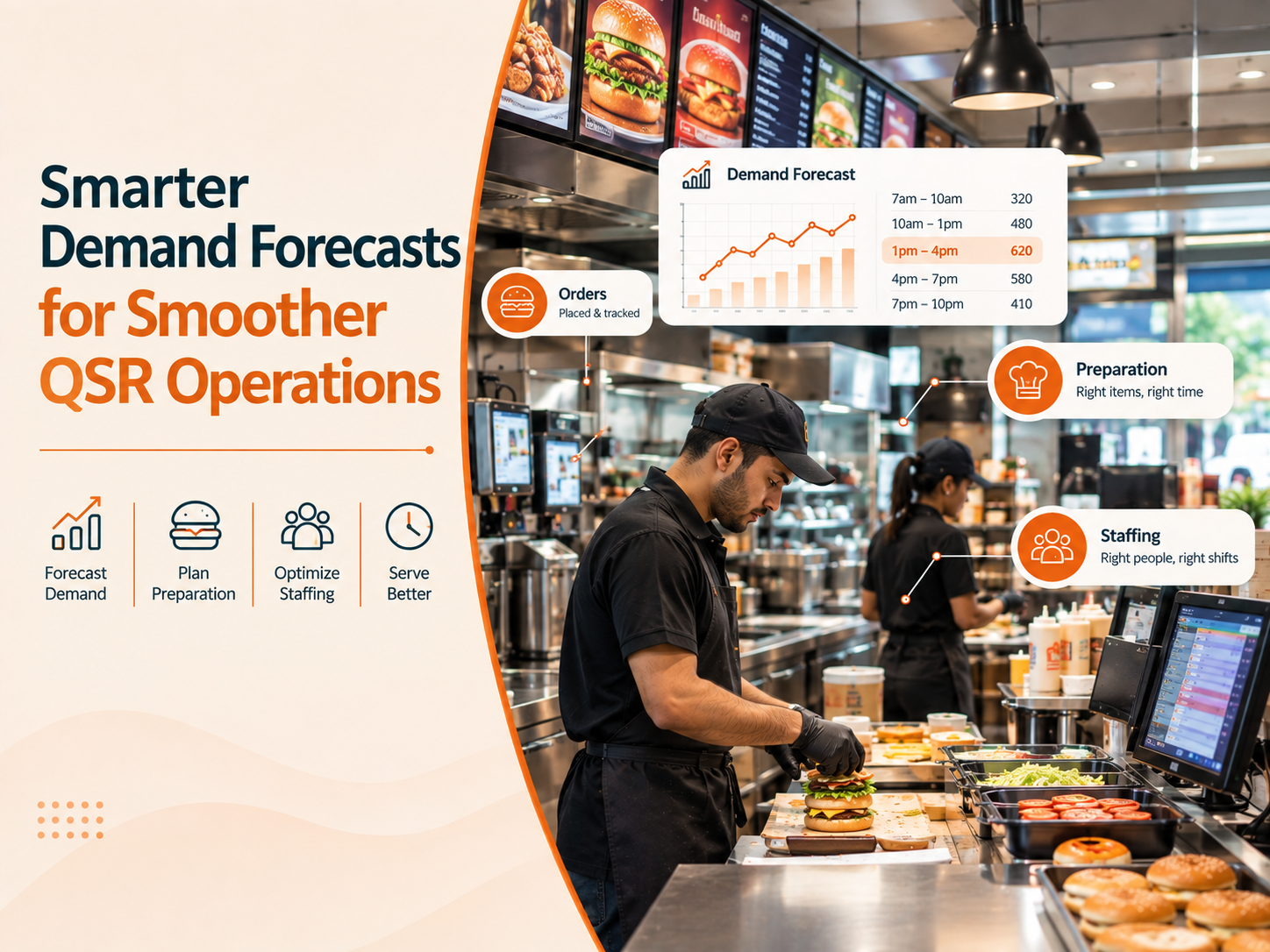
Demand Forecasting in QSR: How Outlets Predict Orders, Prep, and Staffing
Learn how QSR demand forecasting helps predict orders, plan food preparation, optimize staffing, manage perishability, and improve outlet op…
Read more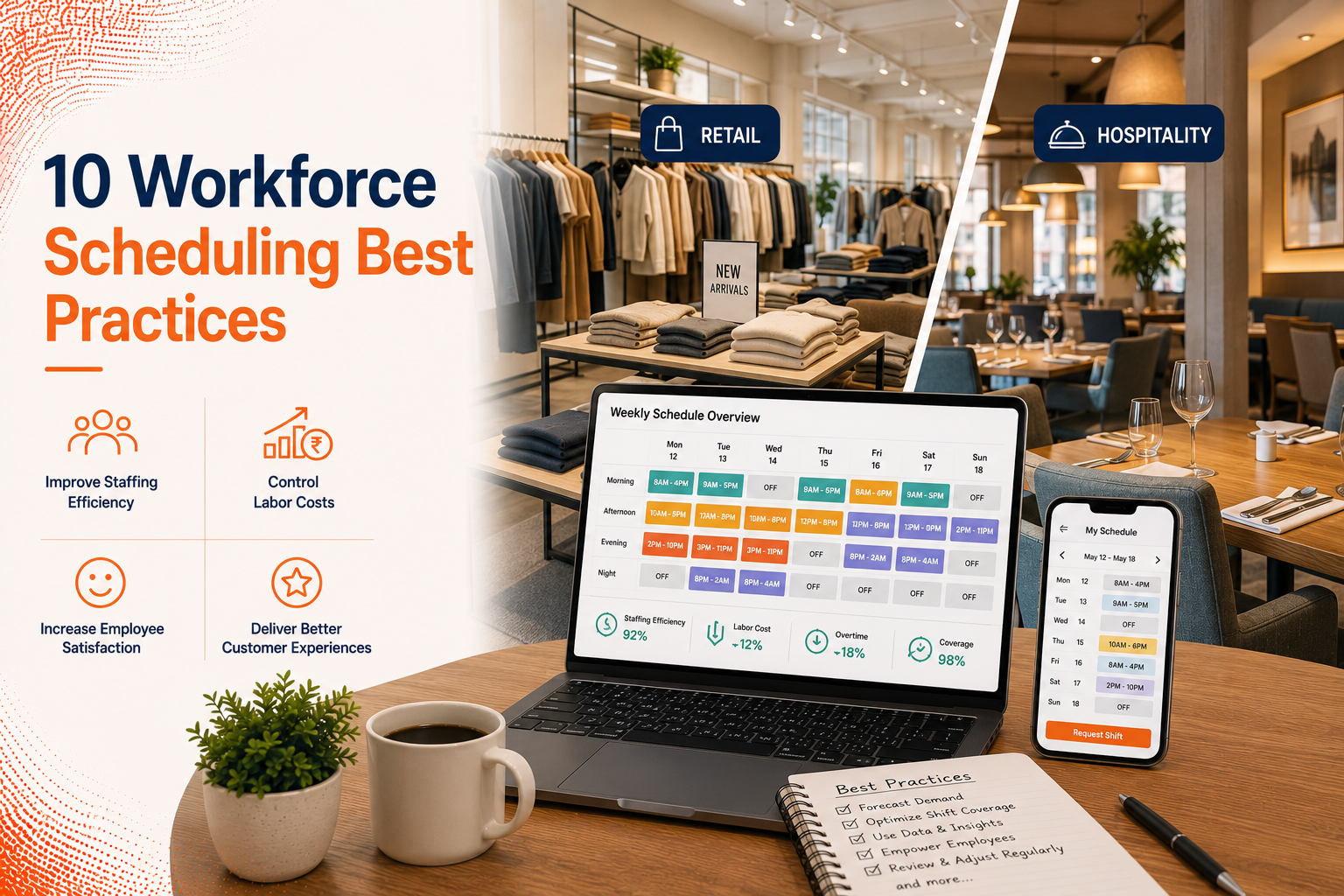
10 Workforce Scheduling Best Practices Every Business Should Follow
Discover 10 workforce scheduling best practices that help businesses improve staffing efficiency, control labor costs, increase employee sat…
Read more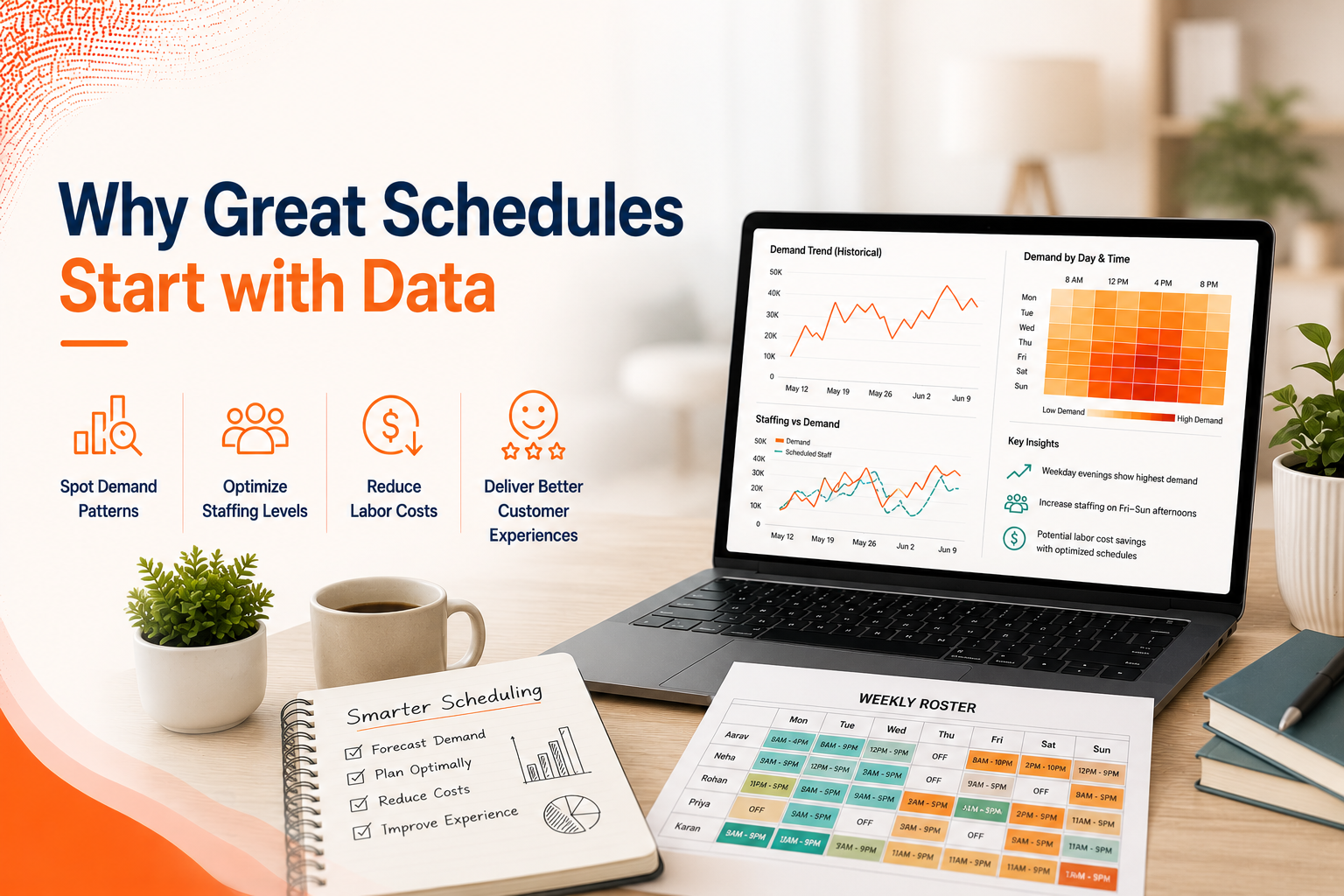
How Historical Data Improves Workforce Scheduling
Learn how historical data helps businesses improve workforce scheduling by identifying demand patterns, optimizing staffing levels, reducing…
Read more