

Why Beauty and Cosmetic Brands Need SOP Scoring and Automation to Deliver Consistent Store Experiences
Learn how SOP scoring and digital SOP management help beauty and cosmetic brands improve store compliance, visual merchandising, hygiene standards, and customer experience across multiple locations.
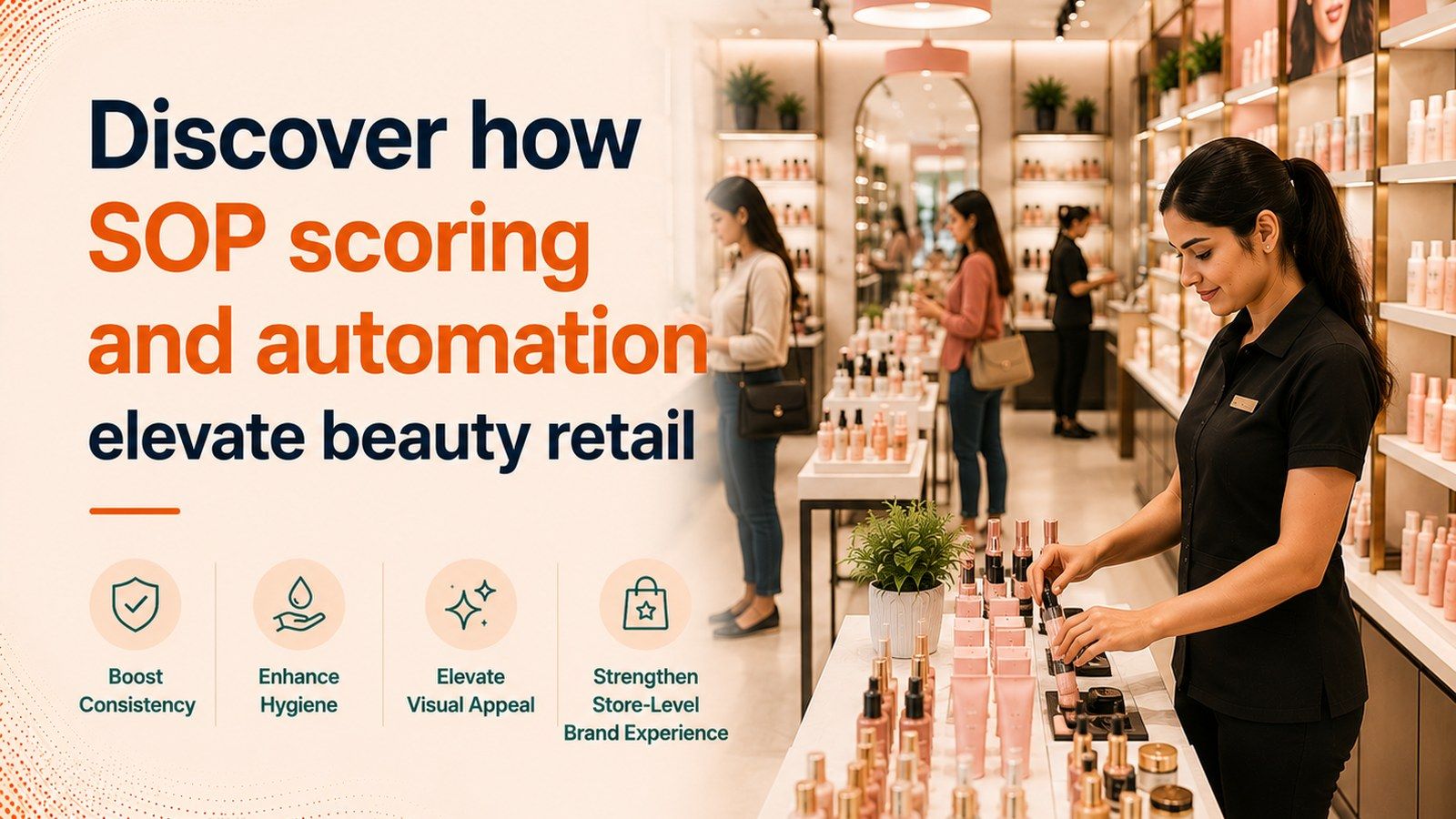
In beauty and cosmetic retail, customers notice the details. A well organized product display, spotless tester stations, knowledgeable beauty advisors, and a clean consultation area all shape how customers perceive a brand. While product quality may attract customers, consistent in store execution is what builds trust and loyalty.
For brands operating across multiple locations, maintaining these standards every day is a significant operational challenge. Even the most comprehensive Standard Operating Procedures are ineffective if there is no reliable way to measure whether they are being followed.
This is why many leading beauty and cosmetic retailers are moving towards digital SOP management with performance based scoring. It gives operations teams complete visibility into store execution while helping create a culture of accountability and continuous improvement.
Why Traditional SOP Audits Fall Short
Many beauty retailers still rely on paper checklists, spreadsheets, or manual inspections to monitor store operations. While these methods may confirm that an audit was completed, they rarely provide meaningful operational insights.
Some of the most common challenges include:
- Limited visibility into daily store execution
- Inconsistent audit standards across locations
- Little or no proof that tasks have actually been completed
- Difficulty comparing store performance
- Limited historical data to identify recurring operational issues
As store networks expand, manual audits become increasingly difficult to manage and often fail to provide the information needed to improve operations.
From Checklists to Performance Measurement
The purpose of an SOP is not simply to complete a checklist. It is to ensure that every customer receives the same high quality experience regardless of which store they visit.
This is where SOP scoring adds significant value.
Instead of recording whether a task was completed, scoring evaluates how well operational standards are being maintained. Every audit contributes to a measurable performance score that allows operations teams to benchmark stores, identify trends, and focus improvement efforts where they are needed most.
Rather than relying on assumptions, decisions are supported by objective operational data.
The Operational Areas That Matter Most
Tester Hygiene
Tester products are one of the most important customer touchpoints in a beauty store. Customers expect them to be clean, safe, and readily available.
An effective SOP should evaluate:
- Cleanliness of testers
- Product condition and expiry compliance
- Shelf cleanliness
- Availability of disposable applicators
- Overall presentation
Maintaining tester hygiene is essential for protecting customer confidence and reinforcing the quality of the brand.
Visual Merchandising
Visual merchandising is much more than aesthetics. It directly influences product discovery, customer engagement, and purchasing decisions.
Store audits should measure:
- Compliance with approved planograms
- Correct product placement
- Promotional display execution
- Campaign visibility
- Shelf presentation
Consistent merchandising ensures customers experience the same brand standards across every location.
Consultation Areas
Many beauty brands offer personalised skincare and makeup consultations. These dedicated spaces should reflect the same quality standards as the products themselves.
Operational checks should include:
- Cleanliness and organisation
- Sanitisation of tools and equipment
- Product availability
- Lighting and presentation
- Overall customer readiness
A well maintained consultation area strengthens customer trust and enhances the overall shopping experience.
Staff Presentation
In beauty retail, employees are an extension of the brand.
Customers naturally associate staff appearance with professionalism, product quality, and service standards.
Regular audits should evaluate:
- Grooming standards
- Uniform compliance
- Personal presentation
- Product readiness
- Adherence to brand guidelines
Consistent staff presentation reinforces a premium brand image across every store.
Customer Engagement Standards
Exceptional beauty retail goes beyond maintaining attractive stores.
Store teams should consistently deliver knowledgeable, personalised customer service.
Operational reviews should assess whether beauty advisors are:
- Greeting customers professionally
- Understanding customer requirements
- Recommending suitable products
- Communicating ongoing promotions accurately
- Following approved consultation practices
These standards improve customer satisfaction while increasing conversion rates and average transaction value.
Why Scoring Changes the Way Stores Are Managed
Without measurable performance, operational issues often remain hidden until customer complaints begin to increase.
SOP scoring enables operations teams to identify problems early.
If one store consistently records lower hygiene scores while another struggles with merchandising compliance, managers can investigate the root cause before the issue affects customer experience.
Historical scoring also makes it easier to identify recurring patterns, measure improvement over time, and evaluate the effectiveness of coaching and training initiatives.
Instead of managing stores based on assumptions, leaders can make informed decisions using operational data.
Building a Culture of Continuous Improvement
One of the biggest advantages of SOP scoring is that it encourages continuous improvement rather than simple compliance.
Store managers understand the standards expected of them.
Regional managers can benchmark performance across locations.
High performing stores become examples of best practice.
Stores requiring additional support can be identified quickly and provided with targeted coaching.
Over time, operational excellence becomes part of the organisation's culture rather than an activity performed only during audits.
Conclusion
As beauty and cosmetic brands continue to expand, maintaining consistent execution across every store becomes increasingly important. Customers expect the same level of cleanliness, presentation, service, and professionalism regardless of where they shop.
SOP scoring provides retailers with a practical way to measure operational performance, identify improvement opportunities, and ensure brand standards are consistently maintained across every location.
For businesses focused on delivering exceptional customer experiences, operational consistency is no longer a competitive advantage. It has become an expectation.

Festive Season Readiness Checklist for Retail Stores
Prepare your retail stores for festive season with a checklist covering pricing accuracy, stock readiness, billing, staffing, crowd safety, …
Read more
Retail Store and QSR Closing Checklist: Complete Guide
Read more
How to Open a Retail Store or QSR : A Step-by-Step Opening Checklist Guide
Why most opening checklists fail before the first mistake even happens, and how to build one that actually holds up across every shift and l…
Read more