

7 Workforce Scheduling Mistakes Multi-Location Businesses Make
Workforce scheduling directly impacts labor costs, productivity, employee satisfaction, and customer experience. Yet many retail and hospitality businesses continue to struggle with issues such as overstaffing, understaffing, manual scheduling processes, and limited visibility across locations. This blog highlights seven common workforce scheduling mistakes that can affect operational performance and business profitability, with practical examples from multi-location retail and hospitality operations.
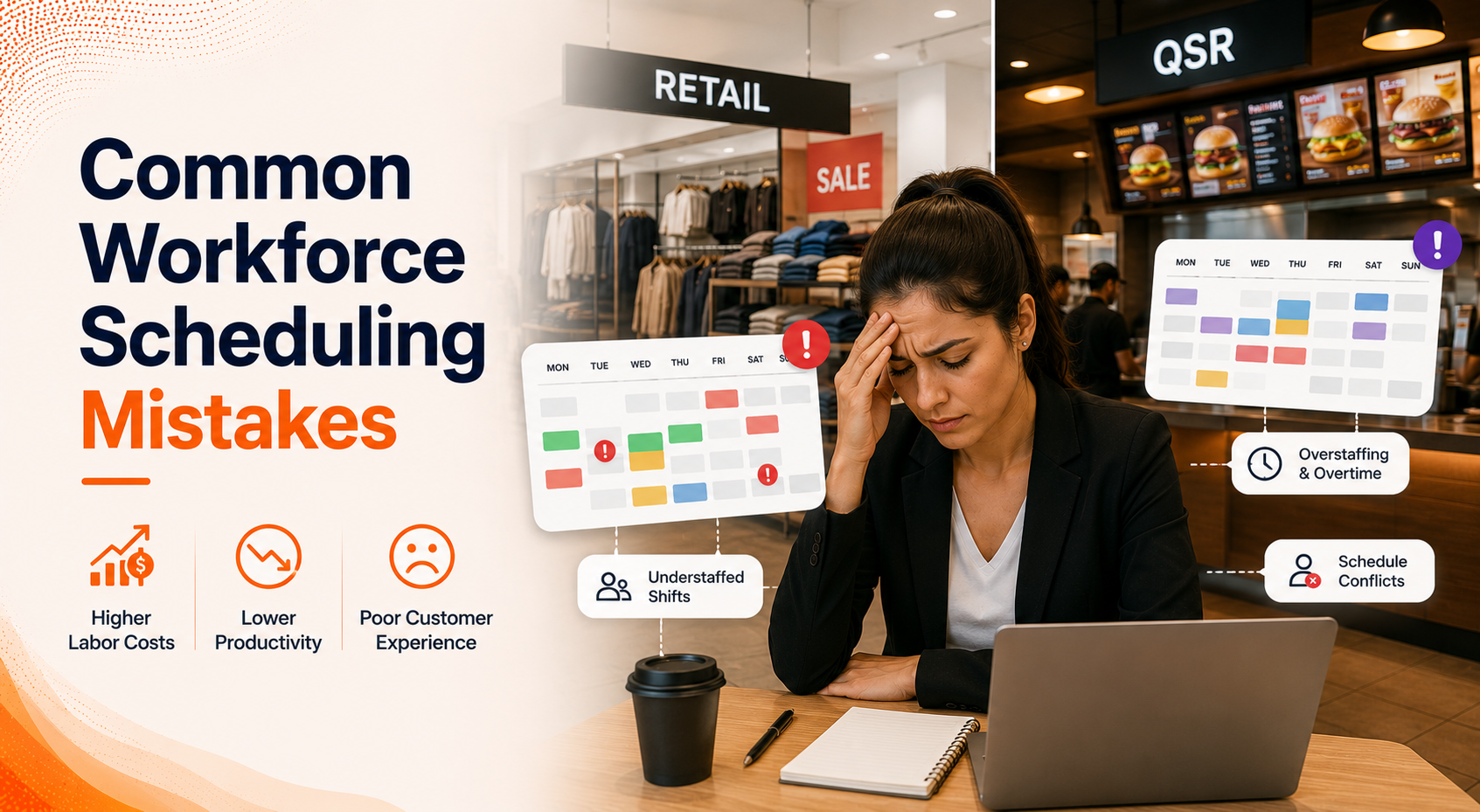
Workforce scheduling is one of the most important operational functions in retail and hospitality businesses. Whether you're managing a fashion retail chain, QSR brand, pet store network, cloud kitchen, supermarket, or hotel group, having the right employees available at the right time directly impacts customer experience, productivity, and labor costs.
However, workforce scheduling is often more complex than simply assigning shifts. Many businesses continue to rely on assumptions, spreadsheets, and manual planning processes that create inefficiencies across locations.
While these challenges may seem minor initially, they can quickly lead to increased labor costs, staffing shortages, employee dissatisfaction, and inconsistent customer experiences.
In this blog, we'll explore seven common workforce scheduling mistakes that multi-location businesses make and the impact these challenges can have on daily operations.
1. Scheduling Based on Assumptions Instead of Actual Demand
Many managers create schedules based on past habits rather than actual business demand.
For example, a fashion retail store may schedule the same number of associates every weekday because "that's how it's always been done." However, customer traffic often varies significantly throughout the week. While Monday mornings may be relatively quiet, Fridays, weekends, and promotional events can bring a sharp increase in footfall.
Without considering these demand fluctuations, businesses often find themselves understaffed during busy periods and overstaffed during slower hours.
Common consequences include:
- Inconsistent customer service
- Increased employee workload during peak periods
- Lost sales opportunities
- Poor workforce utilization
2. Overstaffing During Low-Traffic Hours
To avoid service disruptions, businesses sometimes schedule more employees than necessary. While this may appear to be a safer approach, it often results in avoidable labor costs.
Consider a pet store chain operating across multiple locations. Managers may schedule a full team throughout the day, even though customer traffic drops significantly during weekday afternoons. Employees remain on the clock, but there is limited work available to justify the staffing levels.
When this happens across multiple locations, labor expenses can increase without contributing to revenue growth.
The impact often includes:
- Higher payroll costs
- Reduced labor productivity
- Lower profitability
- Inefficient resource allocation
3. Understaffing During Peak Business Hours
While overstaffing affects profitability, understaffing can directly impact customer experience and revenue.
A QSR outlet may operate efficiently during non-peak hours but struggle during lunch and dinner rush periods if staffing levels are not aligned with demand. Long queues begin to form, orders take longer to prepare, and employees become overwhelmed trying to manage both customer service and kitchen operations.
Customers who experience delays may choose not to return, while employees face increased stress and burnout.
Common outcomes include:
- Longer customer wait times
- Reduced service quality
- Employee fatigue
- Lost sales opportunities
- Lower customer satisfaction
4. Relying on Spreadsheets and WhatsApp for Scheduling
Many businesses still manage workforce schedules through Excel sheets, emails, and WhatsApp groups.
While these tools may work for smaller teams, they become increasingly difficult to manage as operations expand.
For example, a cloud kitchen operating multiple delivery brands may update staff schedules in spreadsheets while communicating shift changes through WhatsApp. If an employee misses an update or accesses an outdated version of the schedule, the kitchen could suddenly find itself short-staffed during a high-volume delivery window.
Small communication gaps can quickly create operational disruptions.
Challenges often include:
- Scheduling errors
- Version control issues
- Miscommunication
- Increased administrative effort
- Lack of workforce visibility
5. Ignoring Employee Availability and Preferences
Creating schedules without considering employee availability often creates unnecessary staffing challenges.
In the hospitality industry, housekeeping teams frequently operate across different shifts and schedules. When employee availability is not considered during workforce planning, managers often face last-minute absenteeism, shift swap requests, and scheduling conflicts.
Over time, this can affect both employee satisfaction and operational efficiency.
Common consequences include:
- Higher absenteeism rates
- Increased shift changes
- Lower employee engagement
- Scheduling conflicts
- Higher staff turnover
6. Lack of Visibility Across Multiple Locations
As businesses expand, workforce scheduling becomes increasingly difficult to manage.
An ecommerce dark store network may experience staffing shortages at one fulfillment center while another nearby location has excess manpower available during the same shift. Without centralized visibility, managers cannot easily identify these workforce imbalances or allocate resources where they are needed most.
As a result, some locations become overburdened while others remain underutilized.
This often leads to:
- Uneven staffing levels
- Resource inefficiencies
- Reduced productivity
- Inconsistent operational performance
- Limited workforce flexibility
7. Treating Workforce Scheduling as an Administrative Task Instead of a Strategic Function
Many organizations still view workforce scheduling as simply assigning employees to shifts.
In reality, scheduling decisions influence labor costs, customer experience, workforce productivity, and overall business performance.
Consider a supermarket chain that creates weekly schedules without reviewing customer traffic patterns, sales trends, or labor cost data. While schedules may appear adequate on paper, they often fail to align staffing levels with actual operational requirements.
Businesses that treat scheduling as a routine administrative task frequently miss opportunities to optimize workforce performance and improve profitability.
The result is often:
- Higher labor costs
- Lower workforce productivity
- Missed optimization opportunities
- Poor staffing decisions
- Reduced operational efficiency
The Hidden Cost of Poor Workforce Scheduling
Individually, these mistakes may seem manageable. However, across multiple stores, restaurants, cloud kitchens, pet stores, dark stores, supermarkets, or hotel properties, they can create significant operational challenges.
The hidden costs often include:
- Rising labor expenses
- Increased overtime
- Employee burnout
- Higher staff turnover
- Scheduling conflicts
- Reduced workforce productivity
- Poor customer experiences
- Lower profitability
For multi-location businesses, workforce scheduling has a direct impact on both operational performance and financial outcomes.
Conclusion
Workforce scheduling is far more than creating employee rosters. It plays a critical role in controlling labor costs, maintaining service standards, improving employee productivity, and delivering consistent customer experiences.
From scheduling based on assumptions and relying on spreadsheets to lacking visibility across locations, these common mistakes can create significant operational inefficiencies if left unaddressed.
Recognizing these challenges is the first step toward building a more effective workforce scheduling process that supports business growth and operational excellence.
In our next article, we'll explore how smarter workforce scheduling helps businesses reduce labor costs without impacting customer experience.
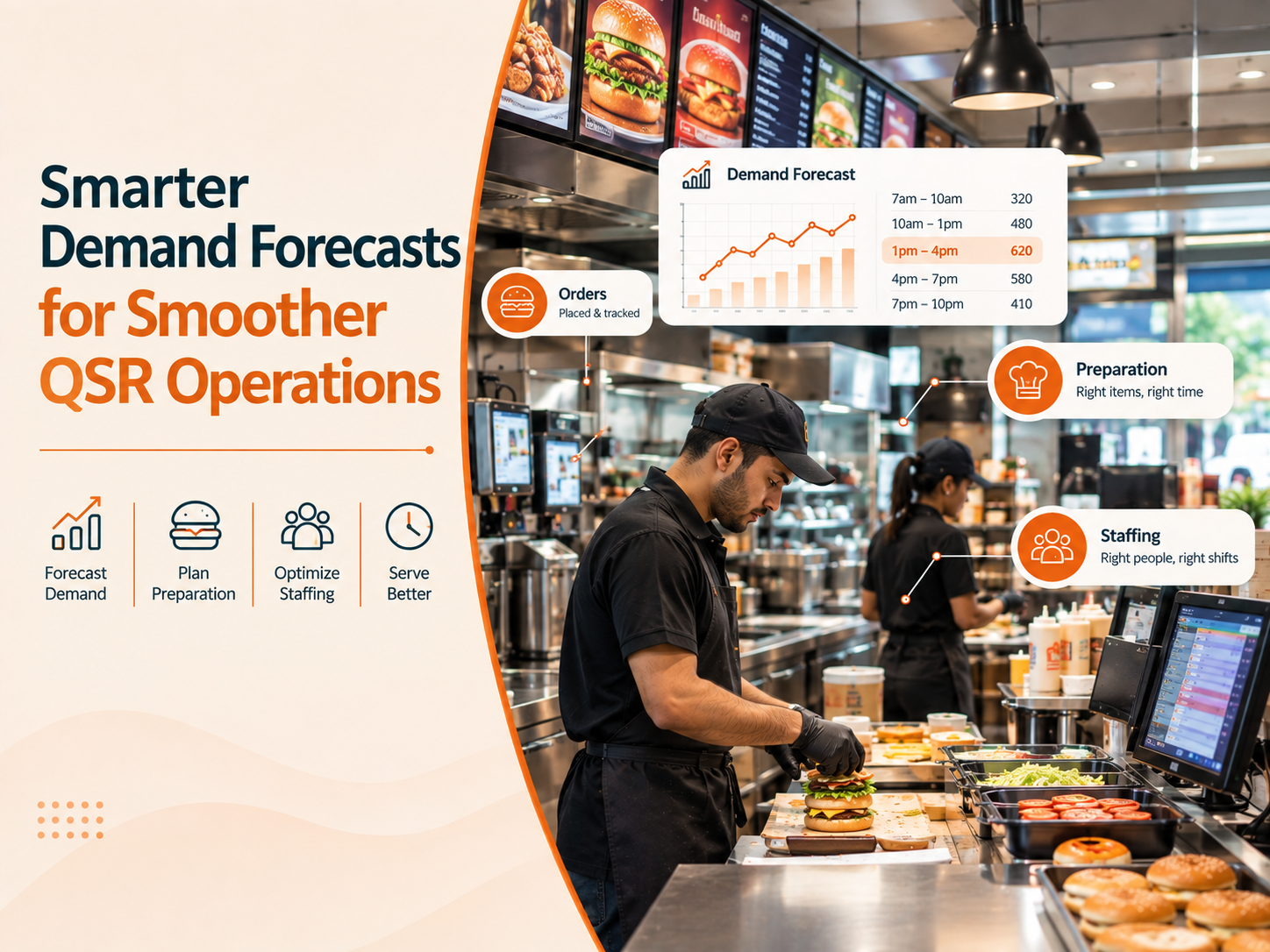
Demand Forecasting in QSR: How Outlets Predict Orders, Prep, and Staffing
Learn how QSR demand forecasting helps predict orders, plan food preparation, optimize staffing, manage perishability, and improve outlet op…
Read more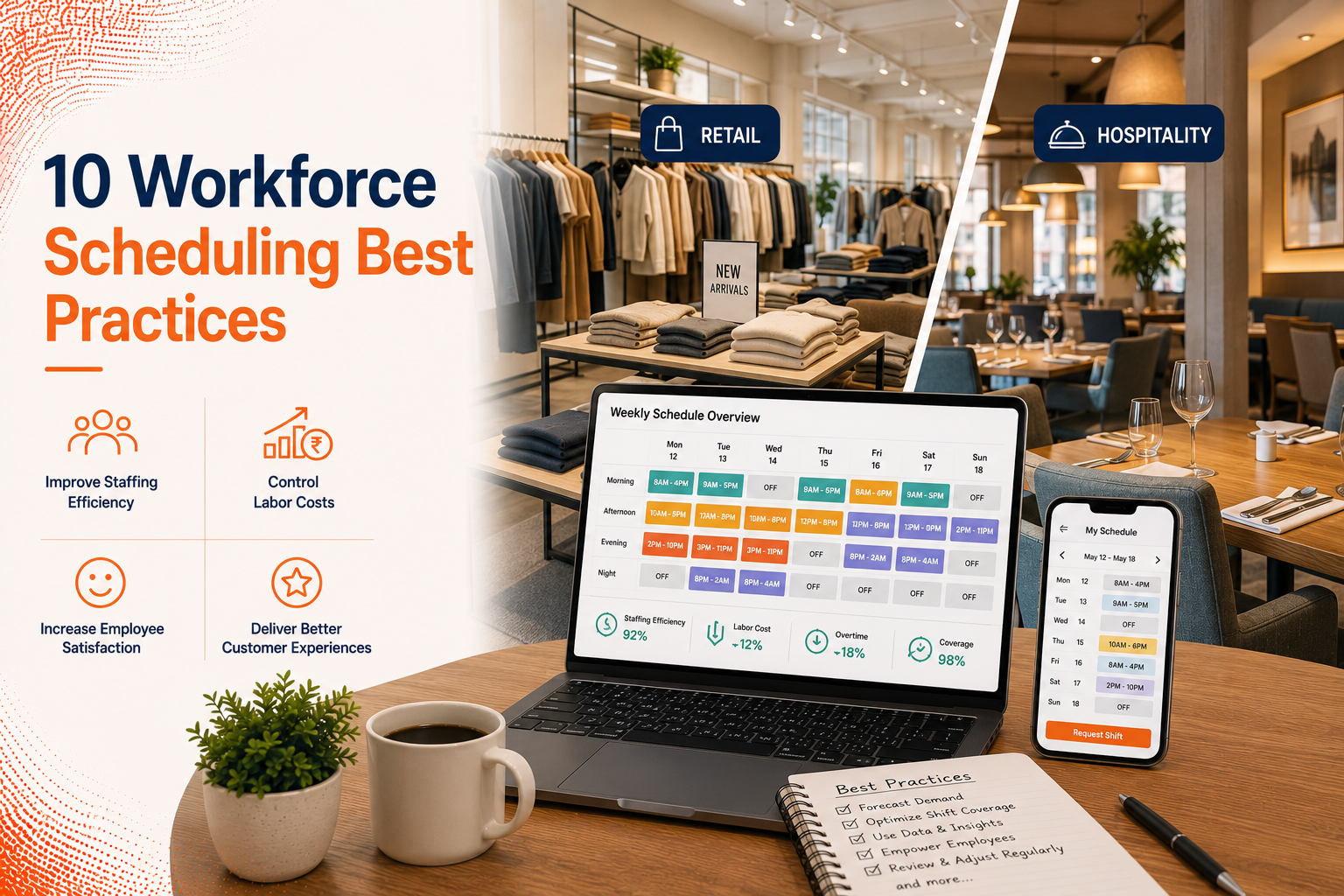
10 Workforce Scheduling Best Practices Every Business Should Follow
Discover 10 workforce scheduling best practices that help businesses improve staffing efficiency, control labor costs, increase employee sat…
Read more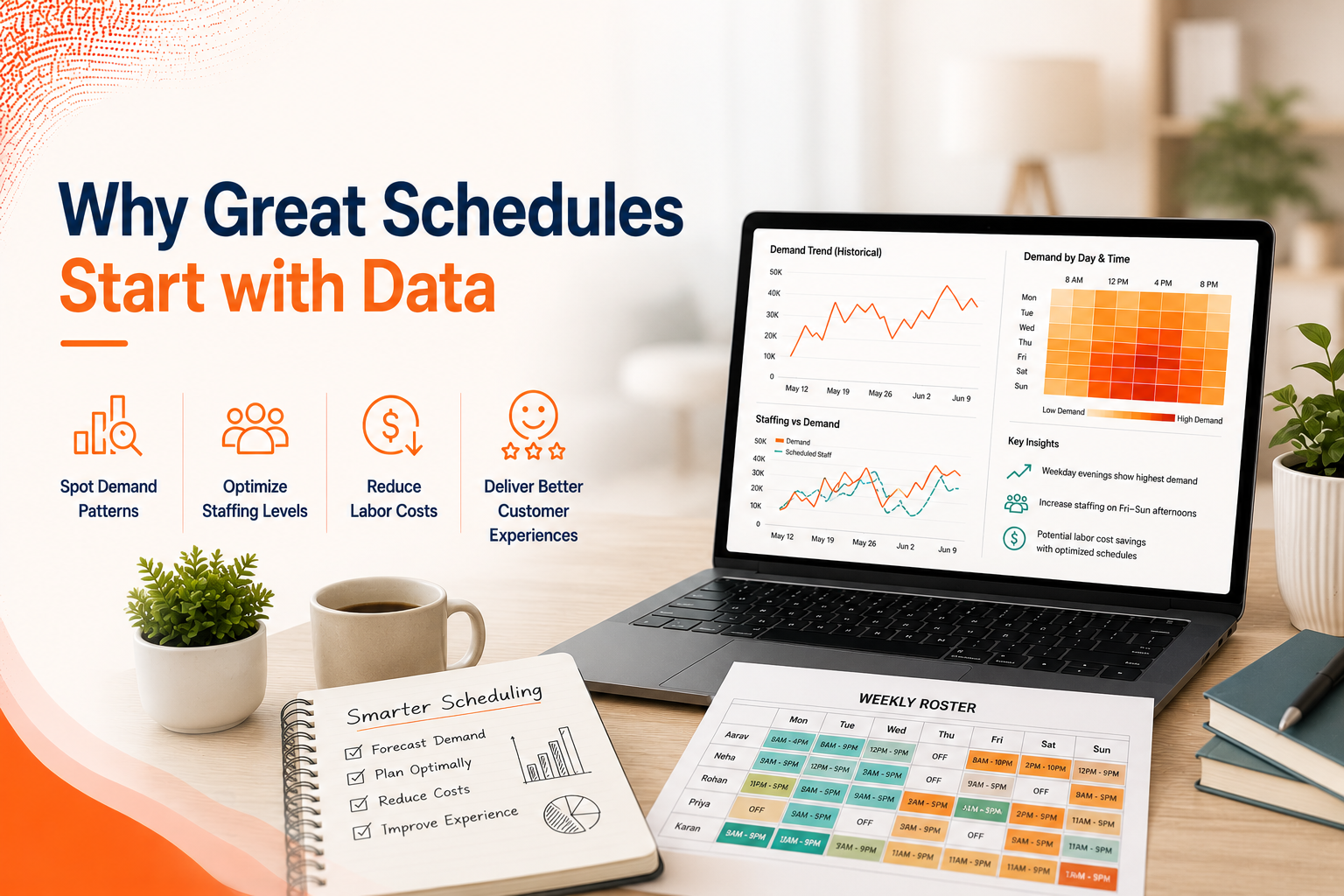
How Historical Data Improves Workforce Scheduling
Learn how historical data helps businesses improve workforce scheduling by identifying demand patterns, optimizing staffing levels, reducing…
Read more