

What Is Footfall? Meaning, Importance and How Businesses Use It
Learn the meaning of footfall, why it matters for retail and hospitality businesses, how it is measured, and how AI-powered footfall analytics help improve operations and customer experience.
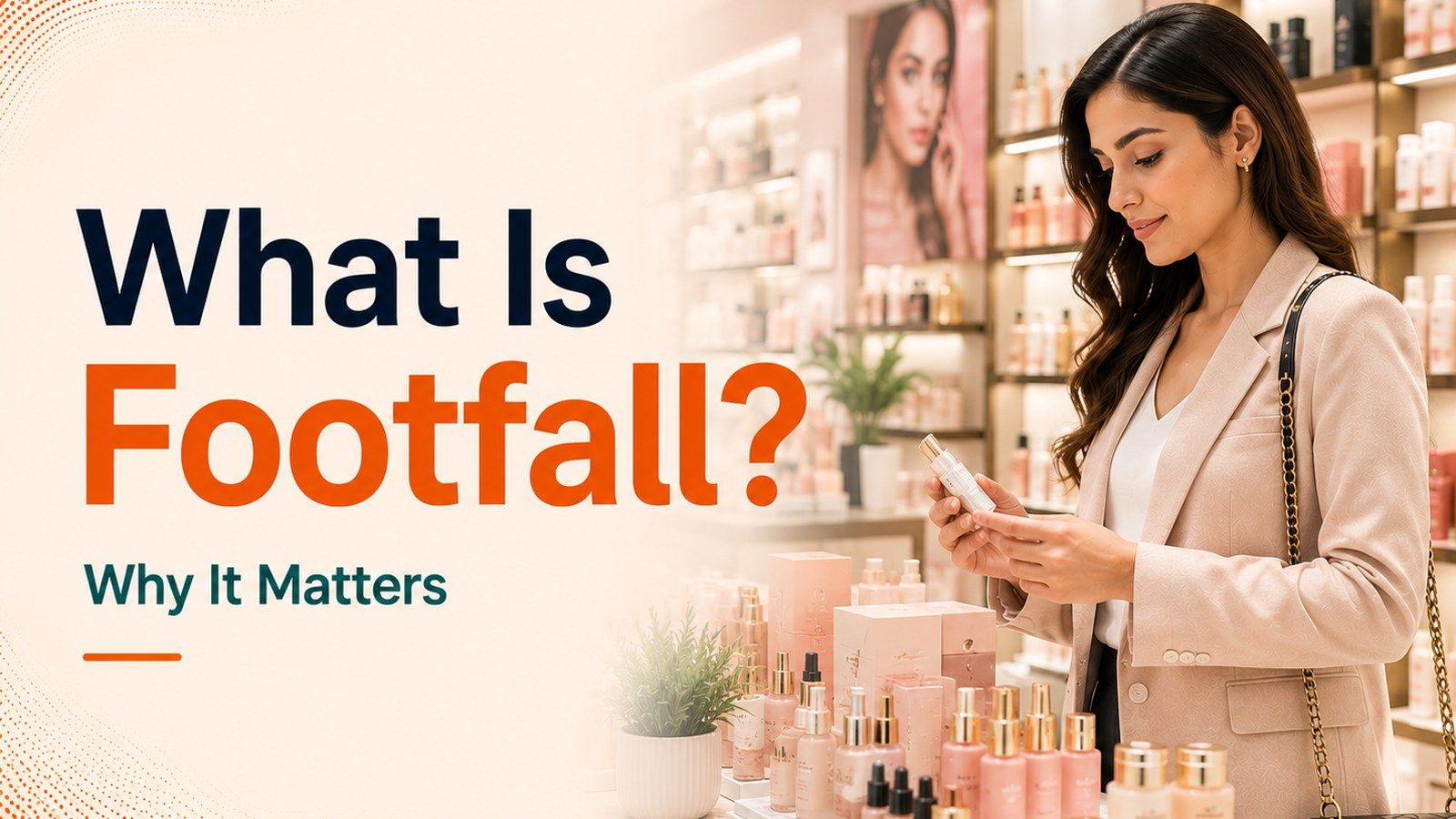
Every customer who walks into your store represents an opportunity. They may browse, make a purchase, ask for assistance, or simply explore your products. But before any of that happens, they first contribute to one of the most important business metrics: footfall.
Whether you operate a retail store, restaurant, shopping mall, hotel, or any customer-facing business, understanding footfall helps you make smarter decisions about staffing, merchandising, marketing, and operations.
In this article, we'll explain what footfall means, why it matters, how it is measured, and how modern AI-powered analytics are helping businesses turn visitor data into actionable insights.
What Is Footfall?
Footfall refers to the number of people who enter a physical location during a specific period.
For example, if 800 customers visit a supermarket on a Saturday, the store's footfall for that day is 800.
Footfall is commonly measured daily, weekly, monthly, or during specific campaigns to understand customer traffic patterns and evaluate business performance.
It is also commonly referred to as store traffic or visitor count.
Why Is Footfall Important?
Footfall is much more than a visitor count. It helps businesses understand customer demand and evaluate how effectively their operations are performing.
A retailer launching a promotional campaign wants to know whether more customers visited the store.
A restaurant wants to identify its busiest meal periods.
A shopping mall wants to understand which entrances receive the highest traffic.
These insights help businesses make informed operational decisions rather than relying on assumptions.
How Businesses Use Footfall Data
Footfall data supports several important business decisions.
Measuring Marketing Performance
Marketing campaigns should generate more than impressions. They should bring customers into your business.
Comparing footfall before and after a promotion helps businesses evaluate whether their campaigns successfully increased store visits.
Optimizing Staffing
Knowing when customers typically visit allows managers to schedule employees more efficiently.
Instead of overstaffing during quiet periods or being understaffed during peak hours, businesses can align staffing with actual customer demand.
Improving Store Layouts
Understanding where customers spend the most time helps retailers optimise product placement and merchandising.
Popular products can be positioned strategically, while low-traffic areas can be redesigned to improve customer engagement.
Forecasting Demand
Historical footfall trends help businesses anticipate busy periods and prepare accordingly.
This improves inventory planning, workforce scheduling, and customer service.
Footfall Alone Does Not Measure Success
High footfall does not automatically mean strong business performance.
Imagine two stores each receive 1,000 visitors in a day.
One store generates significantly higher sales than the other.
The difference lies in how effectively each store converts visitors into customers.
To gain a complete picture, businesses should analyse footfall alongside metrics such as:
- Conversion rate
- Average transaction value
- Dwell time
- Queue waiting time
- Repeat customer visits
Together, these metrics provide a much deeper understanding of customer behaviour.
How Is Footfall Measured?
Businesses use different technologies depending on their operational requirements.
Traditional methods include:
- Manual counting
- Infrared sensors
- Thermal sensors
- Wi-Fi and Bluetooth tracking
Today, many organisations are adopting AI-powered video analytics.
Using existing CCTV cameras, AI can do far more than simply count visitors.
It can analyse customer movement, measure dwell time, generate heatmaps, monitor queues, and identify peak trading periods, giving businesses richer operational insights.
Industries That Benefit from Footfall Analytics
Footfall tracking is valuable across many industries.
Retail
Retailers use footfall data to evaluate store performance, optimise merchandising, measure campaign success, and improve staffing.
Restaurants and Cafés
Restaurants analyse footfall to understand peak dining hours, improve table turnover, reduce waiting times, and schedule employees efficiently.
Shopping Malls
Mall operators use footfall analytics to evaluate tenant performance, plan events, and optimise visitor flow throughout the property.
Hotels
Hotels analyse guest movement across lobbies, restaurants, and common areas to improve service delivery and resource planning.
The Future of Footfall Analytics
Footfall tracking has evolved significantly over the past decade.
Modern AI-powered analytics provide insights that were previously impossible to measure.
Businesses can now understand:
- Customer movement patterns
- High-performing and low-performing zones
- Queue lengths
- Peak operating hours
- Customer dwell time
- Sales conversion when integrated with POS systems
Rather than simply reporting visitor numbers, AI helps businesses make faster, data-driven operational decisions.
Conclusion
Footfall is one of the most valuable indicators of customer demand and business performance. While knowing how many people enter your premises is important, the real value comes from understanding how they behave once they are inside.
By combining footfall data with operational metrics such as conversion rates, dwell time, and customer movement, businesses can improve staffing, optimise layouts, evaluate marketing effectiveness, and deliver better customer experiences.
As AI-powered analytics continue to evolve, footfall is becoming much more than a counting metric. It is becoming a strategic tool for improving operational performance and supporting smarter business decisions.
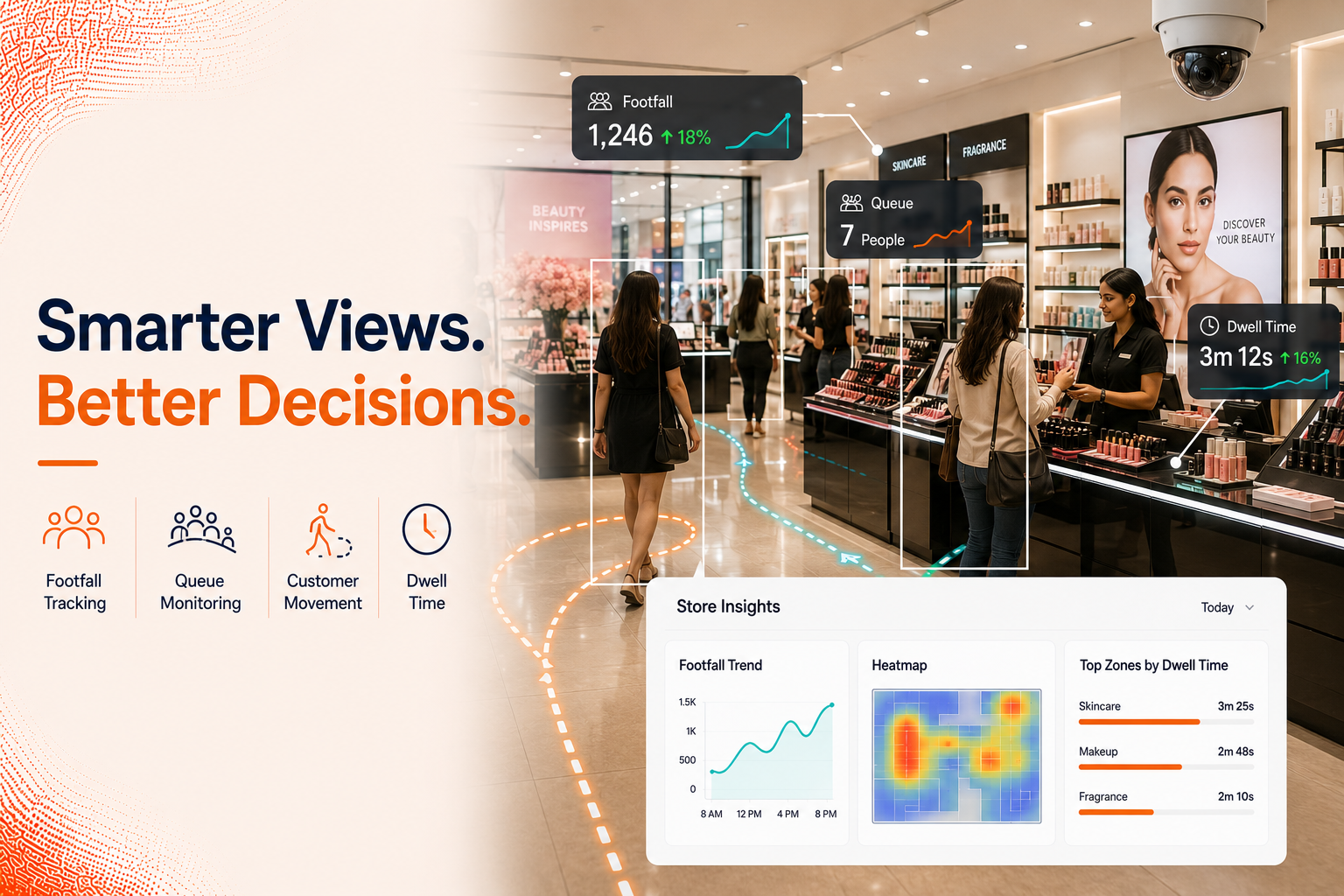
What Can AI Actually Detect Inside a Retail Store?
Discover what AI video analytics can actually detect inside a retail store from footfall and queues to customer movement and dwell time and …
Read more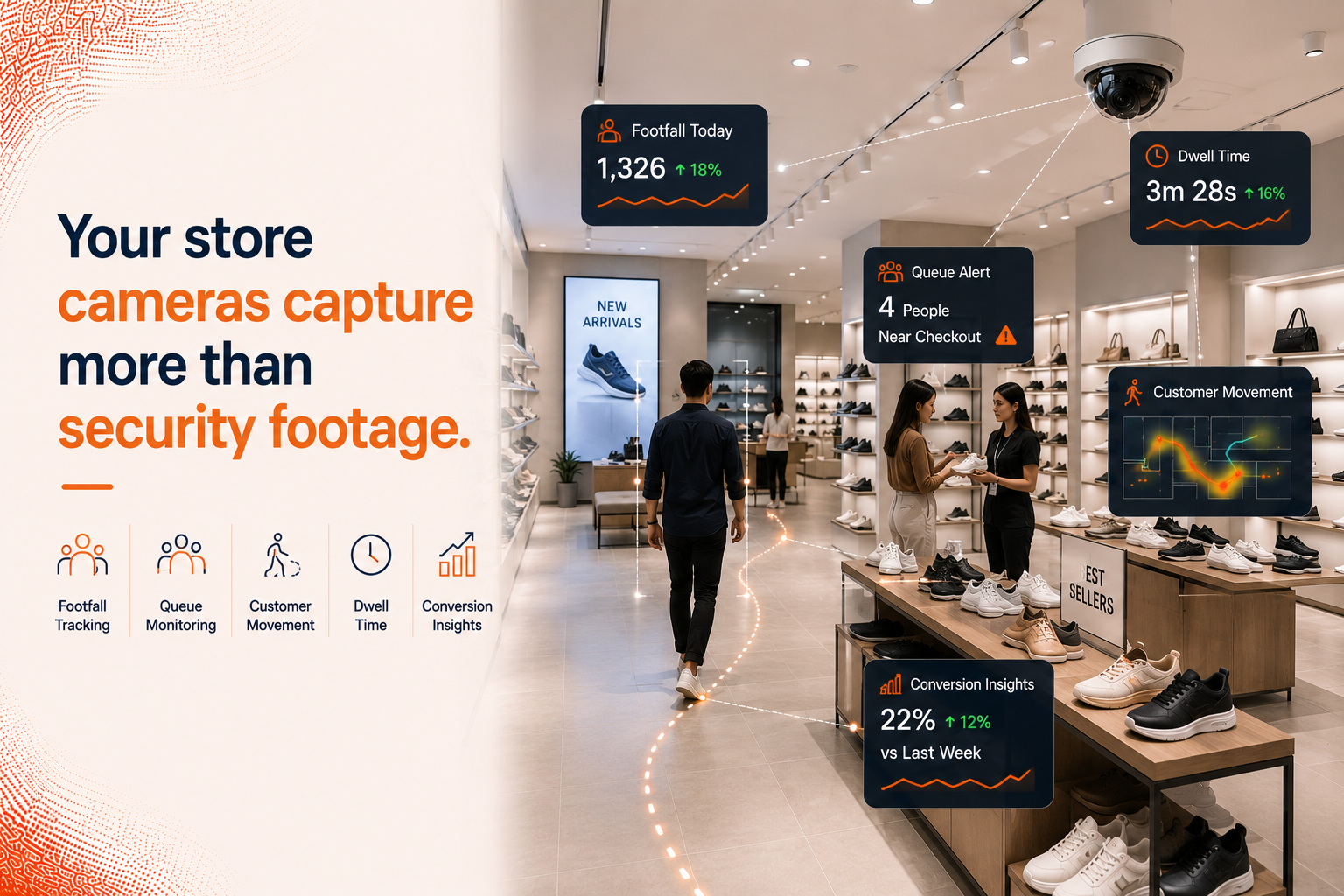
What Your Store Cameras Know About Your Business (That You Don't)
Your store cameras capture more than security footage. Discover how AI video analytics transforms existing CCTV systems into business intell…
Read more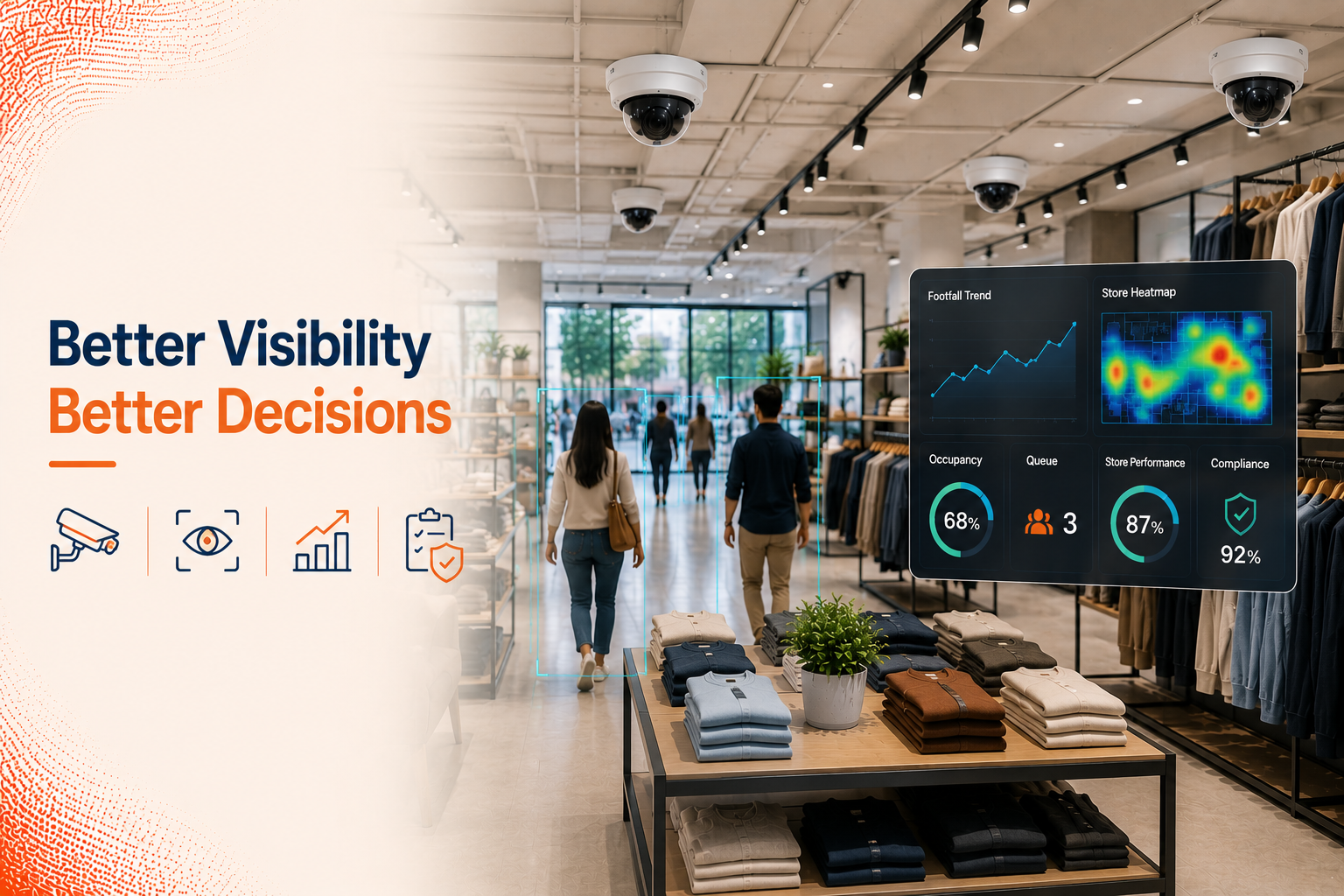
How AI Video Analytics Helps Retailers Make Smarter Business Decisions
Discover how AI video analytics helps retailers make smarter business decisions by improving staffing, customer experience, store performanc…
Read more