

What Can AI Actually Detect Inside a Retail Store?
Discover what AI video analytics can actually detect inside a retail store from footfall and queues to customer movement and dwell time and how these insights help retailers improve store operations.
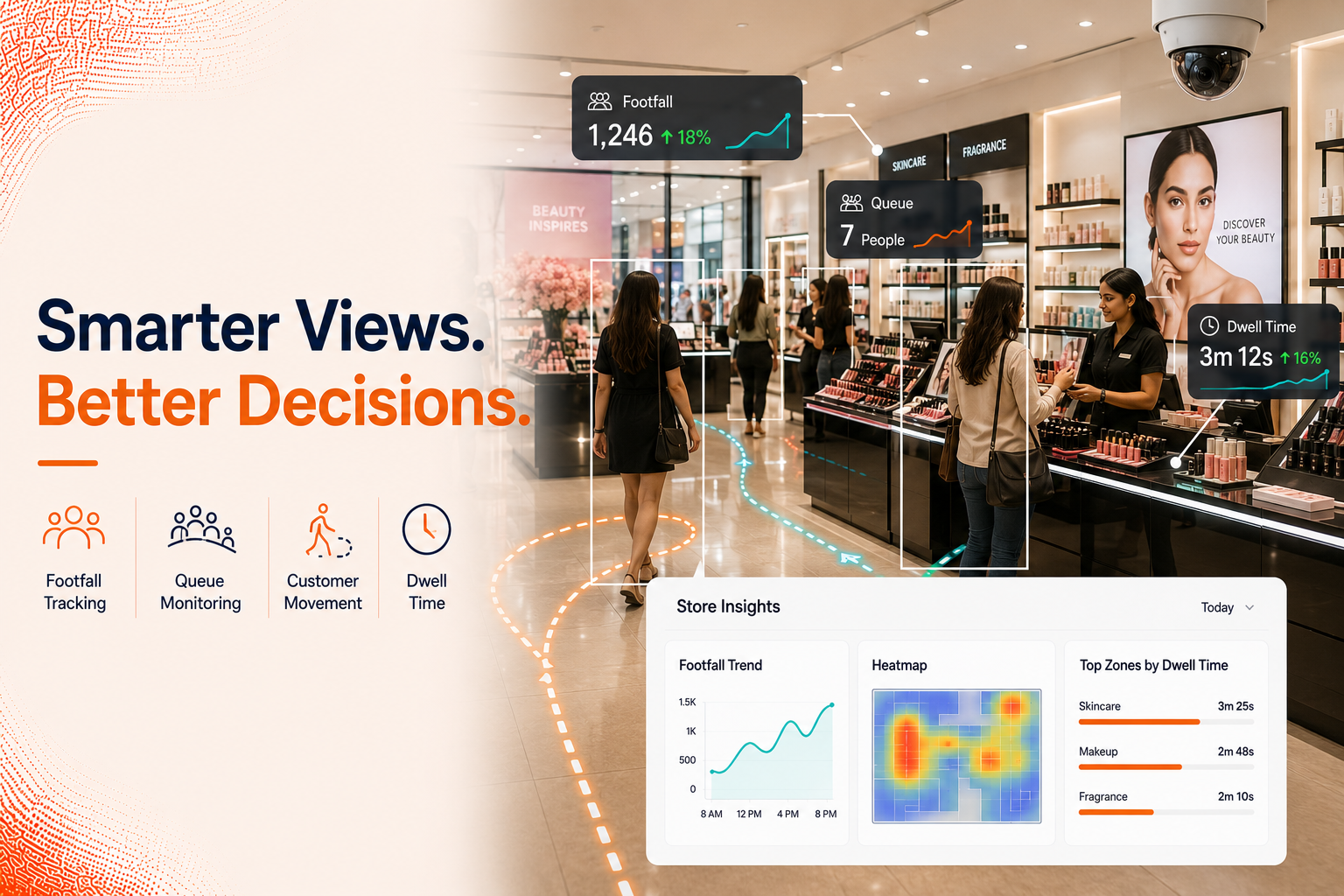
When retailers first hear about AI video analytics, one of the first questions they ask is: What exactly can AI detect inside my store?
- Can it recognize queues?
- Can it measure customer traffic?
- Can it understand how shoppers move?
The answer is yes but AI isn't watching stores the way people imagine.
It doesn't simply record video or replay footage. Instead, AI continuously analyses activity inside the store, identifies operational patterns, and converts them into insights that help businesses make better decisions.
Let's look at some of the key operational insights AI can detect inside a retail store.
Every Store Is Full of Operational Signals
Every minute, a retail store generates valuable operational information.
- Customers walk in and out.
- Queues form at checkout.
- Some departments become busier than others.
- Promotional displays attract attention.
- Employees move across different areas to serve customers.
Individually, these activities may seem routine. Together, they paint a clear picture of how efficiently a store is operating.
AI video analytics helps retailers identify these patterns automatically, giving operations teams better visibility without spending hours reviewing camera footage.
1. Customer Footfall
Customer footfall measures how many people enter a store during a specific period.
AI automatically tracks visitor numbers throughout the day, helping retailers understand traffic trends, identify peak shopping hours, compare store performance, and evaluate the impact of marketing campaigns or seasonal events.
2. Queue Build-Up
Queues don't appear all at once they gradually build over time.
AI continuously monitors checkout areas and identifies when waiting lines begin to increase, allowing store teams to respond before customer experience is affected.
Monitoring queue patterns also helps retailers understand recurring bottlenecks and improve checkout efficiency.
3. Busy Areas Inside the Store
Some sections of a store naturally attract more customers than others.
AI identifies high-traffic and low-traffic areas, helping retailers understand which departments receive the most attention.
These insights can support decisions around store layout, product placement, staffing, and promotional planning.
4. Customer Dwell Time
Footfall tells retailers how many customers visited.
Dwell time reveals how long they stayed in specific areas.
Understanding dwell time helps businesses identify which sections are engaging customers and which areas may require improvements to increase shopper interest or improve the overall experience.
5. Customer Movement
Customers don't always move through a store the way retailers expect.
AI analyses movement patterns to show how shoppers navigate different areas, helping businesses understand customer journeys, identify frequently used pathways, and discover sections that receive less attention.
These insights can help retailers optimise store layouts and improve customer flow.
6. Store Occupancy
Understanding how busy a store becomes throughout the day helps retailers plan more effectively.
AI monitors occupancy trends in real time, making it easier to identify peak shopping periods, compare traffic across locations, and align staffing levels with customer demand.
7. Staff Availability
Customer experience often depends on having the right employees available at the right time.
AI can provide visibility into staff presence within customer-facing areas, helping retailers understand whether teams are positioned where they're needed most during busy periods.
8. Promotional Display Engagement
Launching a promotion is only the first step.
Retailers also need to understand whether customers are actually noticing it.
AI helps measure customer interaction around promotional displays, enabling businesses to evaluate campaign effectiveness and optimise in-store merchandising strategies.
9. Congested Areas
Congestion isn't limited to checkout counters.
Popular aisles, promotional zones, and store entrances can also become crowded, affecting the shopping experience.
AI helps identify these recurring congestion points, allowing retailers to improve layouts and create a smoother customer journey.
10. Store Activity Trends
One day's data rarely tells the complete story.
AI continuously analyses store activity over time, helping businesses identify recurring trends rather than isolated events.
By comparing historical patterns, retailers can better understand seasonal demand, operational changes, and long-term performance across locations.
Turning Insights Into Better Decisions
Detecting activity is only the first step.
The real value comes from using these insights to improve everyday operations.
Instead of relying solely on periodic store visits or manual observations, retailers gain objective visibility into what's happening across every location.
These insights can help businesses:
- Improve customer experience.
- Optimise staffing decisions.
- Enhance store layouts.
- Evaluate promotional performance.
- Reduce operational bottlenecks.
- Improve consistency across multiple stores.
Conclusion
Every retail store generates thousands of operational events every single day.
Most of them go unnoticed.
AI video analytics helps businesses uncover these hidden insights by transforming everyday store activity into meaningful operational intelligence.
Whether it's understanding customer movement, identifying queues, measuring footfall, or analysing promotional engagement, these insights help retailers gain better visibility into how their stores actually perform.
As AI continues to evolve, retailers that use these insights effectively will be better positioned to improve operational efficiency, deliver better customer experiences, and make smarter business decisions.
See What AI Can Detect Inside Your Stores
With NymbleUp AI Video Analytics, retailers can monitor store activity, gain real-time operational visibility, and make data-driven decisions that improve performance across every location.
Book a personalized demo today and discover how AI Video Analytics can help you unlock the full potential of your existing store cameras.
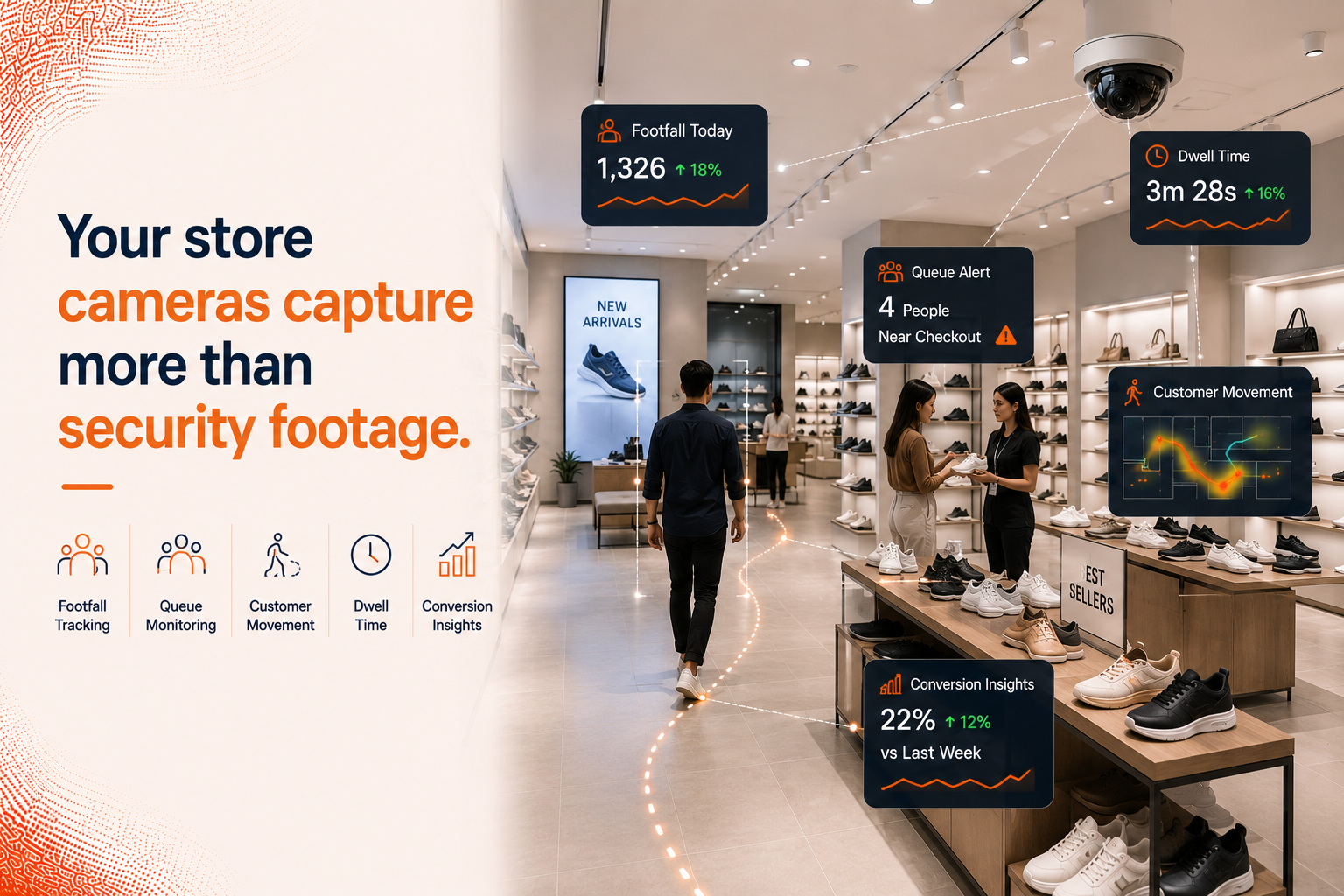
What Your Store Cameras Know About Your Business (That You Don't)
Your store cameras capture more than security footage. Discover how AI video analytics transforms existing CCTV systems into business intell…
Read more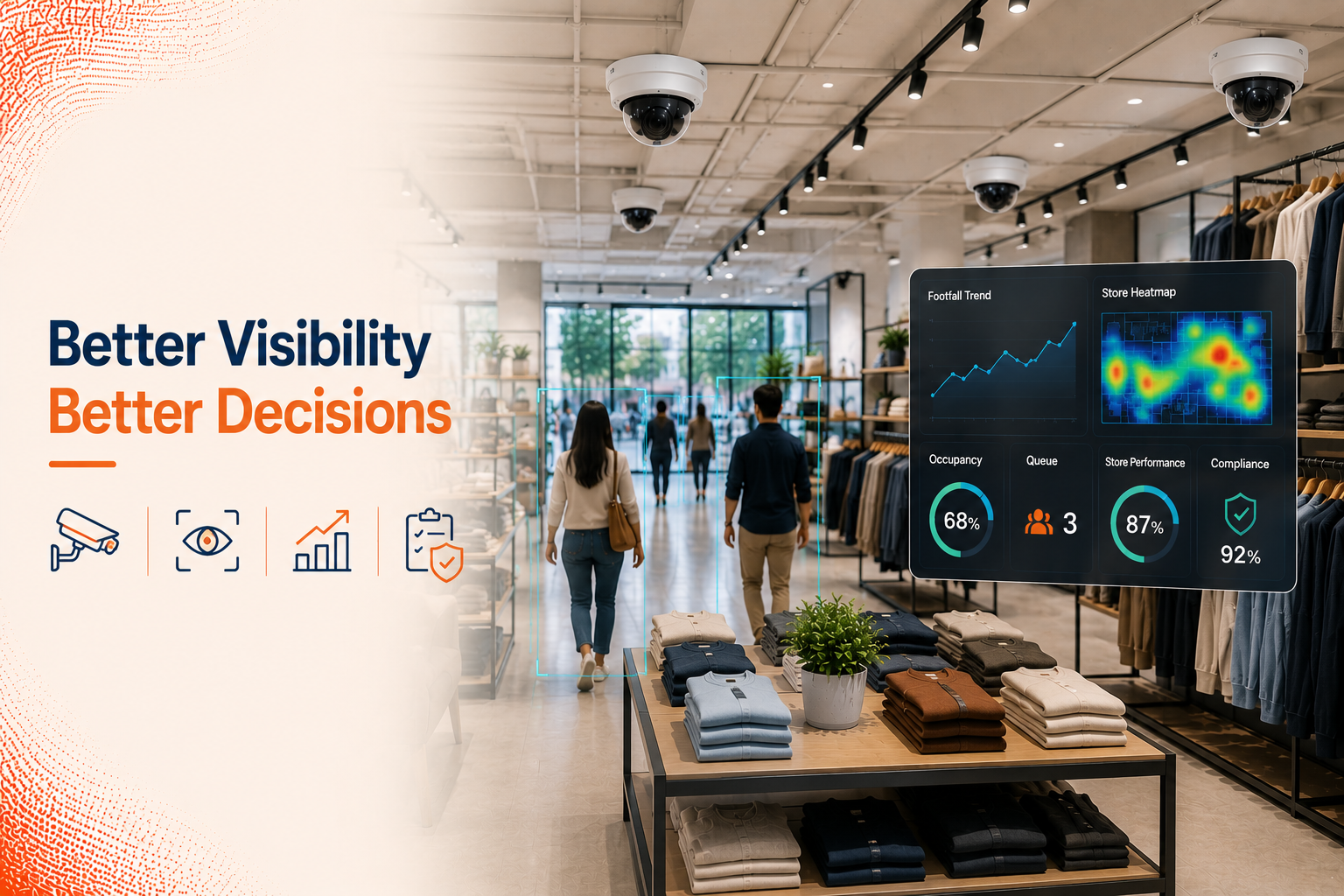
How AI Video Analytics Helps Retailers Make Smarter Business Decisions
Discover how AI video analytics helps retailers make smarter business decisions by improving staffing, customer experience, store performanc…
Read more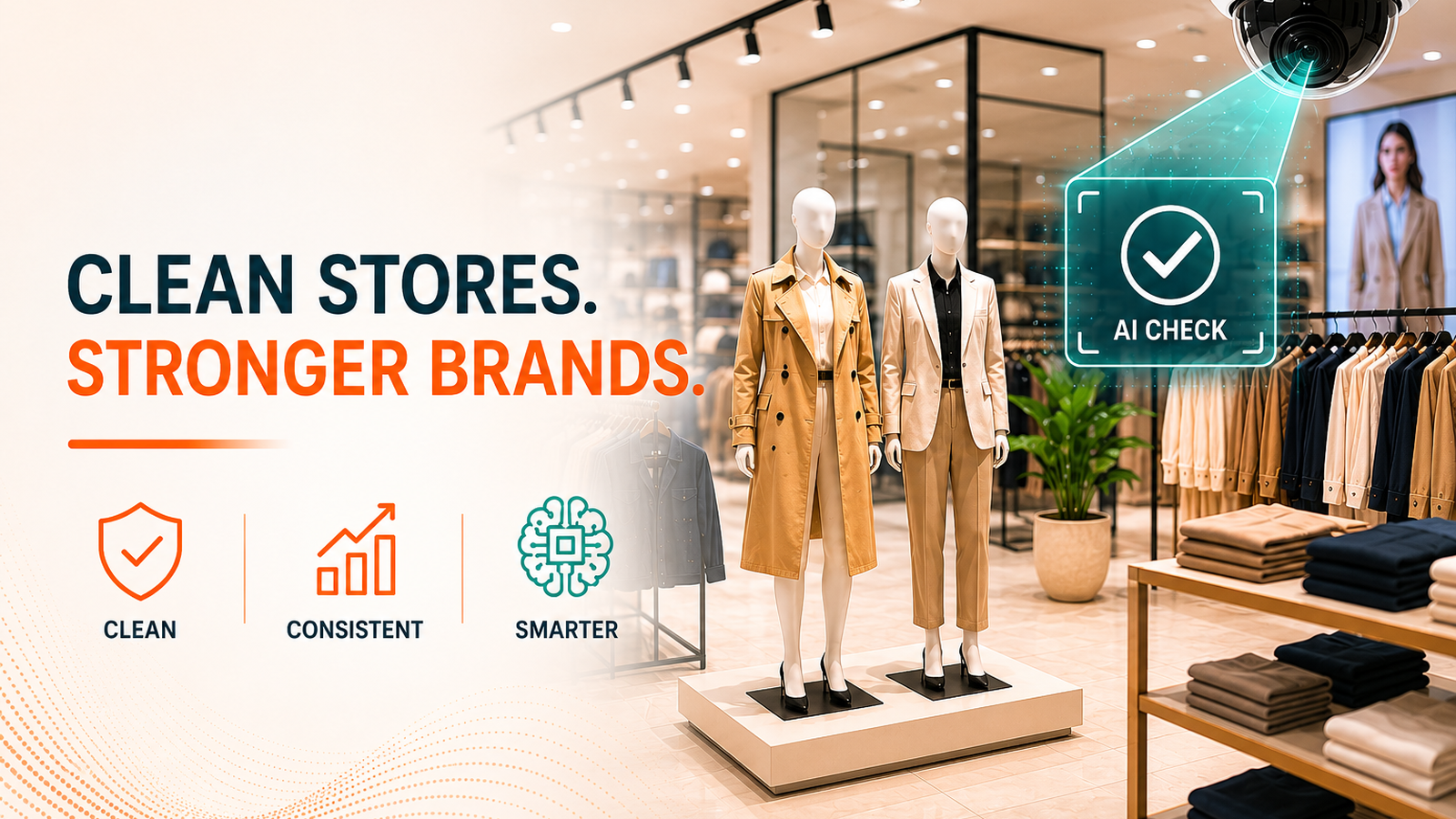
Why Cleanliness Defines Fashion Retail Success And How AI Ensures It Happens Regularly
Discover why the first 30 seconds inside your fashion store influence customer purchases and how AI-powered store monitoring helps maintain …
Read more