

Is Your Fashion Retail Store Ready for the Monsoon?
The monsoon season brings operational challenges for fashion, beauty, and lifestyle retailers, from wet floors and water leakage to inventory damage and customer safety concerns. This guide highlights the key areas store teams should focus on to maintain operational consistency, protect merchandise, and deliver a seamless customer experience throughout the season.
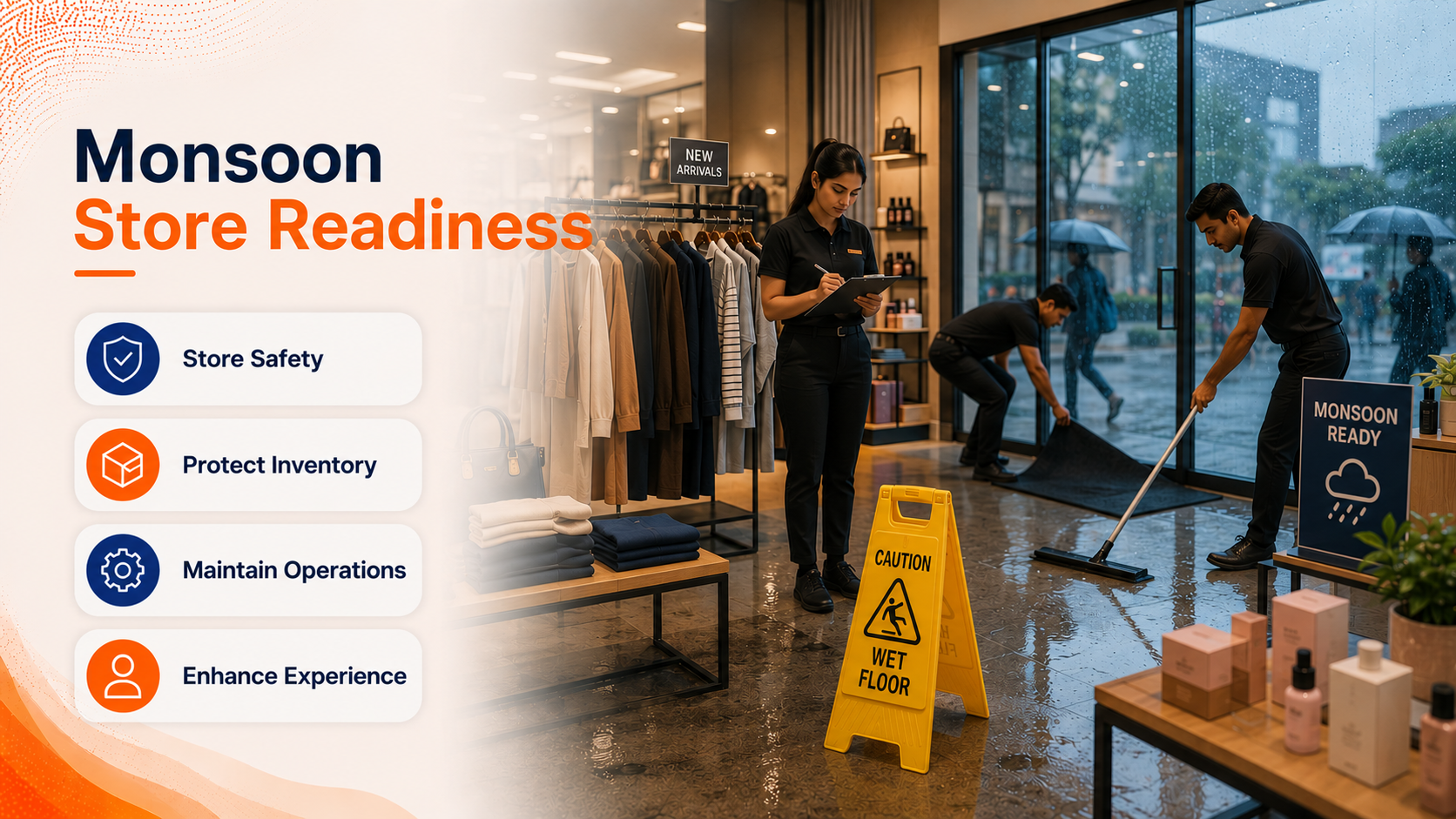
For fashion, beauty, and lifestyle retailers, the monsoon season can introduce a range of operational challenges. Wet entrances, water seepage, damaged merchandise, maintenance issues, and safety risks can quickly impact the customer experience and daily store operations.
For brands operating multiple locations, maintaining consistency across stores becomes even more important during this period.
A proactive approach supported by standardized SOPs, regular audits, and trained store teams can help businesses minimize disruptions and keep operations running smoothly throughout the season.
Why Monsoon Readiness Matters
Monsoon-related issues often go beyond temporary inconveniences.
Without proper preparation, retailers may experience:
- Customer safety incidents
- Inventory damage and losses
- Increased maintenance costs
- Store downtime
- Inconsistent execution across locations
- Poor customer experiences
- Compliance and operational risks
The good news is that many of these challenges can be prevented through structured operational processes and regular store checks.
1. Store Entrance & Customer Safety
During the monsoon season, store entrances become one of the highest-risk areas for accidents and customer complaints.
Key areas to review include:
- Entrance mats are available and properly positioned
- Wet floor warning signs are visible
- Entrance inspections are conducted regularly
- Umbrella storage areas are designated
- Spill response procedures are clearly defined
A safe entrance not only reduces risks but also creates a positive first impression for customers entering the store.
2. Merchandise & Inventory Protection
Fashion, beauty, and lifestyle products can be highly vulnerable to moisture and water exposure.
Store teams should review:
- Inventory storage locations
- Stock room moisture levels
- Protection measures for high-value merchandise
- Packaging material storage conditions
- Monitoring procedures for water-sensitive products
Protecting inventory during the monsoon season helps reduce product losses and avoid unnecessary replacement costs.
3. Store Infrastructure Inspection
Heavy rainfall can expose infrastructure issues that often go unnoticed during the rest of the year.
Operational teams should regularly inspect:
- Roofs and ceilings
- Water leakage points
- Electrical systems
- Air conditioning units
- Drainage systems
Early identification of maintenance issues can help prevent larger disruptions and costly repairs.
4. Trial Rooms & Customer Areas
Customer-facing areas require additional attention during the monsoon season.
Important checks include:
- Trial room cleanliness
- Floor condition and safety
- Lighting and electrical fixtures
- Customer walkways
- Air circulation and ventilation
Maintaining these areas helps ensure a safe, comfortable, and enjoyable shopping experience.
5. Visual Merchandising & Store Standards
Monsoon conditions should not impact brand presentation.
Store managers should monitor:
- Window displays
- Promotional materials
- Product displays
- Signage visibility
- Overall store appearance
Consistent visual standards help reinforce brand identity and customer confidence across every location.
6. Staff Preparedness & SOP Compliance
Even the best operational plans are only effective when store teams know how to execute them.
Retailers should ensure:
- Employees are trained on monsoon-specific procedures
- Escalation protocols are clearly communicated
- Emergency contact information is readily available
- Opening and closing procedures are updated
- Incident reporting processes are standardized
Prepared teams can respond faster and more effectively when unexpected issues arise.
7. Daily Store Audits During the Monsoon
Monsoon preparedness should not be a one-time activity.
Daily operational checks can help identify issues before they affect customers or disrupt store operations.
Opening Checks
- Entrance safety inspection
- Leakage inspection
- Stock room review
- Signage verification
- Housekeeping readiness
Mid-Day Checks
- Wet floor inspection
- Trial room review
- Customer area inspection
- Display condition checks
Closing Checks
- Infrastructure review
- Inventory protection verification
- Incident log review
- Maintenance issue reporting
- Escalation tracking
Quick Monsoon Readiness Scorecard
Use this simple assessment to evaluate your store's preparedness.
Score Your Store
- 0–5 Checks Completed
High Risk
Immediate action is required to address operational and safety gaps.
- 6–15 Checks Completed
Needs Improvement
Basic controls are in place, but several operational risks remain.
- 16–25 Checks Completed
Good Preparedness
Most key operational areas are being managed effectively.
- 26+ Checks Completed
Monsoon Ready
Strong SOP execution and operational preparedness across the store.
For multi-location brands, conducting this assessment across all stores can help identify locations that require additional support, training, or operational reviews.
Common Monsoon Issues Retailers Should Monitor
Store teams should remain alert to:
- Water leakage and seepage
- Slippery floors
- Moisture-related product damage
- Power disruptions
- Drainage issues
- Increased maintenance requirements
- Staff attendance challenges
- Customer safety concerns
Documenting and tracking these issues through structured SOPs and audits can help improve response times and accountability.
Conclusion
Monsoon preparedness is not just a maintenance responsibility, it is an operational priority.
Fashion, beauty, and lifestyle retailers that take a proactive approach to customer safety, inventory protection, infrastructure maintenance, and SOP compliance are better positioned to maintain operational consistency throughout the season.
By combining standardized processes, regular audits, and well-trained teams, retailers can reduce disruptions, protect their merchandise, and continue delivering a seamless customer experience, regardless of the weather.
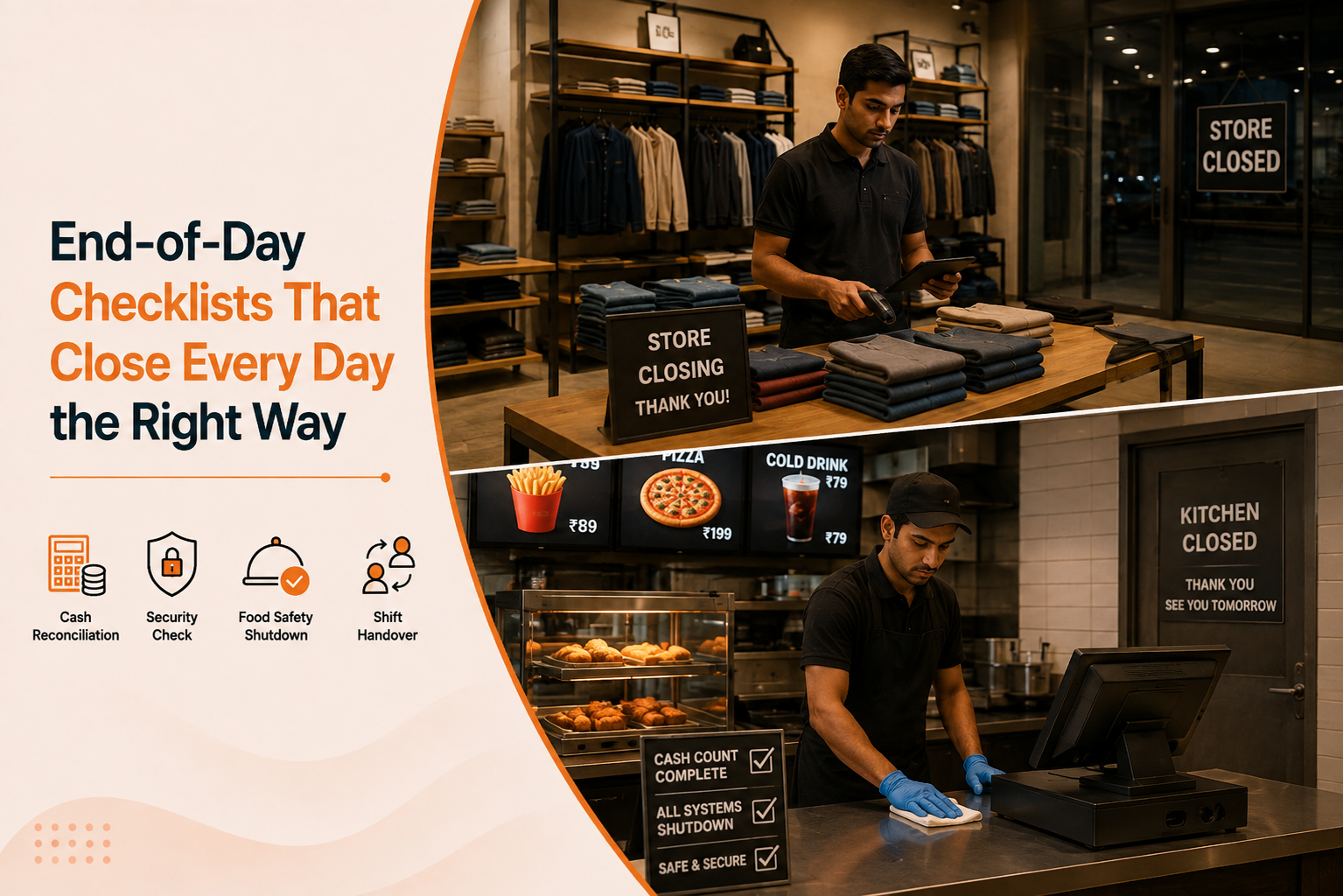
Retail Store and QSR Closing Checklist: Complete Guide
Read more
How to Open a Retail Store or QSR : A Step-by-Step Opening Checklist Guide
Why most opening checklists fail before the first mistake even happens, and how to build one that actually holds up across every shift and l…
Read more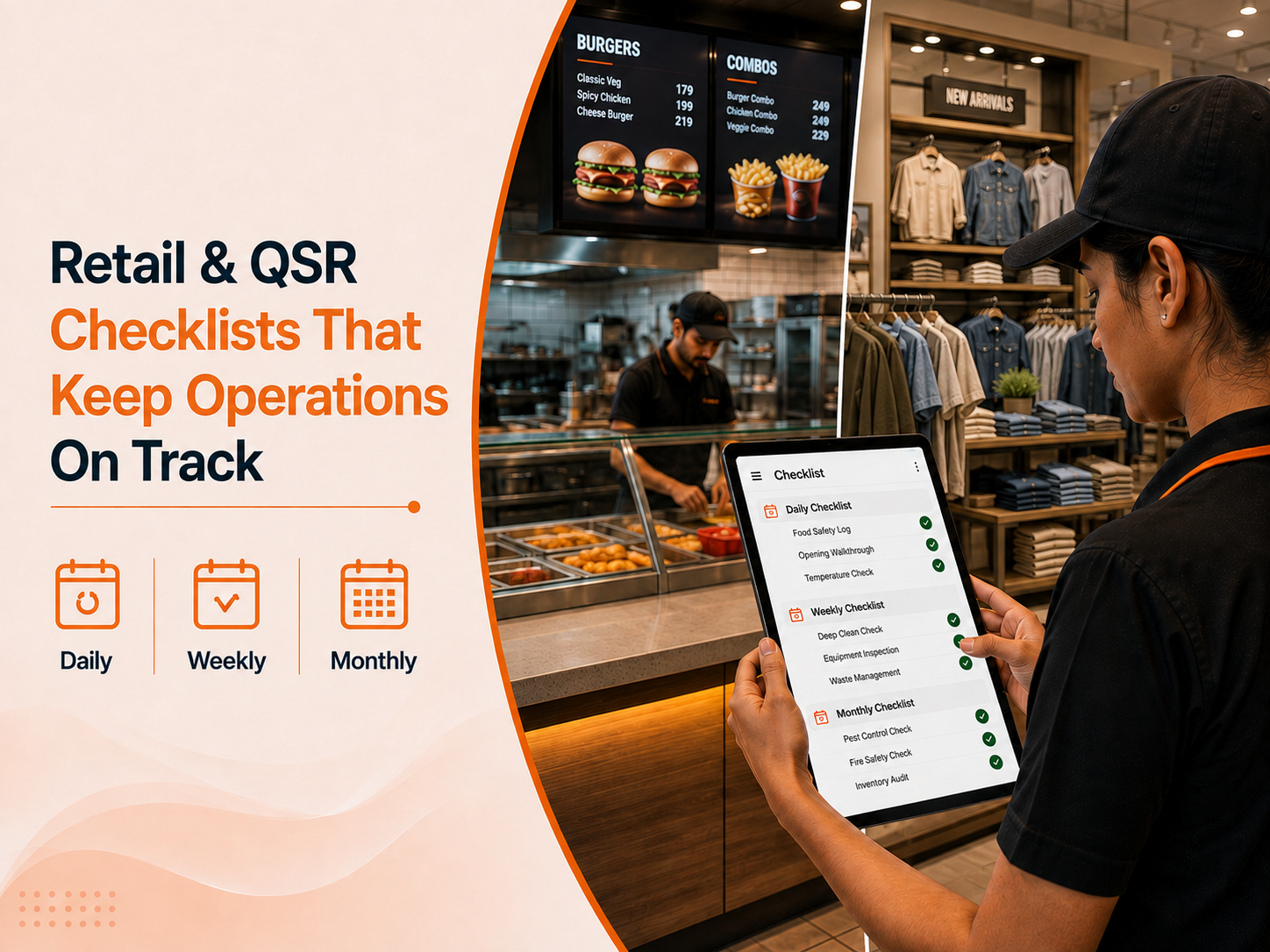
Types of Checklists Every Retail and QSR Store Needs
A detailed breakdown of daily, weekly, and monthly checklists for retail and QSR stores, including food safety logs, walkthroughs, and mobil…
Read more