

How Cloud Kitchens Can Stay Operational During the Monsoon Season
For cloud kitchens, the monsoon season can create operational challenges that directly impact customer satisfaction and profitability. Delivery delays, food safety concerns, equipment failures, staffing shortages, and infrastructure issues can quickly disrupt operations. This blog explores the most common monsoon-related risks and highlights the operational practices cloud kitchens can implement to maintain consistency, food quality, and service standards throughout the season.
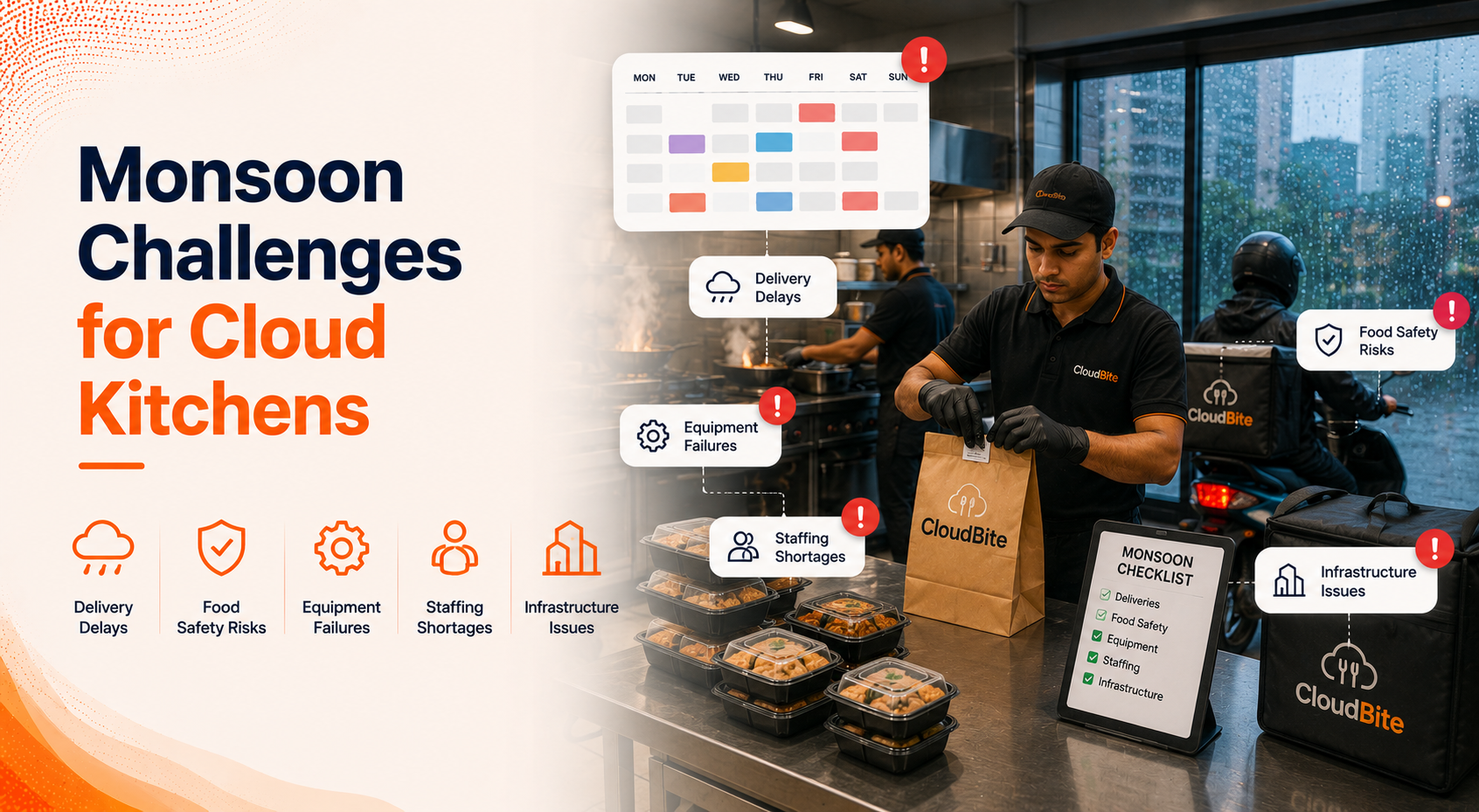
Cloud kitchens operate in a fast-paced environment where speed, consistency, and food quality are critical. Unlike traditional restaurants, they rely heavily on delivery operations, making them particularly vulnerable to seasonal disruptions.
Heavy rainfall, traffic congestion, infrastructure issues, and workforce challenges can directly impact order fulfillment, customer experience, and operational efficiency.
For cloud kitchen operators, monsoon preparedness, it requires standardized processes, operational visibility, and proactive planning to minimize disruptions and maintain service standards.
Why Monsoon Season Is Challenging for Cloud Kitchens
Cloud kitchens depend on several interconnected operational processes:
- Timely order preparation
- Reliable delivery operations
- Food safety and hygiene standards
- Equipment uptime
- Workforce availability
- Consistent execution across locations
When any of these areas are disrupted, customer satisfaction and business performance can quickly suffer.
1. Delivery Delays and Order Backlogs
Heavy rainfall often leads to traffic congestion, waterlogged roads, and slower delivery movements.
This can result in:
- Delayed deliveries
- Longer order turnaround times
- Increased customer complaints
- Higher refund requests
- Reduced customer satisfaction
Since delivery is the primary customer touchpoint for cloud kitchens, delays can have a direct impact on brand perception.
2. Food Safety and Hygiene Risks
Increased humidity and moisture levels create additional food safety challenges.
Areas that require close monitoring include:
- Ingredient storage conditions
- Refrigeration units
- Food preparation areas
- Cleaning schedules
- Waste management practices
Failure to maintain hygiene standards can lead to quality issues, compliance concerns, and customer complaints.
3. Water Leakage and Infrastructure Issues
Monsoon conditions often expose maintenance problems that may go unnoticed during other times of the year.
Common concerns include:
- Roof leaks
- Drainage blockages
- Water accumulation
- Damaged ceilings
- Electrical hazards
Even minor infrastructure issues can disrupt kitchen operations if not identified and addressed quickly.
4. Equipment Downtime
Cloud kitchens rely heavily on operational equipment to maintain service levels.
Critical equipment includes:
- Refrigeration units
- Freezers
- Cooking equipment
- Exhaust systems
- Internet and POS infrastructure
Unexpected failures can result in:
- Production delays
- Order cancellations
- Inventory losses
- Revenue impact
Preventive maintenance becomes especially important during the monsoon season.
5. Staff Attendance Challenges
Heavy rainfall often affects employee commutes and punctuality.
This can create:
- Staffing shortages
- Increased workload for existing employees
- Slower order preparation
- Operational bottlenecks
For businesses operating multiple kitchens, workforce visibility becomes increasingly important during periods of disruption.
6. Increased Customer Complaints
Delivery delays and service disruptions often lead to a rise in customer complaints.
Businesses may experience:
- Negative reviews
- Increased support tickets
- Refund requests
- Lower customer retention
Without a structured process for tracking and resolving issues, recurring operational problems can remain unnoticed.
7. Inconsistent Execution Across Locations
For cloud kitchen brands operating multiple locations, maintaining consistency can become more difficult during the monsoon season.
Without standardized processes, different kitchens may respond differently to operational issues, resulting in:
- Inconsistent customer experiences
- Compliance gaps
- Operational inefficiencies
- Reduced brand consistency
Consistency becomes a key differentiator for brands looking to maintain service quality at scale.
What Helps Cloud Kitchens Stay Operational During the Monsoon?
Managing monsoon-related disruptions requires proactive operational checks and standardized execution across locations.
Workforce Planning for Peak Order Hours
Heavy rainfall and traffic disruptions can affect staff attendance and shift coverage. Proper workforce planning helps ensure adequate staffing during peak meal periods, reducing order delays and maintaining service levels.
Equipment Maintenance and Compliance Checks
Critical kitchen equipment such as refrigerators, freezers, cooking stations, and exhaust systems should be inspected regularly to prevent unexpected breakdowns that can impact food safety and operations.
Food Safety and Raw Material Quality Checks
Increased humidity and moisture can affect ingredient quality and storage conditions. Daily checks on raw materials, storage temperatures, and hygiene standards help maintain food safety compliance.
Packaging Readiness for Smooth Deliveries
Packaging materials should be properly stocked, organized, and protected from moisture. Regular checks help ensure orders are packed efficiently and delivered without delays during adverse weather conditions.
Kitchen Cleanliness and Water Leakage Inspections
Routine inspections of kitchen floors, drainage systems, storage areas, and potential leakage points help prevent hygiene issues, water accumulation, and insect breeding that could impact operational standards.
Quick Monsoon Readiness Scorecard
Use this simple assessment to evaluate your cloud kitchen's preparedness.
Score Your Operations
- Are monsoon-specific SOPs documented and accessible?
- Are food safety and hygiene checks conducted regularly?
- Is critical equipment inspected proactively?
- Are staffing plans in place for attendance disruptions?
- Are packaging materials protected and readily available?
- Are water leakage and cleanliness inspections conducted routinely?
Results
- 0–2 Yes
High Risk
Significant operational vulnerabilities exist and require immediate attention.
- 3–4 Yes
Needs Improvement
Basic controls are in place, but several operational risks remain.
- 5–6 Yes
Operationally Prepared
Your cloud kitchen has established controls to manage monsoon-related challenges effectively.
Conclusion
The monsoon season presents unique operational challenges for cloud kitchens, but disruptions do not have to be inevitable.
By focusing on workforce planning, food safety checks, equipment maintenance, packaging readiness, and kitchen hygiene, businesses can significantly reduce operational risks and maintain service quality throughout the season.
Cloud kitchen operators that prepare in advance are better positioned to protect customer experience, improve operational consistency, and maintain business continuity regardless of weather conditions.
Retail Store and QSR Closing Checklist: Complete Guide
Read more
How to Open a Retail Store or QSR : A Step-by-Step Opening Checklist Guide
Why most opening checklists fail before the first mistake even happens, and how to build one that actually holds up across every shift and l…
Read more
Types of Checklists Every Retail and QSR Store Needs
A detailed breakdown of daily, weekly, and monthly checklists for retail and QSR stores, including food safety logs, walkthroughs, and mobil…
Read more