

7 Ways Retailers Use Footfall Data to Improve Store Performance
Discover how retailers use footfall data to optimize staffing, improve store layouts, measure marketing ROI, increase conversions, and deliver better customer experiences.
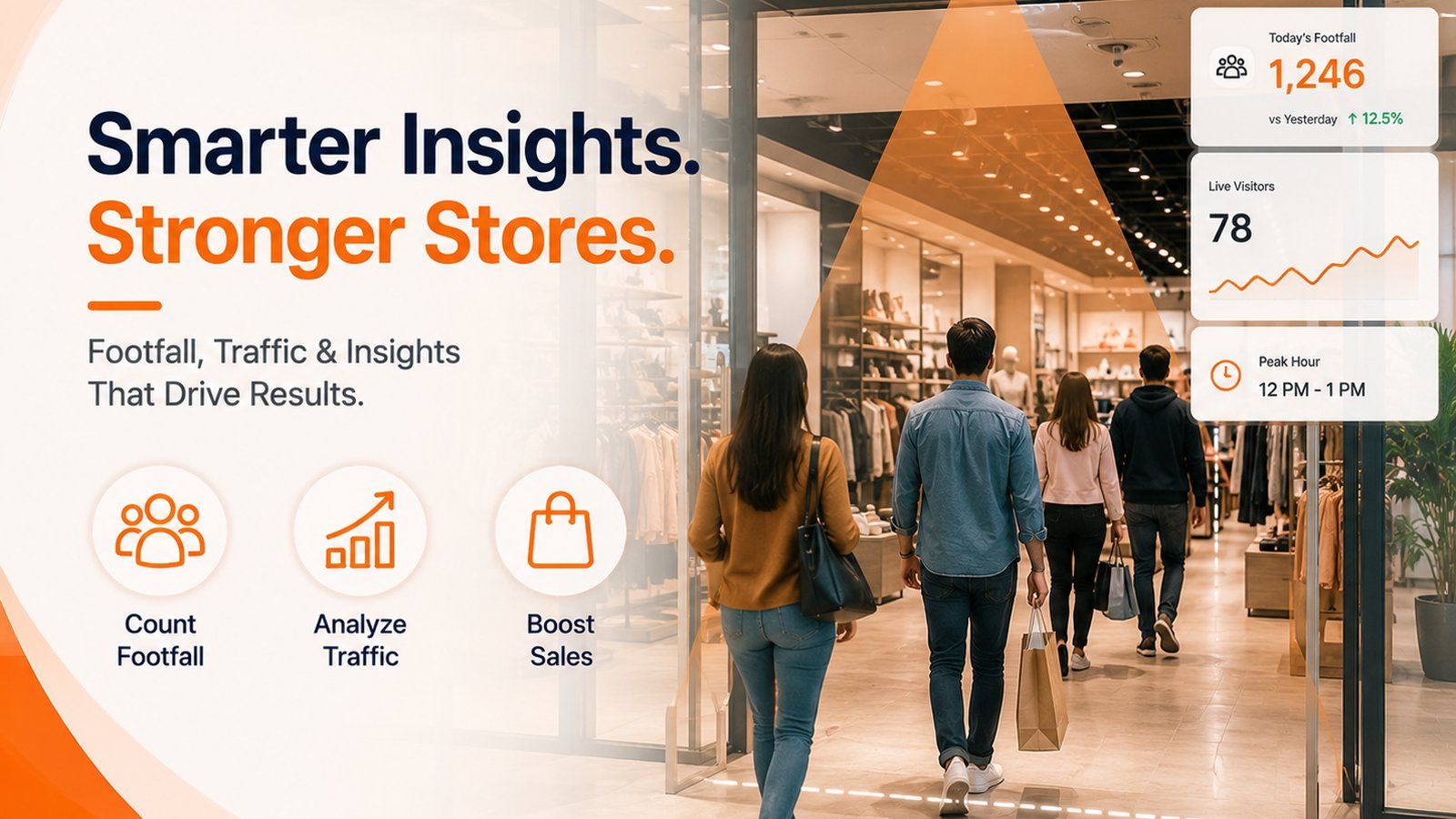
Every retailer wants more customers walking through the door.
But here's a question that often goes unanswered.
What happens after they enter?
Knowing how many people visit your store is only the starting point. The real value lies in understanding how that data can improve everyday operations.
Leading retailers don't use footfall data simply to count visitors. They use it to answer important business questions:
- Why are some stores outperforming others despite similar visitor numbers?
- Which marketing campaigns actually increase store traffic?
- Are customers leaving because of long checkout queues or poor product availability?
- Where should additional staff be deployed during peak hours?
- When footfall data is combined with operational insights, it becomes a powerful tool for improving store performance.
Here are seven practical ways retailers are using footfall analytics to make smarter business decisions.
1. Scheduling the Right Number of Employees
One of the biggest operational challenges in retail is balancing staffing costs with customer service.
Overstaffing increases labour costs.
Understaffing leads to poor customer experiences, longer queues, and missed sales opportunities.
By analysing hourly footfall trends, retailers can understand exactly when stores experience peak customer traffic.
Instead of creating fixed schedules, managers can align staffing with actual customer demand.
For example, if a store consistently experiences its busiest period between 6 PM and 8 PM, additional checkout operators and floor staff can be scheduled during those hours while reducing staffing during quieter periods.
The result is improved customer service without increasing labour costs.
2. Measuring Whether Marketing Campaigns Actually Worked
Marketing teams often measure campaign success using impressions, clicks, or social media engagement.
Retail operations teams measure something much more meaningful.
Did more customers visit the store?
Footfall data helps retailers understand whether promotions, festive campaigns, local advertising, or product launches actually increased store visits.
However, visitor growth alone doesn't tell the full story.
If footfall increases but sales remain unchanged, it often indicates operational issues such as poor merchandising, pricing, stock availability, or customer service.
This allows businesses to evaluate campaigns using both visitor traffic and sales performance instead of relying on marketing metrics alone.
3. Understanding Why Some Stores Perform Better Than Others
Imagine two stores within the same retail chain.
Both receive approximately 1,000 visitors each day.
Store A generates significantly higher sales than Store B.
Without footfall data, management might assume Store B simply needs more customers.
But visitor numbers reveal a different story.
The real issue is conversion.
Operations leaders can then investigate factors such as product availability, store layout, employee engagement, promotional execution, or checkout efficiency.
Sometimes the solution isn't attracting more customers.
It's helping existing visitors complete their purchase.
4. Optimising Store Layouts Based on Customer Behaviour
Retailers spend significant time designing store layouts.
Yet customer behaviour often changes over time.
Footfall analytics combined with AI-powered video analytics helps retailers understand how shoppers actually move through the store.
Questions that can be answered include:
- Which departments attract the most visitors?
- Which displays receive little attention?
- Where do customers spend the most time?
- Which areas are consistently ignored?
These insights help retailers reposition promotional displays, improve product placement, redesign customer pathways, and maximise high-value selling space.
Instead of relying on assumptions, store layouts can evolve based on actual customer behaviour.
5. Reducing Checkout Queues Before They Affect Customers
Long billing queues remain one of the biggest reasons customers abandon purchases.
By monitoring real-time footfall and customer movement, store managers can identify increasing traffic before queues become unmanageable.
Additional billing counters can be opened proactively instead of waiting for customer complaints.
Over time, retailers can also identify recurring peak periods and plan staffing accordingly.
Reducing waiting time doesn't just improve customer satisfaction.
It also increases the likelihood of repeat visits.
6. Planning Inventory More Accurately
Footfall trends often reveal buying patterns before sales reports do.
For example, a retailer may notice a steady increase in customer visits every weekend during the festive season.
Using historical footfall data alongside sales information helps operations teams prepare inventory more accurately.
Popular products remain available when demand increases.
Fresh categories can be replenished more efficiently.
Store managers avoid both stockouts and unnecessary overstocking.
Better planning ultimately improves sales while reducing inventory waste.
7. Improving Overall Store Performance
Perhaps the greatest value of footfall analytics is the ability to measure overall operational performance.
Instead of reviewing sales in isolation, retailers gain a broader understanding of what is happening inside every store.
By combining visitor data with information from POS systems, workforce scheduling, customer feedback, and operational audits, retailers can answer important questions such as:
- Are stores converting visitors into customers effectively?
- Which locations consistently outperform others?
- Which operational changes improve customer engagement?
- Where should management focus improvement efforts?
Footfall becomes much more than a visitor count.
It becomes a performance indicator that supports better business decisions across operations, marketing, merchandising, and workforce planning.
Looking Beyond Traditional Footfall Counters
Traditional footfall counters provided retailers with a simple visitor count.
Today's AI-powered video analytics delivers much deeper operational insights.
Modern solutions can analyse customer movement, measure dwell time, identify high-engagement zones, monitor checkout queues, and generate heatmaps using existing CCTV infrastructure.
This allows retailers to move beyond reporting what happened.
They can understand why it happened and respond while operations are still in progress.
Conclusion
Footfall data has evolved from being a simple traffic metric into one of retail's most valuable operational tools.
Retailers that use footfall analytics effectively don't just count visitors.
They optimise staffing, improve merchandising, refine store layouts, reduce waiting times, plan inventory more accurately, and make better strategic decisions.
As physical retail continues to compete with digital channels, understanding what happens inside the store is becoming just as important as attracting customers in the first place.
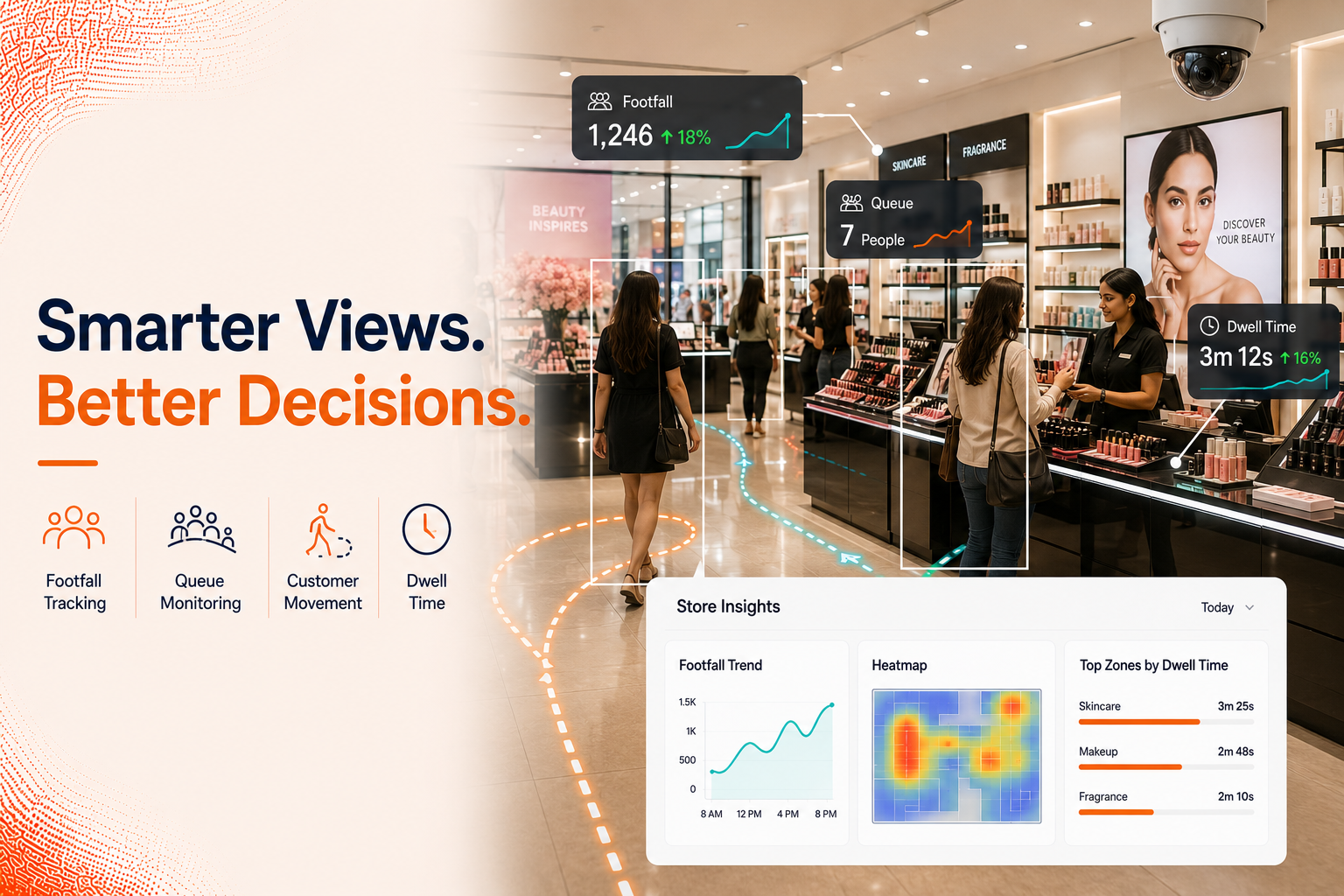
What Can AI Actually Detect Inside a Retail Store?
Discover what AI video analytics can actually detect inside a retail store from footfall and queues to customer movement and dwell time and …
Read more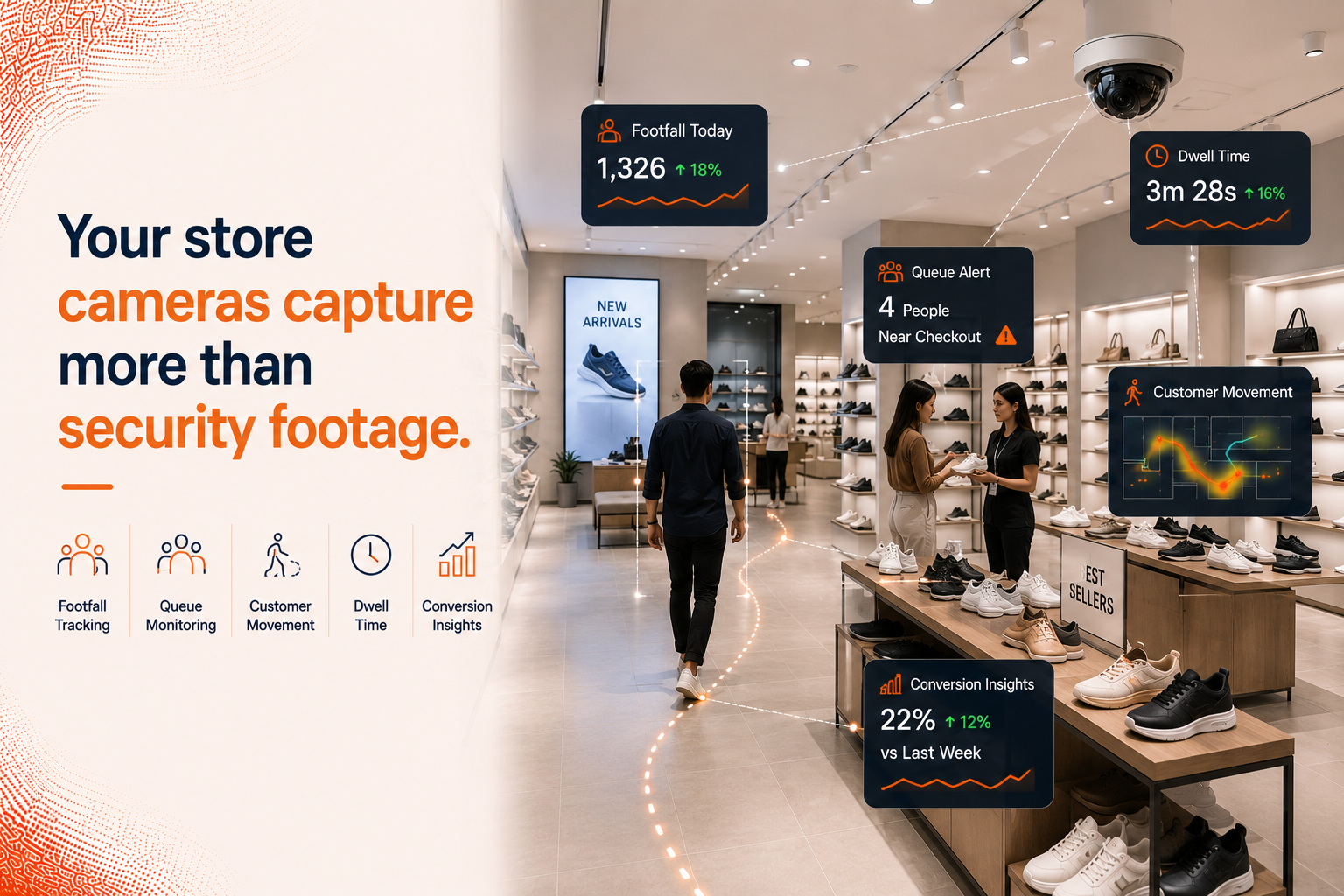
What Your Store Cameras Know About Your Business (That You Don't)
Your store cameras capture more than security footage. Discover how AI video analytics transforms existing CCTV systems into business intell…
Read more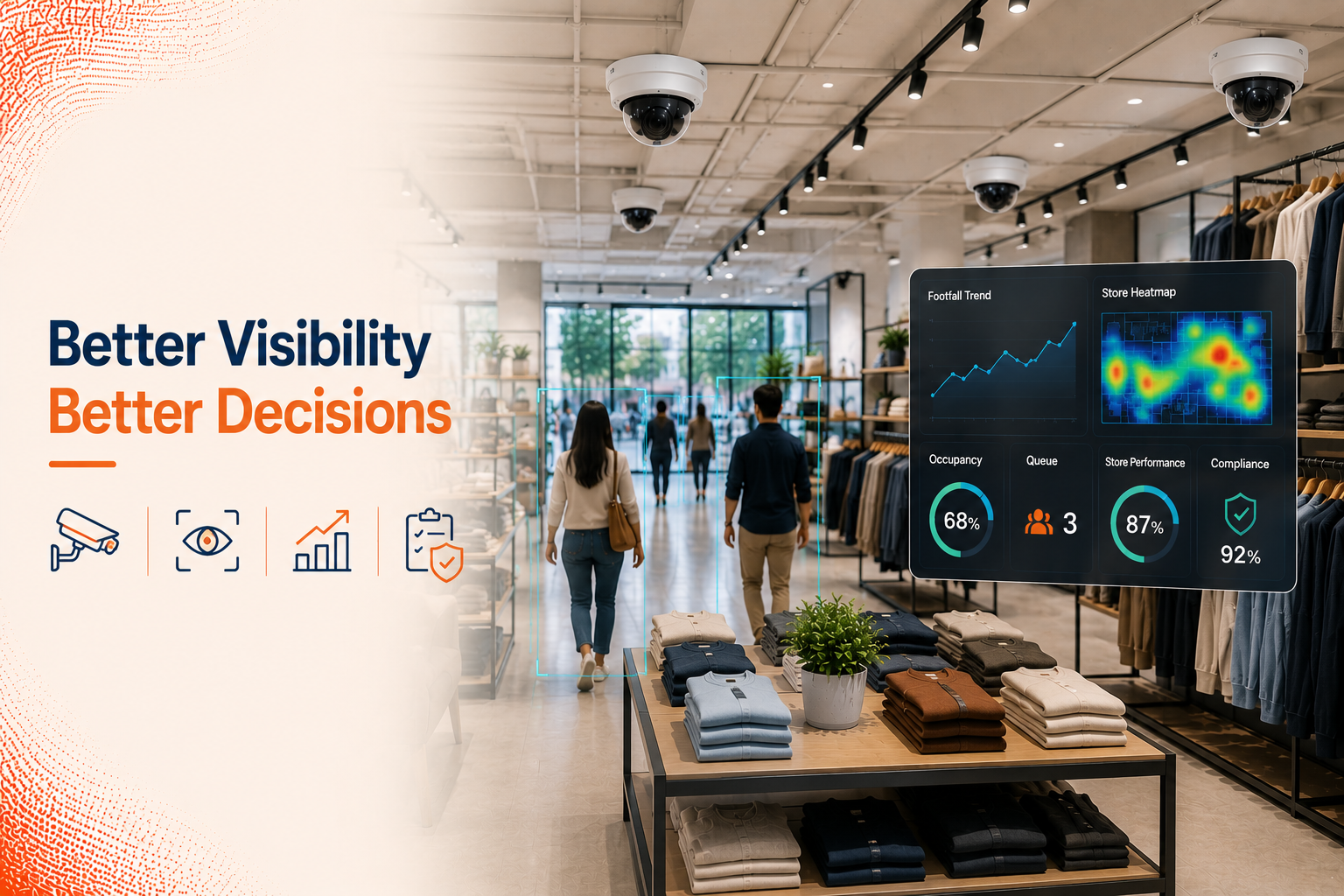
How AI Video Analytics Helps Retailers Make Smarter Business Decisions
Discover how AI video analytics helps retailers make smarter business decisions by improving staffing, customer experience, store performanc…
Read more