

How AI is Redefining Footfall Tracking in the Age of Digital Retail
Discover how AI powered footfall tracking uses video analytics to measure customer movement, dwell time, queue lengths, and store conversion, helping retailers optimise operations and improve customer experience.
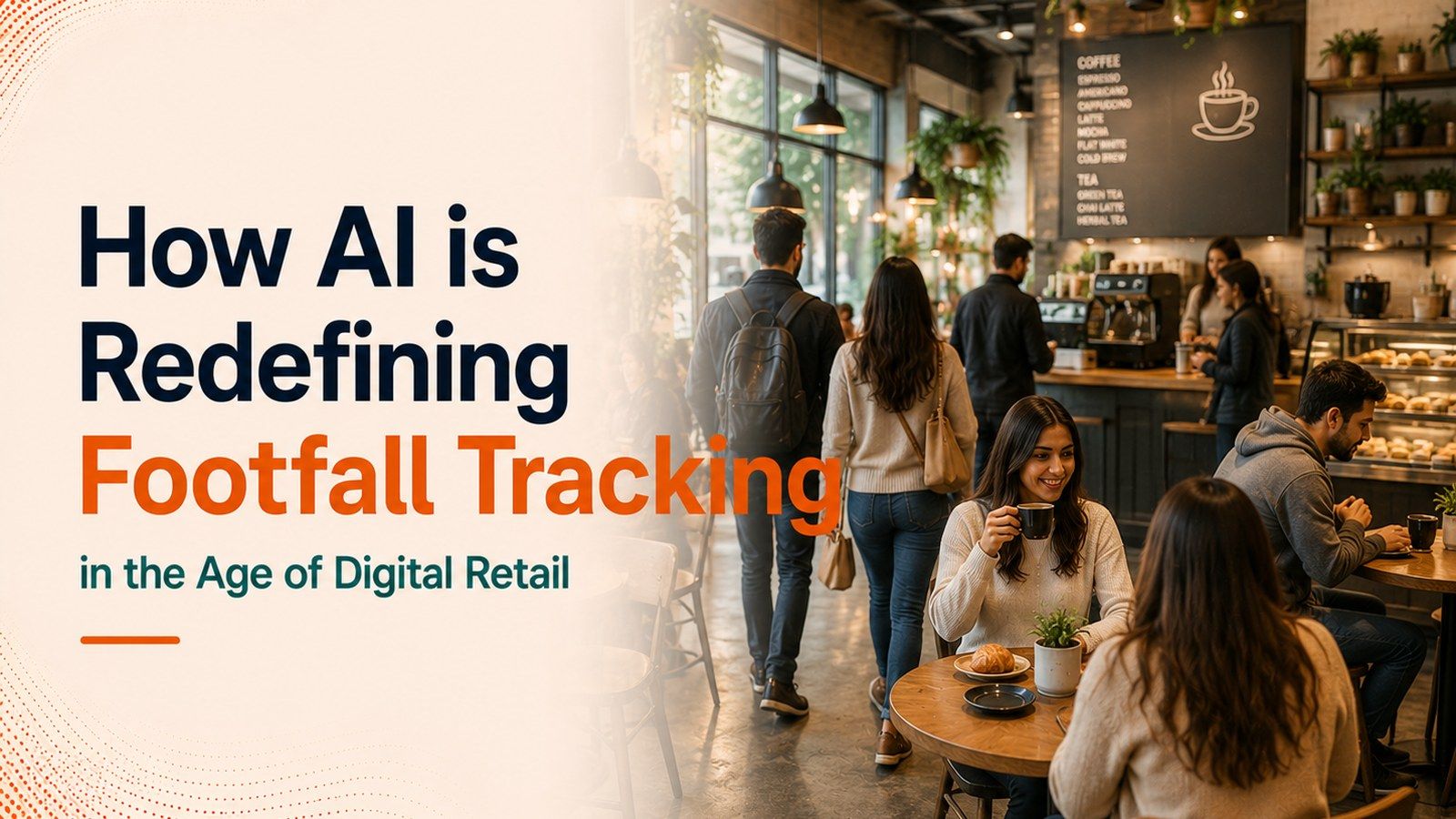
For years, retailers have measured footfall to understand store performance. Knowing how many people entered a store helped estimate customer demand, evaluate marketing campaigns, and compare the performance of different locations.
However, retail has changed significantly. Modern stores need far more than visitor counts. They need to understand how customers move through the store, where they spend time, which displays attract attention, how long queues become, and ultimately how these behaviours influence sales.
This is where AI powered video analytics is changing the way retailers measure and optimise store performance.
Instead of simply counting visitors, AI transforms footfall data into operational intelligence that helps retailers improve layouts, staffing, merchandising, and customer experience.
Why Traditional Footfall Counters Are No Longer Enough
Traditional footfall tracking solutions were designed to answer one simple question.
How many people entered the store?
Technologies such as infrared beam counters, thermal sensors, and Wi Fi or Bluetooth tracking provided basic visitor counts, but they offered very little operational context.
These systems could not answer questions such as:
- How many visitors were actual customers rather than employees?
- Which departments attracted the most attention?
- Where did customers spend the most time?
- Which areas were consistently ignored?
- Did increased footfall actually result in more sales?
Without this context, retailers were forced to make operational decisions based on incomplete information.
AI Turns Cameras into Business Intelligence
Most retailers already have CCTV cameras installed for security purposes.
AI powered video analytics allows these existing cameras to become valuable operational assets by analysing customer movement in real time.
Rather than simply recording activity, AI continuously interprets what is happening inside the store and converts it into actionable insights.
This enables operations teams to make faster and better informed decisions every day.
Beyond Counting Customers
Accurate People Counting
AI accurately counts customers entering and leaving the store while filtering out employees and other non customer traffic.
This produces cleaner, more reliable footfall data that can be used for operational planning and performance measurement.
Understanding Customer Movement
Knowing where customers walk is often more valuable than knowing how many customers entered.
AI maps customer journeys throughout the store, helping retailers identify:
- High traffic areas
- Low engagement zones
- Popular product categories
- Dead spaces within the store
These insights support better store layouts and more effective product placement.
Dwell Time Analysis
The amount of time customers spend in a particular area often indicates interest.
AI measures dwell time across different departments, displays, and promotional zones, allowing retailers to understand which areas successfully capture customer attention and which require improvement.
This information is particularly valuable when evaluating new store layouts or promotional campaigns.
Queue Monitoring
Long checkout queues remain one of the biggest reasons customers abandon purchases.
AI continuously monitors queue lengths and waiting times, alerting store managers when additional checkout counters should be opened.
This helps improve customer satisfaction while making better use of available staff.
Measuring Store Conversion
Footfall alone does not measure business performance.
When AI video analytics is integrated with Point of Sale data, retailers can compare visitor numbers with completed transactions to calculate store conversion rates.
This helps answer important operational questions.
Did increased marketing activity generate more paying customers?
Did promotional displays increase purchases?
Are some stores converting visitors more effectively than others?
These insights help retailers improve both marketing effectiveness and store operations.
Supporting Better Operational Decisions
One of the biggest advantages of AI powered footfall tracking is its ability to improve everyday operational decisions.
Store managers can use footfall trends to schedule employees during peak trading hours.
Visual merchandising teams can evaluate whether promotional displays attract customer attention.
Operations teams can identify congestion points before they affect customer experience.
Regional managers can compare customer behaviour across multiple locations using consistent performance metrics.
Rather than relying on assumptions, decisions are supported by objective operational data.
A Practical Retail Example
Consider a supermarket that experiences strong customer traffic every weekend.
Traditional people counters would simply report that visitor numbers increased.
AI video analytics provides a much deeper understanding.
It identifies which departments attract the highest traffic, how long customers remain in each section, whether promotional displays influence movement, where queues become excessive, and how visitor behaviour compares with actual sales.
Armed with these insights, the retailer can improve staffing, optimise merchandising, reduce customer waiting times, and increase overall store efficiency.
The Future of Footfall Tracking
As AI continues to evolve, footfall tracking will become increasingly predictive rather than descriptive.
Instead of simply reporting what happened yesterday, AI will help retailers anticipate future demand, forecast busy trading periods, recommend staffing levels, optimise store layouts, and identify operational risks before they affect customers.
Footfall data is evolving from a reporting metric into a strategic decision making tool that supports every aspect of retail operations.
Conclusion
Understanding customer behaviour inside physical stores has become just as important as analysing online customer journeys.
AI powered video analytics enables retailers to move beyond simple visitor counting and gain meaningful insights into how customers interact with their stores.
By combining accurate footfall tracking with movement analysis, dwell time measurement, queue monitoring, and sales conversion metrics, retailers can make smarter operational decisions, improve customer experiences, and maximise store performance.
As retail becomes increasingly data driven, AI powered footfall tracking is no longer simply a technology upgrade. It is becoming an essential capability for businesses looking to operate more efficiently and compete more effectively.
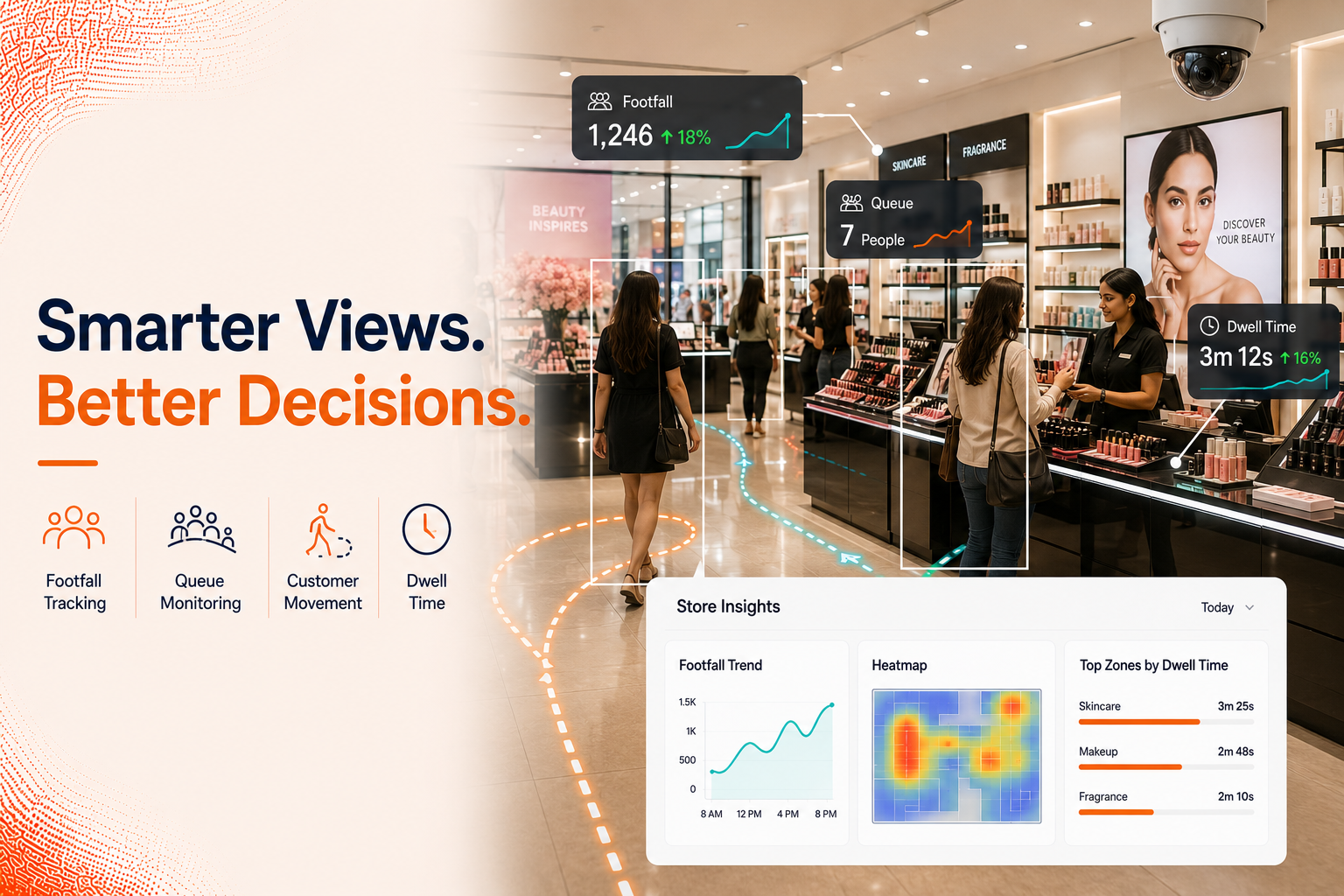
What Can AI Actually Detect Inside a Retail Store?
Discover what AI video analytics can actually detect inside a retail store from footfall and queues to customer movement and dwell time and …
Read more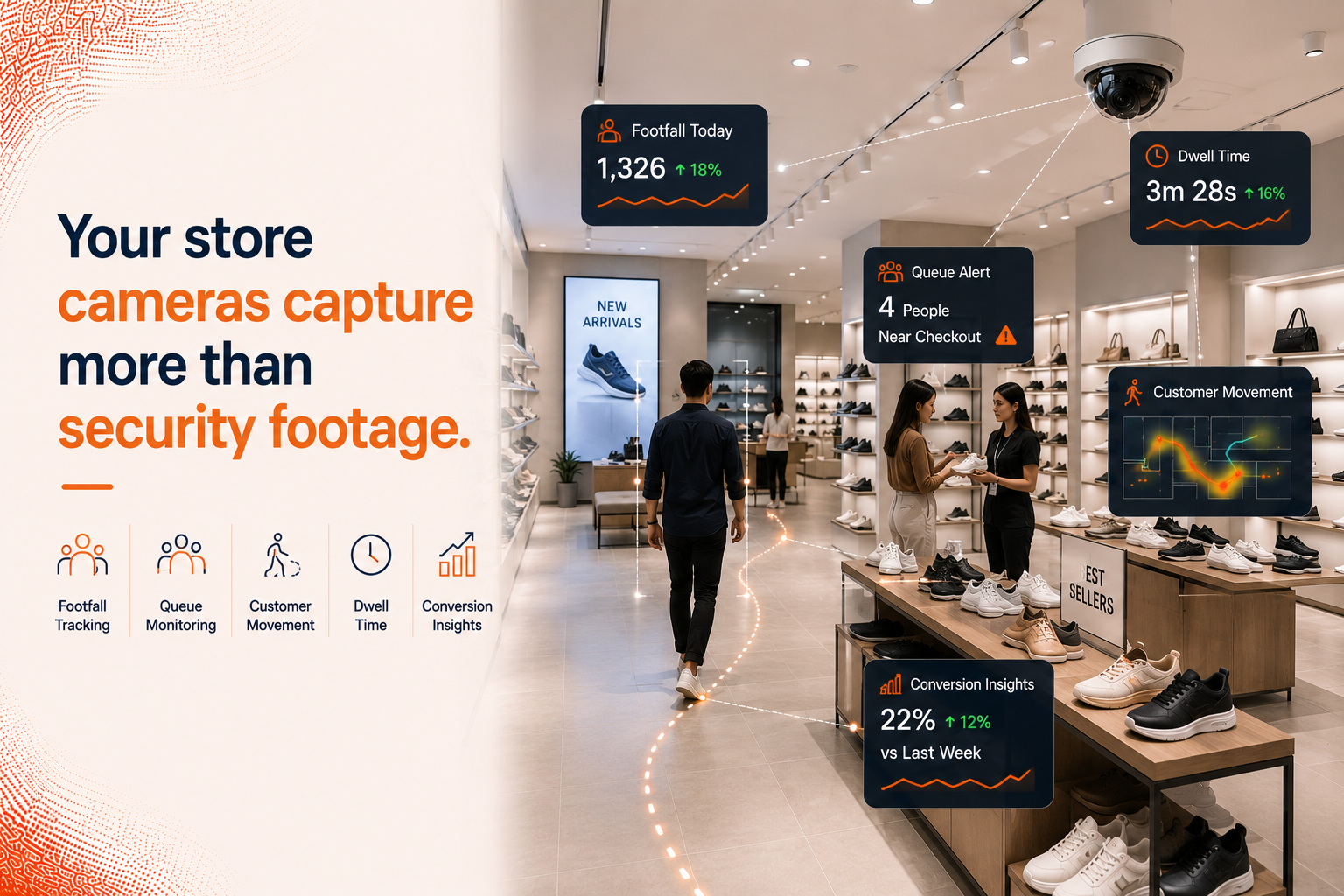
What Your Store Cameras Know About Your Business (That You Don't)
Your store cameras capture more than security footage. Discover how AI video analytics transforms existing CCTV systems into business intell…
Read more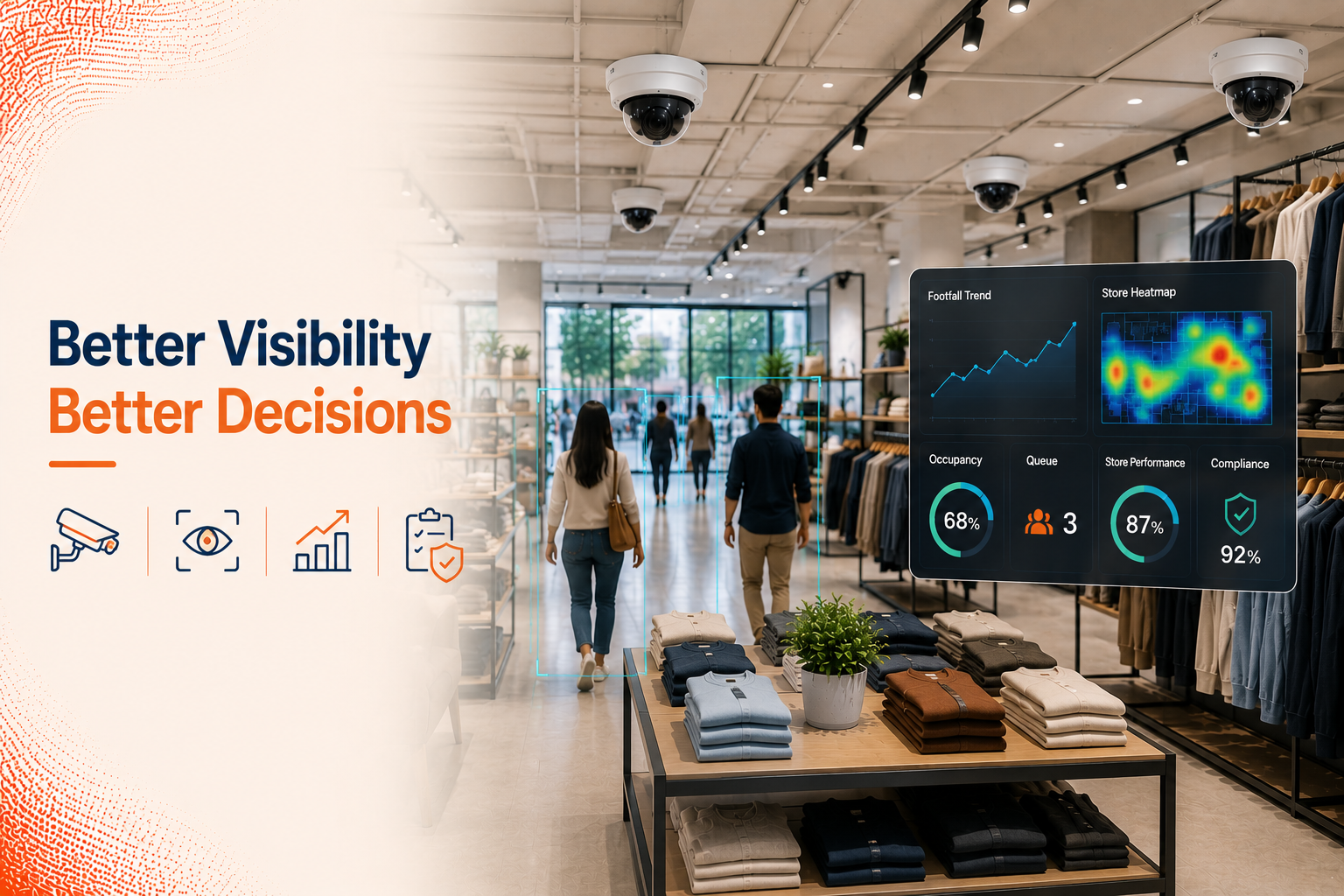
How AI Video Analytics Helps Retailers Make Smarter Business Decisions
Discover how AI video analytics helps retailers make smarter business decisions by improving staffing, customer experience, store performanc…
Read more