

12 Store Execution KPIs Every Retail Operations Team Should Track
Most retailers already collect operational data. The real challenge is identifying which metrics truly reflect execution quality and support better decision-making. This article explores 12 store execution KPIs that help retail leaders benchmark performance, identify execution gaps, and improve operational consistency across every location.
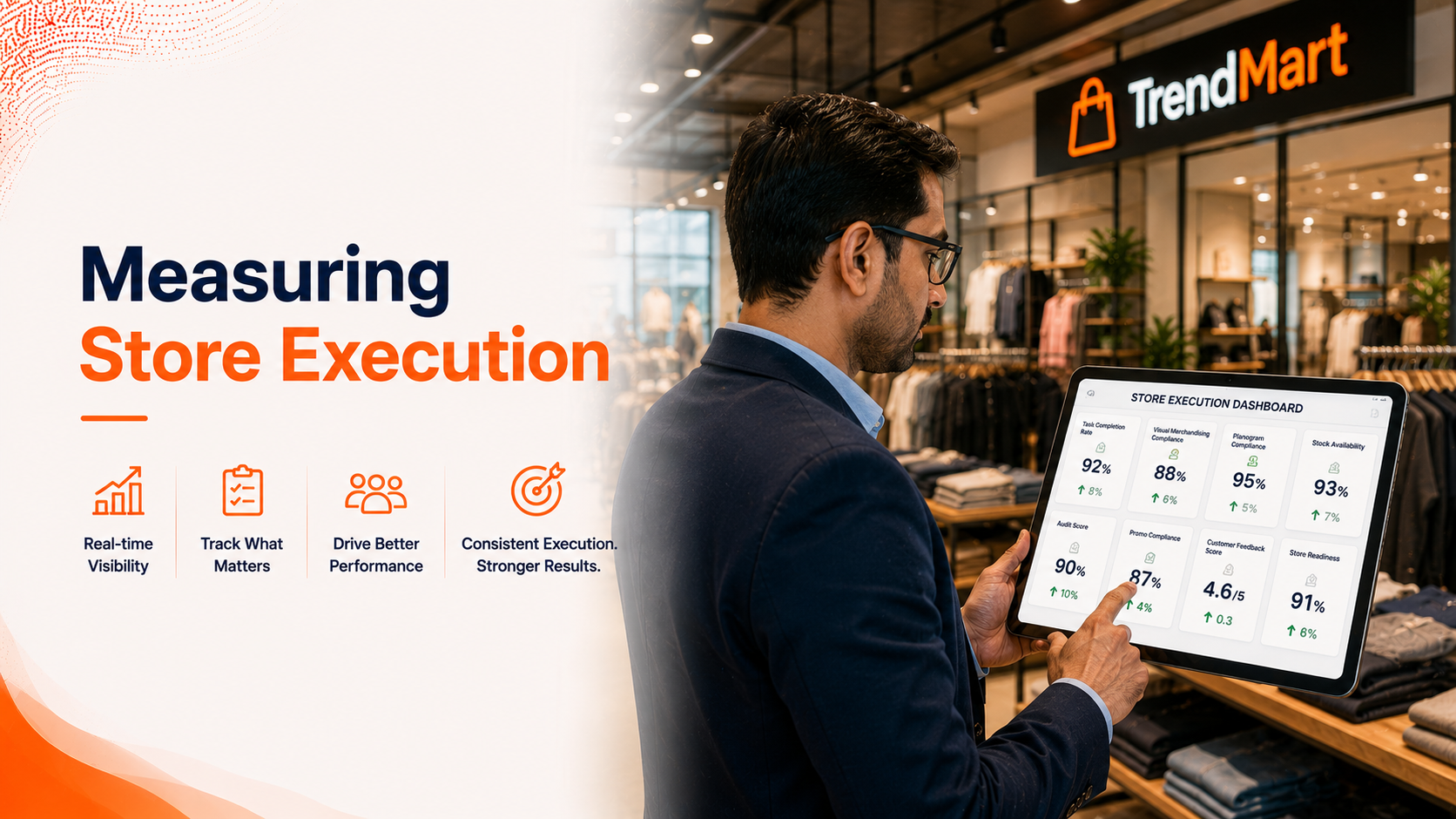
Most retail operations teams don't struggle with a lack of data. They struggle with identifying which metrics actually reflect store execution.
Dashboards often contain dozens of reports covering sales, inventory, labour, audits, customer feedback, and operations. While each metric has its place, not all of them help leaders understand whether stores are consistently executing operational standards.
The most effective retail organizations focus on a balanced set of execution KPIs that provide early visibility into operational gaps, enable meaningful comparisons across stores, and support faster decision-making.
Rather than measuring everything, the objective should be to monitor the metrics that directly influence operational consistency and long-term store performance.
Why Store Execution KPIs Matter
Store execution should be measured the same way every strategic business function is measured with clear, actionable metrics.
The right KPIs help retail leaders:
• Benchmark stores and regions using consistent standards.
• Identify execution gaps before they become larger operational issues.
• Prioritize improvement efforts based on data rather than assumptions.
• Improve accountability across regional and store teams.
• Monitor operational trends as the business grows.
When reviewed consistently, these KPIs provide a clearer picture of how effectively retail strategies are being executed across the store network.
1. SOP Compliance Rate
SOP compliance is one of the earliest indicators of operational discipline. Declining compliance often signals broader execution issues long before they appear in audit scores or customer feedback. Monitoring this KPI helps operations teams identify stores that require additional support before inconsistencies become widespread.
2. Store Audit Score
Audit scores provide a structured view of execution quality across stores. Rather than focusing only on individual audit results, retail leaders should monitor trends over time to identify recurring operational gaps, regional patterns, and opportunities for continuous improvement.
3. Promotional Execution Rate
Retail campaigns are only as successful as their in-store execution. This KPI highlights whether promotions are implemented accurately and on schedule across every location. Even small execution gaps can reduce campaign effectiveness and create inconsistent customer experiences.
4. Price Accuracy
Pricing errors directly affect customer trust and operational credibility. Monitoring price accuracy helps identify process gaps between merchandising, pricing updates, and store execution while reducing avoidable customer complaints.
5. Shelf Availability
Shelf availability is more than an inventory metric, it's a reflection of execution quality. Persistent stockouts often indicate underlying issues in replenishment planning, inventory accuracy, or operational routines. Tracking this KPI helps retailers identify trends before they begin affecting sales performance.
6. Task Completion Rate
A high task completion rate should reflect consistent execution rather than simply completed checklists. When reviewed alongside audit scores and compliance metrics, this KPI helps determine whether critical operational activities are being completed to the expected standard.
7. Store Readiness Score
Store readiness provides a snapshot of operational preparedness before customers enter the store. Consistently high readiness scores demonstrate disciplined execution across opening routines, merchandising, staffing, housekeeping, and operational planning.
8. Incident Resolution Time
Operational issues are inevitable in every retail business. What differentiates high-performing retailers is how quickly they resolve them. Tracking incident resolution time helps operations leaders identify bottlenecks, improve accountability, and minimize disruptions to store performance.
9. Employee Training Completion Rate
Retail businesses continually onboard new employees while introducing new products, campaigns, and operating procedures. Monitoring training completion helps ensure store teams remain aligned with operational expectations and reduces execution variability across locations.
10. Workforce Schedule Adherence
Labour planning directly influences both customer experience and operating costs. Measuring schedule adherence helps determine whether stores are consistently staffed according to operational demand, particularly during peak trading periods and promotional events.
11. Customer Satisfaction Score
Customer feedback should be viewed as a lagging indicator of store execution. While it reflects the outcome of operational performance, it rarely explains the underlying cause. Comparing customer satisfaction alongside operational KPIs provides far more meaningful insights into store performance.
12. Corrective Action Closure Rate
Identifying operational issues is only the first step. The real measure of execution is how effectively those issues are resolved. Monitoring corrective action closure ensures audit findings translate into operational improvements rather than recurring problems.
KPIs Are Only Valuable When They Drive Action
Performance dashboards should do more than display operational data.
The real value comes from identifying patterns, comparing store performance, and enabling faster operational decisions.
For example, a decline in SOP compliance combined with lower audit scores may indicate inconsistent execution at specific locations. Slower incident resolution across a region may highlight resource constraints or process inefficiencies. Looking at KPIs collectively provides a far more accurate view of store performance than reviewing each metric in isolation.
The objective isn't simply to measure execution, it's to continuously improve it.
Common KPI Mistakes Retailers Make
Even well-established retail organizations can reduce the effectiveness of their reporting by focusing on the wrong metrics or reviewing them inconsistently.
Some common mistakes include:
• Tracking too many KPIs without clear business objectives.
• Measuring activities instead of operational outcomes.
• Reviewing reports only during monthly business reviews.
• Failing to assign ownership for operational improvements.
• Treating every store the same instead of benchmarking similar store formats and regions.
• Collecting data without translating insights into action.
A focused KPI framework is often more valuable than a dashboard containing dozens of disconnected metrics.
Conclusion
As retail operations become more complex, store execution can no longer be managed through periodic reviews or instinct alone.
The retailers that consistently outperform their competitors are those that measure execution with the same discipline they apply to sales, inventory, and financial performance.
Tracking the right KPIs provides operations leaders with the visibility needed to identify execution gaps early, benchmark performance across stores, and make informed decisions that strengthen operational consistency.
Ultimately, the goal isn't to build more reports. It's to build better-performing stores.

How Did Retail Technology Actually Evolve in India, and Where Does AI Fit In?
From kirana-store trust to nationwide store networks, a look at how retail technology evolved in India, and where AI genuinely fits into mul…
Read more
AI in Retail Operations: Driving Efficiency, Consistency, and Better Customer Experiences
Discover how AI is transforming retail operations through video analytics, workforce scheduling, and SOP automation. Learn how retailers imp…
Read more