

How Did Retail Technology Actually Evolve in India, and Where Does AI Fit In?
From kirana-store trust to nationwide store networks, a look at how retail technology evolved in India, and where AI genuinely fits into multi-location operations today.
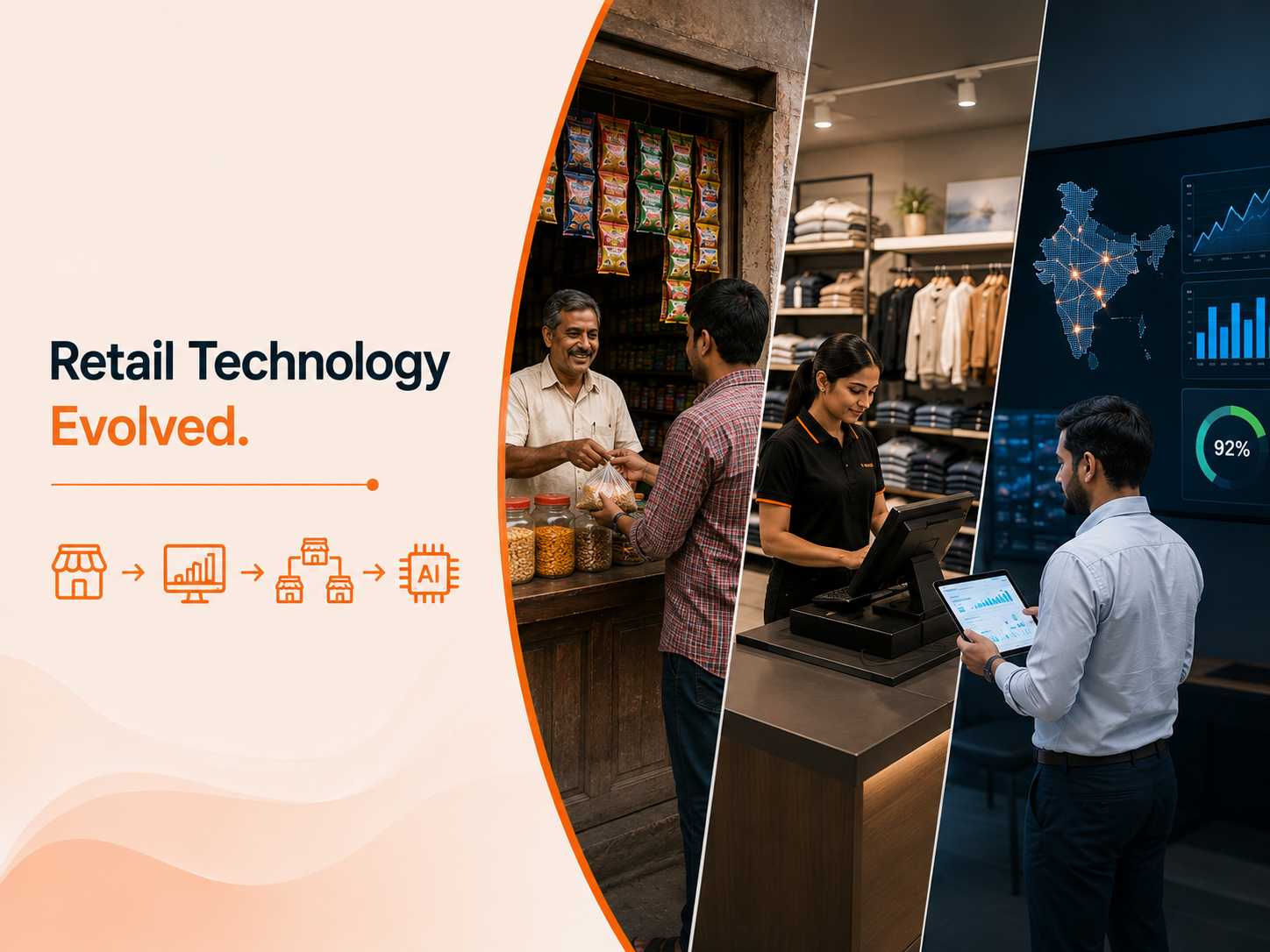
With Independence Day just two days away, it feels like the right time to reflect on one of the many transformations that have shaped modern India: the remarkable evolution of how we shop, eat and experience brands.
Retail is one of them.
Think about how an Indian consumer shops today. A neighbourhood kirana store still serves its community, but alongside it are supermarkets, quick-commerce dark stores, global fashion chains, modern pharmacies, cafés, QSRs, food-delivery platforms, self-ordering kiosks and increasingly, AI-powered systems.
The journey from one to the other wasn't a single technological revolution. It was built over decades, store by store, system by system. And in many ways, the evolution of Indian retail is also the story of how Indian businesses learned to operate at scale.
It Started With Trust, Not Technology
For much of India's post-independence history, retail was personal. The local kirana owner knew his customers, remembered what they usually bought, knew which products moved fastest and often extended credit based on nothing more than trust.
There were no dashboards telling him what to stock. No workforce scheduling software. No automated alerts. No AI forecasting demand.
There didn't need to be.
When you are running one store and know your customers personally, experience is the operating system.
Organised retail existed too. Stores such as Nilgiris demonstrated that supermarket-style, self-service retail had a place in India long before it became mainstream. But the real transformation came when Indian retail began moving from individual stores to networks.
1991: When Scale Became Possible
The economic reforms of 1991 changed India's relationship with the world. As the economy opened up, investment increased, new businesses emerged and consumer aspirations began changing.
Through the late 1990s and 2000s, organised retail started expanding rapidly. Big Bazaar, Shoppers Stop, Reliance Retail and many others began building something fundamentally different from the traditional neighbourhood store: consistency at scale.
A customer should be able to walk into one outlet and experience broadly the same brand at another outlet hundreds of kilometres away.
That sounds simple today. It wasn't.
Behind every consistent store experience was a growing operational machine — standardised processes, procurement systems, inventory controls, training, audits and increasingly sophisticated technology.
The more stores a business opened, the less it could depend on individual memory. Systems became necessary.
Then India Went Digital
The next transformation was even bigger.
The internet changed how consumers discovered, compared and purchased products. Smartphones put shopping, payments and food ordering into people's hands.
By March 2024, India had crossed 950 million internet subscribers. At the same time, platforms such as Zomato and Swiggy fundamentally changed how restaurants operated.
A QSR that once primarily managed customers walking through its doors could now be receiving orders from multiple digital channels simultaneously.
More channels meant more customers, but they also meant more operational complexity. Order times mattered. Kitchen productivity mattered. Inventory accuracy mattered. Staffing during peak hours mattered. SOP compliance mattered. Customer experience mattered.
The question was no longer simply, "Are we selling enough?"
It became: "Can we execute consistently across every location, every shift and every channel?"
That is a very different problem.
The Rise of the Multi-Location Operator
This is perhaps the most important part of India's retail and QSR evolution.
Indian businesses didn't just adopt technology to make individual stores smarter. They adopted it because they were building networks.
A business with five stores can still rely heavily on human oversight. A business with 500 stores cannot.
As brands expanded, spreadsheets, phone calls, WhatsApp messages and individual memory began reaching their limits. The industry gradually built technology around the frontline:
- POS and billing systems
- ERP and inventory management
- CRM platforms
- Digital payments
- Delivery integrations
- Learning and training platforms
- Workforce management
- Digital checklists and audits
- Business intelligence and analytics
Each solved a different piece of the operational puzzle.
And now, AI is beginning to sit on top of many of those systems.
AI Has Arrived. But Not Everywhere.
There is understandably a lot of excitement around AI in retail. We are already seeing applications such as AI-powered recommendations and personalisation, self-ordering and intelligent kiosks, demand forecasting, computer vision, customer-service automation, dynamic pricing, and inventory and waste optimisation.
But there is an important distinction between AI being discussed and AI being deployed meaningfully at scale.
The reality is far more measured. Much of the industry's AI adoption is still concentrated around familiar use cases such as chatbots, recommendations and customer-facing personalisation. More advanced applications where AI continuously analyses operational data, makes recommendations or takes actions with limited human intervention are still at an earlier stage.
And that isn't necessarily a bad thing.
India's retail industry doesn't need to adopt AI simply because AI exists. It needs to adopt it where AI can solve problems that humans and traditional systems struggle to solve at scale.
So Where Does AI Actually Make Sense?
Consider what happens inside a typical multi-location business.
Demand changes by day, hour, season, weather and location. Staff availability changes. Customer traffic changes. Inventory changes. Promotions change. Service expectations change.
Across hundreds of outlets, these variables interact constantly.
This is where AI becomes interesting.
Instead of simply reporting what happened, AI can help identify patterns in what is likely to happen. Instead of asking managers to manually inspect hundreds of operational records, AI can help surface what needs attention. Instead of relying entirely on periodic audits, computer vision can potentially analyse what is happening on the shop floor continuously.
For multi-location operators, some of the most practical opportunities include:
- Demand & workforce planning: Using historical and real-time data to better align staffing with expected demand.
- Operational compliance: Identifying gaps in SOP execution and bringing exceptions to the attention of the right teams.
- Video intelligence: Turning existing CCTV infrastructure into a source of operational and customer insights.
- Training & performance: Using digital learning and assessments to build more consistent frontline capability.
- Incident management: Moving from manual follow-ups to structured identification, escalation and resolution.
- Decision support: Bringing operational signals together so regional and central teams can act before small issues become larger ones.
The value isn't really in saying, "We use AI."
The value is being able to make better decisions, faster, across hundreds or thousands of locations.
India's Biggest Advantage May Be Its Scale
There is another reason this evolution is particularly interesting in India.
Indian businesses operate across enormous variations in geography, customer behaviour and operating conditions. A brand may operate in Mumbai, Jaipur, Bengaluru and Guwahati while still being expected to deliver a consistent experience.
That makes India a fascinating environment for operational technology.
The challenge isn't simply digitising a store. It is creating systems that can work across thousands of stores, millions of transactions and constantly changing conditions.
And Indian businesses have already demonstrated that they can do this.
UPI transformed payments at extraordinary scale. Food-delivery platforms built massive logistics networks. Quick commerce created entirely new fulfilment models. Retailers built nationwide store networks serving very different markets.
The next step is making those operations increasingly intelligent.
AI Won't Replace the Store Manager
There is also a misconception worth leaving behind.
The future of AI in retail isn't necessarily a store with no people. It is more likely to be a store where people have better information.
A manager shouldn't have to discover at the end of the month that a process has been repeatedly missed. A workforce planner shouldn't have to manually analyse months of sales data to understand staffing requirements. A regional operations team shouldn't have to wait for a periodic audit to discover a recurring compliance issue.
Technology can help bring those signals forward.
The human still makes the decision. AI simply gives that human a better view of what is happening.
What Comes Next?
For multi-location retail and QSR brands, the opportunity isn't to chase every new AI trend. It is to identify where intelligence can genuinely make everyday operations simpler, faster and more consistent.
That could mean better workforce planning, stronger SOP execution, smarter training, faster incident resolution, deeper operational visibility or turning existing store infrastructure into actionable insights.
The next phase of Indian retail won't be defined by how much technology a business adopts, but by how intelligently it uses it.
NymbleUp is building for that shift bringing AI, automation and operational intelligence together to help multi-location retail and hospitality brands run more consistently at scale. Explore Nymbleup
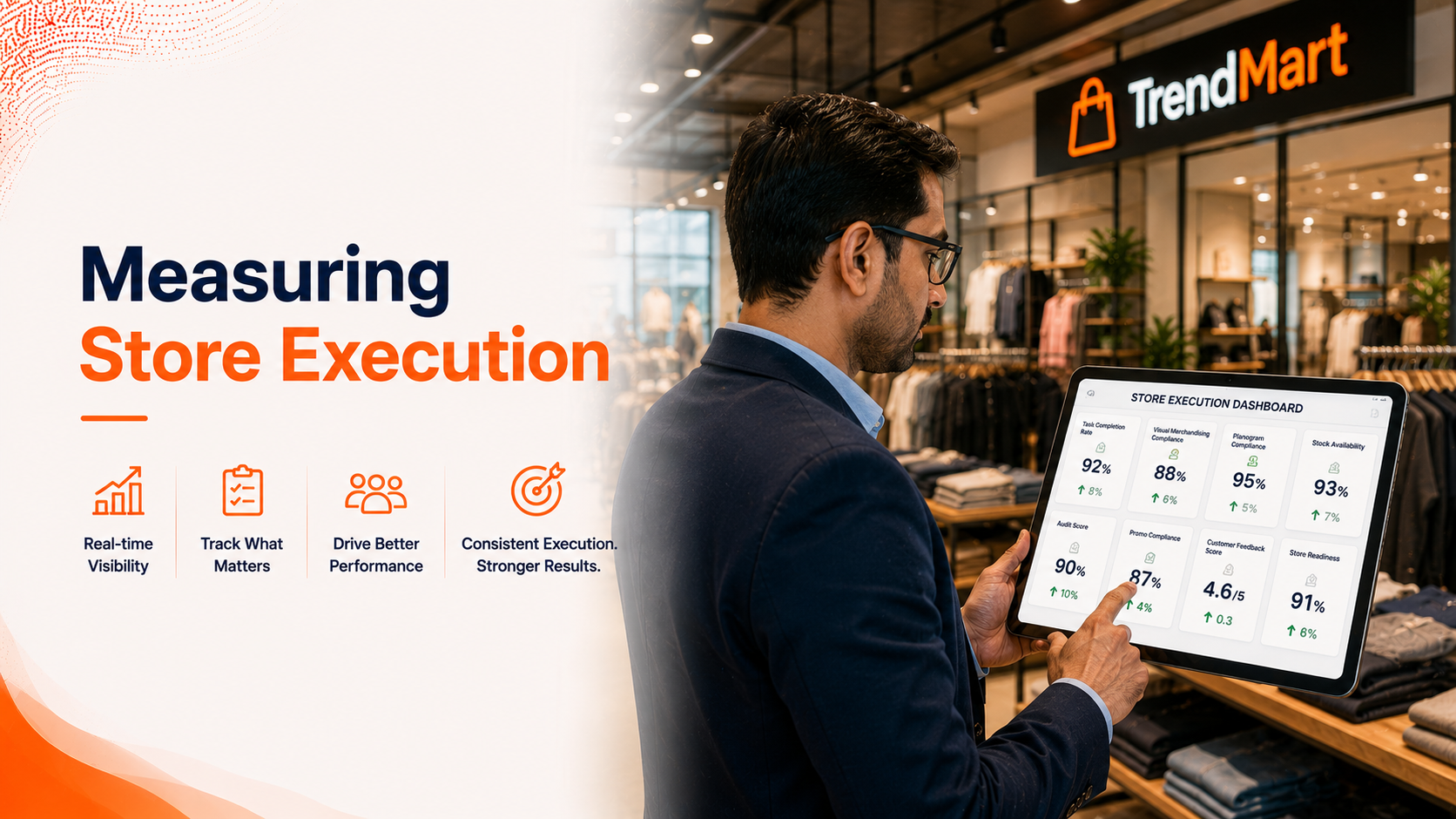
12 Store Execution KPIs Every Retail Operations Team Should Track
Most retailers already collect operational data. The real challenge is identifying which metrics truly reflect execution quality and support…
Read more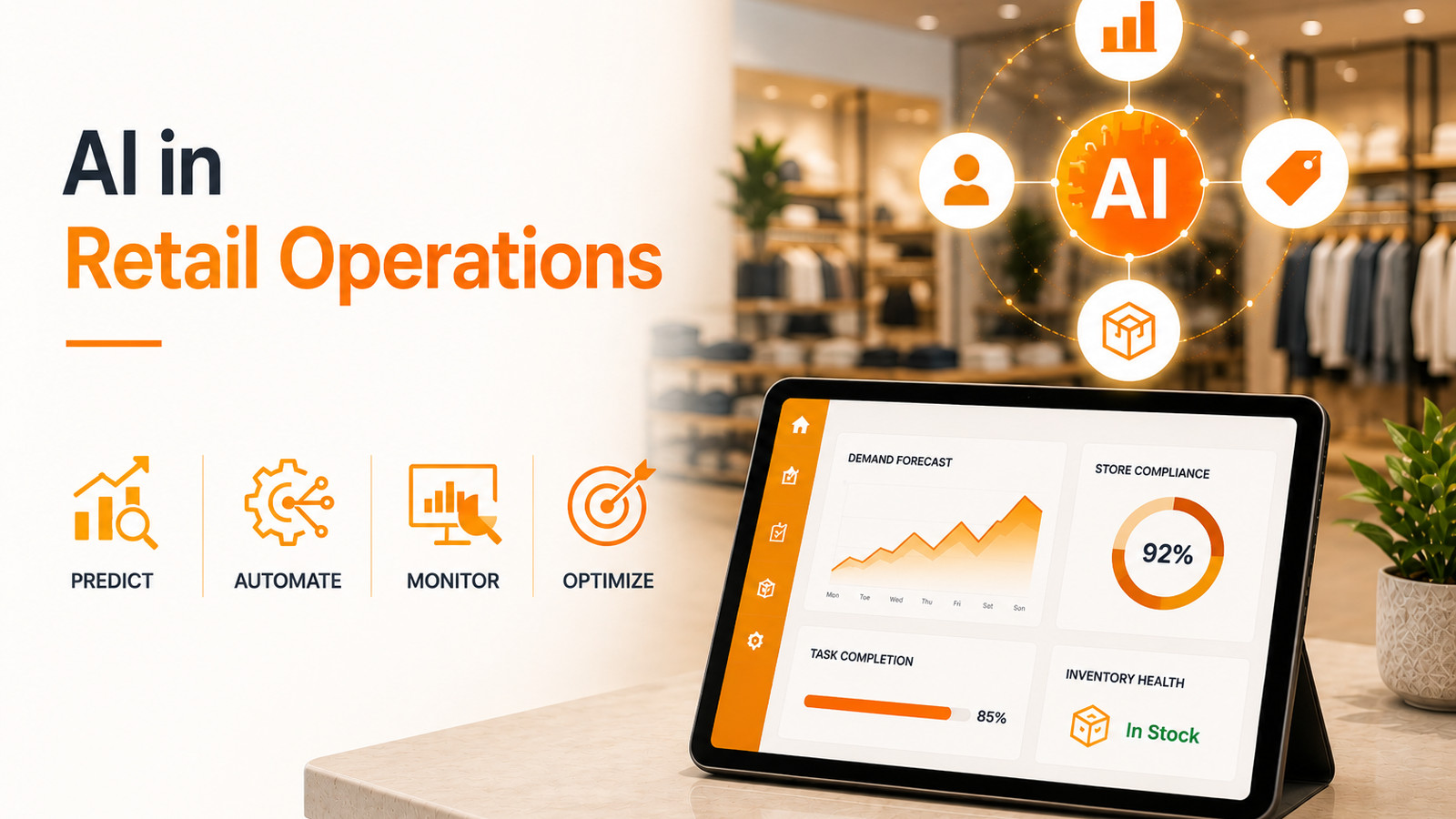
AI in Retail Operations: Driving Efficiency, Consistency, and Better Customer Experiences
Discover how AI is transforming retail operations through video analytics, workforce scheduling, and SOP automation. Learn how retailers imp…
Read more