
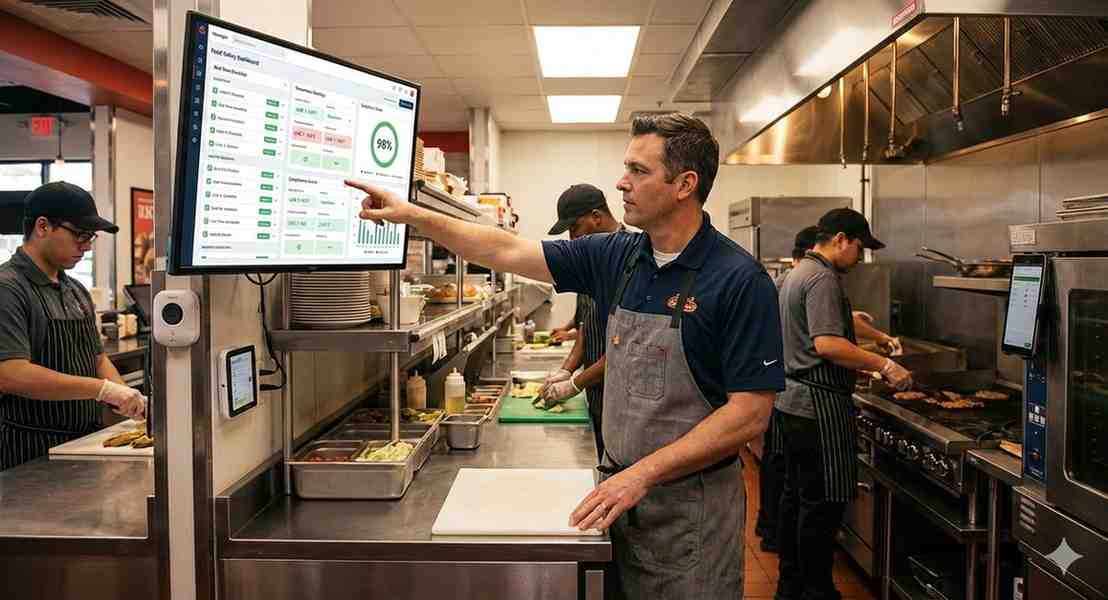
Ensuring 100% Food Safety Compliance in QSRs with Digital Audit Tools
If you own or operate a Quick-Service Restaurant (QSR) or fast-food chain, you are aware of how hectic things can be. Customers want fast service, consistent food across all locations, and staff and inventory that are constantly changing. In all that chaos, one thing must remain constant: food safety compliance.
It only takes one food safety mistake to ruin everything. Customers can become sick, there can be massive fines, the company may be forced to shut down, and the public trust may be destroyed. With social media, bad news spreads instantly, putting your entire brand at risk.
In the past, managers relied on paper checklists and occasional inspections to keep track of their work. Compared to modern QSRs, this old-fashioned method is too slow and messy. There are gaps where mistakes can occur.
The solution is simple: Digital Audit Tools.
When you switch to intelligent, digital systems, you become proactive and stop problems before they happen (reacting to them after they occur). Every store, every minute of the day, must ensure consistency and food safety compliance with this checklist.
This blog will show you why digital tools are a must-have, what the best restaurant audit software looks like, and how they help you achieve 100% safety.
The Never-Ending Battle for Food Safety Compliance in Fast-Paced QSRs
Maintaining perfect food safety compliance is challenging, especially when you manage multiple locations. A QSR operation’s speed and size create special challenges that cannot be handled by old methods.
- Inconsistency between stores
Rules are easy to write for the head office, but enforcing them across hundreds of locations with different managers, high staff turnover, and local issues is difficult.
Imagine checking and recording the fridge temperature three times a day. When you try to manage that with paper across 500 stores, you quickly see where the system fails. Paper-based systems suffer from inconsistency.
- Why Paper Checklists Always Fail
The nature of paper checklists is flawed. It’s easy for managers to “pencil whip” them, filling them out quickly without actually performing the checks to meet deadlines.
It also slows down your best employees. Managers spend more time filing, copying, and storing paperwork than serving customers and running their restaurants. Upon receiving the paperwork, the head office finds that the reports are weeks old, which means that a small safety issue has already become a big one.
- Keeping Up with Changing Rules
Regulatory requirements for food safety (such as HACCP and local health codes) are always changing. In some stores, store managers may be following old, incorrect instructions because they rely solely on paper forms. The use of digital tools, however, ensures that every employee in every store has access to the most up-to-date checklist in real time. By adapting your entire chain immediately to new rules, your brand is protected from fines and bad press.
Why Digital is the Only Way for QSR Audit Management
Switching from paper to a digital system for QSR audit management is essential. It’s the only way to reduce risk and increase efficiency. Digital systems solve all the problems of paper by giving you structure, accountability, and real-time information you never had before.
- Instant Alerts and Quick Fixes
Digital QSR audit management is fastest. Using a paper system, it might take all day for a critical violation-such as a freezer breaking-to be reported.
That changes with a digital system. A refrigerator temperature that is unsafe is immediately logged by the system:
- High-priority problems flagged.
- Sends a text or email notification to the supervisor or manager of the store automatically.
- Make an immediate follow-up task to fix the fridge or move the food.
The immediate response reduces the potential health crisis and thousands of dollars in spoiled food to a small, manageable issue.
- Audits That Show the Full Picture
Traditional audits are just snapshots. They only tell you if the store was safe at the moment the auditor was standing there. Digital systems, however, create a steady stream of data.
This rich data helps the corporate team move past simply finding mistakes to predicting them. For example, data might show that safety checks are often missed during the 5:00 PM rush on Fridays. This insight lets you adjust staffing or provide targeted training to fix the issue before a health inspector finds it. This makes QSR audit management smart, not just administrative.
- Proof and Accountability
Accuracy and accountability are enforced by digital tools. Using GPS tagging and timestamps, you can prove when and where a task was completed, preventing “pencil whipping.”
The system can require mandatory photographic or video evidence for the most important safety items, such as a photograph of a clean surface or a reading from a thermometer. Having this proof creates an undeniable record of compliance that protects your brand from lawsuits.
The Must-Have Features of Great Restaurant Audit Software
To truly achieve 100% food safety compliance, your digital tool needs to do more than just digitize a form. The best restaurant audit software has smart features designed to force compliance, automate follow-up, and provide smart insights.
- Smart Checklists that Adapt
Great software uses dynamic checklists (or “smart forms”). The form can change based on the answers given. For instance, if a manager checks “Yes” to “Is the fryer oil spent?”, the software automatically makes a new, mandatory task appear called “Oil Disposal and Replacement.” This ensures no necessary follow-up action is forgotten.
- Corrective Action Management (CAM)
A failed audit point must be fixed. The most crucial feature is the closed-loop Corrective Action Management system. When a failure is logged, the software immediately:
- Generates a fix-it task.
- Assigns it to a specific person (e.g., the Shift Leader).
- Sets a firm deadline.
- Tracks the fix until the supervisor digitally approves the resolution.
This process ensures problems are fixed fast and formally recorded, giving you a full audit trail for regulators.
- Automatic Scheduling and Permissions
Safety is a team job. Effective restaurant audit software uses role-based permissions, so employees only see the tasks that apply to them. Furthermore, the software automatically pushes tasks to the right person at the right time. For example, a task to check the hot holding temperature is sent directly to the cook’s device at 11:30 AM, guaranteeing essential checks are never missed during a busy shift.
- Smart Data and Predictive Reports
The real value of digital tools is the data. The software must turn raw safety information into helpful business intelligence. The dashboards should show you things like:
- Compliance Score by Location: Quickly spotting the stores that are struggling.
- Most Common Failures: Identifying specific training weaknesses (e.g., the meat slicing station).
This smart analysis lets your head office fix problems and update rules before a small, isolated mistake turns into a huge, chain-wide failure. It turns food safety compliance into a competitive advantage.
The Great Return on Investment (ROI) of Digital Compliance
Adopting modern restaurant audit software is an investment that quickly pays for itself, providing benefits that go far beyond just avoiding a single fine.
- Save Time and Make it Easy: The software must be incredibly easy for frontline staff to use. If it’s confusing, employees won’t use it, and the system will fail. The best tools have clean screens and let staff complete an entire audit on a mobile device in minutes. By making the digital process faster than paper, you guarantee that staff will actually use the system, which is the key to consistent food safety compliance.
- Connect Everything for Total Control: The biggest power comes when your QSR audit management tool talks to your other systems:
- Sensor Integration: The software can connect to smart thermometers in your fridges, automatically logging temperature readings into the audit form. This removes manual logging and ensures perfect accuracy.
- Training Integration: If a manager finds a mistake in an audit (e.g., the employee didn’t cool food properly), the software can automatically assign a mandatory training video to that employee to close the knowledge gap
- Stop Disaster: The number one benefit is avoiding massive costs from lawsuits, fines, and shutdowns, which can total millions of dollars. Avoiding just one major food safety event pays for the software across your entire chain.
- Save Labor and Food: Eliminating paper and automating checks frees up manager time. With consistent checks, you have less spoiled food, better inventory control, and staff focusing on customers, not paperwork.
- Protect Your Brand: Showing that you have a powerful, data-backed system for safety protects your brand’s reputation. This customer confidence leads to more loyalty and higher sales.
By embracing digital restaurant audit software, QSRs can stop worrying about risk and start focusing on consistency and quality. The future of food safety compliance is digital, and it’s the only reliable way to thrive in the fast-paced world of fast food.
For more details & Queries contact: enquires@nymbleup.com